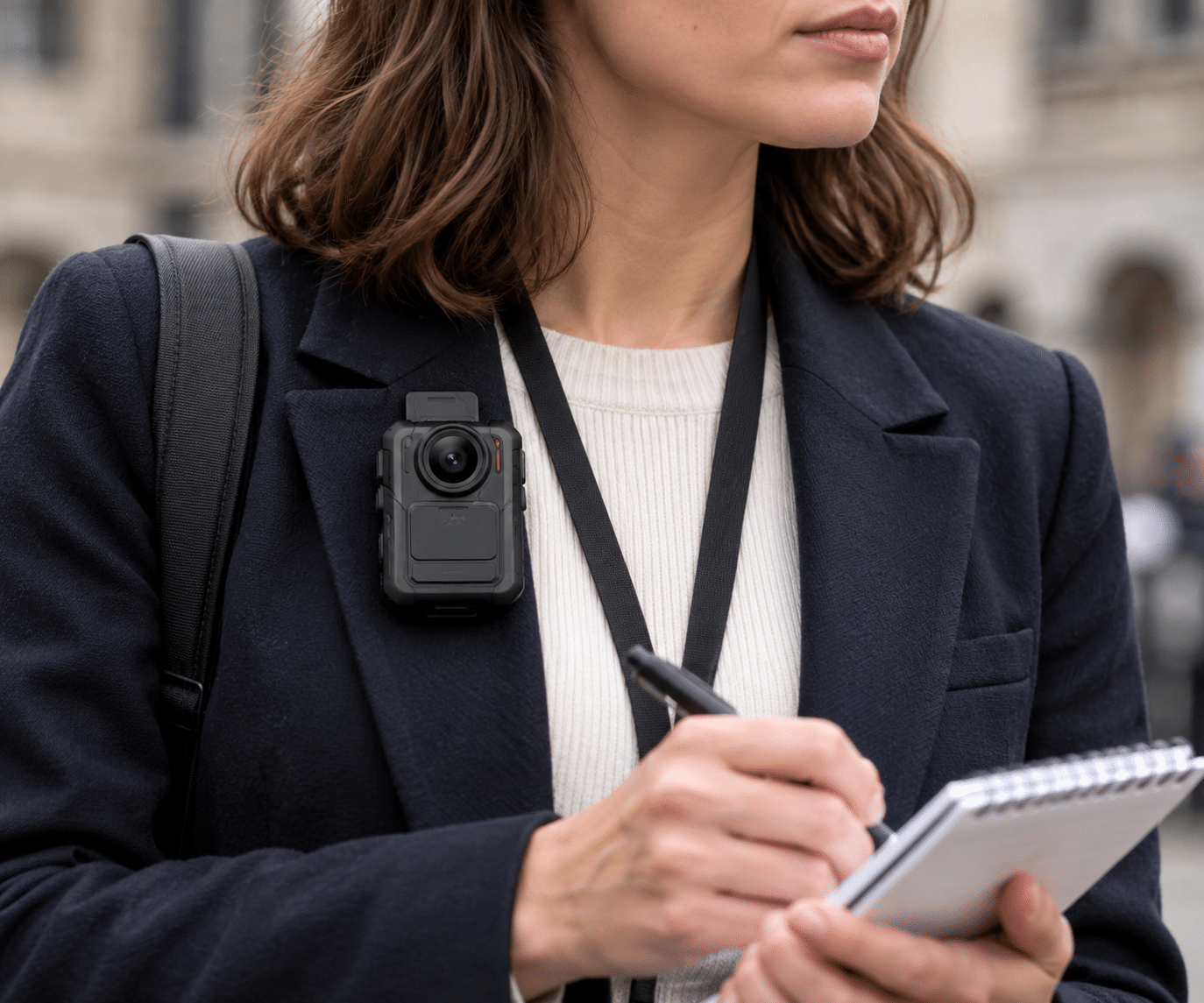
Artificial intelligence (AI) can make hours of police body-camera footage searchable within minutes, but new research warns that transcription errors could distort investigations, undermine accountability and change how encounters between officers and civilians are understood.
A study published in the ‘Journal of Experimental Criminology’ found that AI transcription software captured much of the language recorded by police body-worn cameras but struggled to identify individual speakers accurately, particularly during complicated exchanges involving several people.
Researchers examined 176 body-camera videos covering 73 incidents and approximately 23 hours of footage collected by the Kansas City Police Department in Missouri between January and March 2024. They compared transcripts generated by Rev.ai, the speech-recognition technology behind Axon’s automated transcription service, with versions edited by professional human transcribers.
The AI-generated transcripts identified an average of 3.3 speakers per document, compared with 4.8 in the human-edited versions, and never identified more than seven speakers, while human-edited transcripts recorded as many as 16.
The software also produced transcripts containing approximately 25,000 fewer words across the sample, suggesting that background conversations, radio communications and contributions from less prominent speakers were frequently omitted.
What is still wrong
The problem was not simply that the technology missed words, but that it sometimes attributed statements to the wrong person, potentially changing the meaning of an encounter.
In one example, a tense exchange between a police officer and a civilian was largely transcribed correctly, but the AI system combined statements from both people and presented them as if they had come from one speaker.
Such mistakes could have serious consequences when transcripts are used to investigate allegations of misconduct, assess the use of force or evaluate whether officers communicated respectfully with members of the public.
The researchers argue that AI transcription remains useful for searching large volumes of recordings, identifying keywords and flagging encounters for further examination, but should not replace human review when accurate speaker identification matters.
The technology offers a practical solution to a significant problem: the Kansas City police department can generate more than 350 hours of body-camera footage in a single day, making comprehensive manual review difficult.
However, the study has limitations because it examined footage from one police department and assessed a single AI transcription provider, meaning the findings may not apply equally to other systems.
The researchers also acknowledged that the human-edited transcripts began with AI-generated drafts, rather than being produced independently from the original recordings.
The findings highlight a broader challenge for artificial intelligence in criminal justice: a system can reproduce most of the words in a recording while still misrepresenting the interaction itself.