Imagine telling an AI to do something and watching it make the wrong move.
But before you can react with more words, the machine already knows something is off. It detects, from your brain activity, that its interpretation does not match what you intended and adjusts what it is doing! That may sound like AI can read your mind before you have expressed the thought.
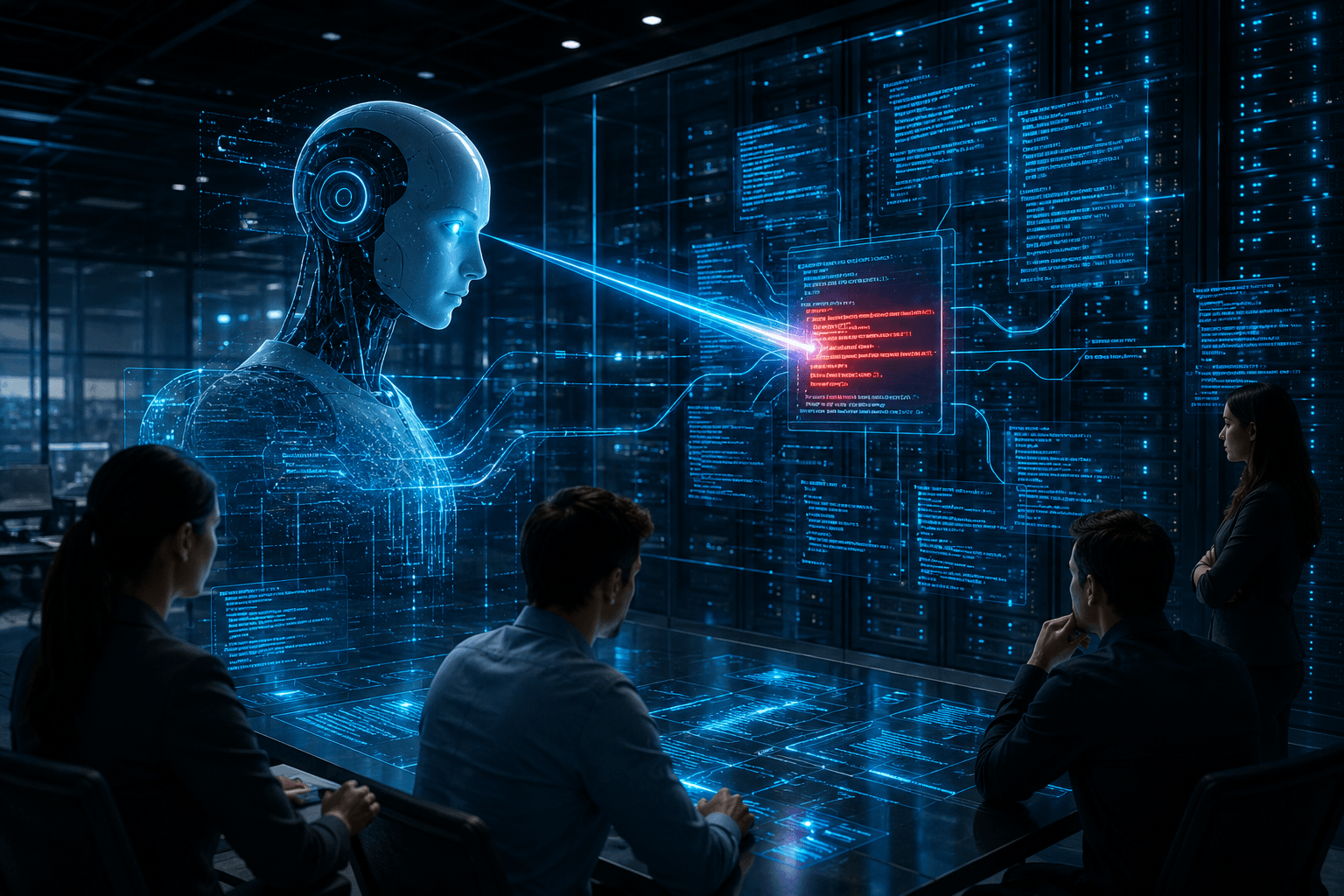
Korean researchers have developed an AI system that can use brain signals to detect when a machine has misunderstood a person’s intention.
Well, it cannot read your thoughts in the science-fiction sense, but researchers at South Korea’s The Korea Advanced Institute of Science and Technology (KAIST) have taken an important step towards AI detecting when its understanding of your intention is wrong.
The technology, developed by a KAIST team led by Professor Sang Wan Lee in collaboration with Microsoft Research Asia, is called Neural Value Alignment, or NVA. The basic idea is surprisingly simple: instead of making AI rely only on what people say or write, the researchers want it to also detect signals from the brain that reveal when something has gone wrong.
Consider a familiar situation. You ask an AI assistant or robot to perform a task. It follows your instruction, but does something you did not actually intend. Normally, you have to correct it by saying something such as, “No, that’s not what I meant.” KAIST’s system is designed to detect that mismatch from brain activity, potentially allowing the machine to correct itself without waiting for the person to explain.
This is possible because the brain reacts when reality does not match expectations. The researchers used electroencephalography, or EEG, to record electrical activity from people’s brains while they interacted with an AI system.
They focused on two types of signals. One indicates that the result was different from what a person expected. The other indicates that the situation itself has not developed as the person expected. The technical names are reward prediction error and state prediction error, but the important point is that both can provide clues about what a person thinks should be happening.
The researchers found that these signals could be distinguished in brain activity. They then used them together to help an AI work out two separate things: whether it had chosen the wrong action, and whether it had misunderstood the person’s goal in the first place. That distinction matters because the same action can sometimes serve different purposes, while different actions can achieve the same goal.
The research is still a long way from an AI that casually reads people’s minds. The experiment relies on EEG equipment to measure brain signals, and the researchers are demonstrating a scientific method for detecting mismatches between human intentions and AI behaviour. It is not a consumer product that can currently be plugged into ChatGPT, a phone or a home robot.
The next stage is to develop this idea for more natural cooperation between people and machines. KAIST says the approach could eventually be applied to physical robots in homes and factories, autonomous vehicles, medical robots and rehabilitation systems. The team’s ongoing work with Microsoft Research Asia is aimed at developing brain-computer technologies that allow humans and AI to communicate and collaborate more naturally.
There is no announcement that this particular technology is being released as a commercial product. For now, it remains a research advance. But its significance is clear: the future of AI may not depend only on machines understanding what we say. It may also depend on machines becoming better at recognising when what they have understood is not what we actually meant.
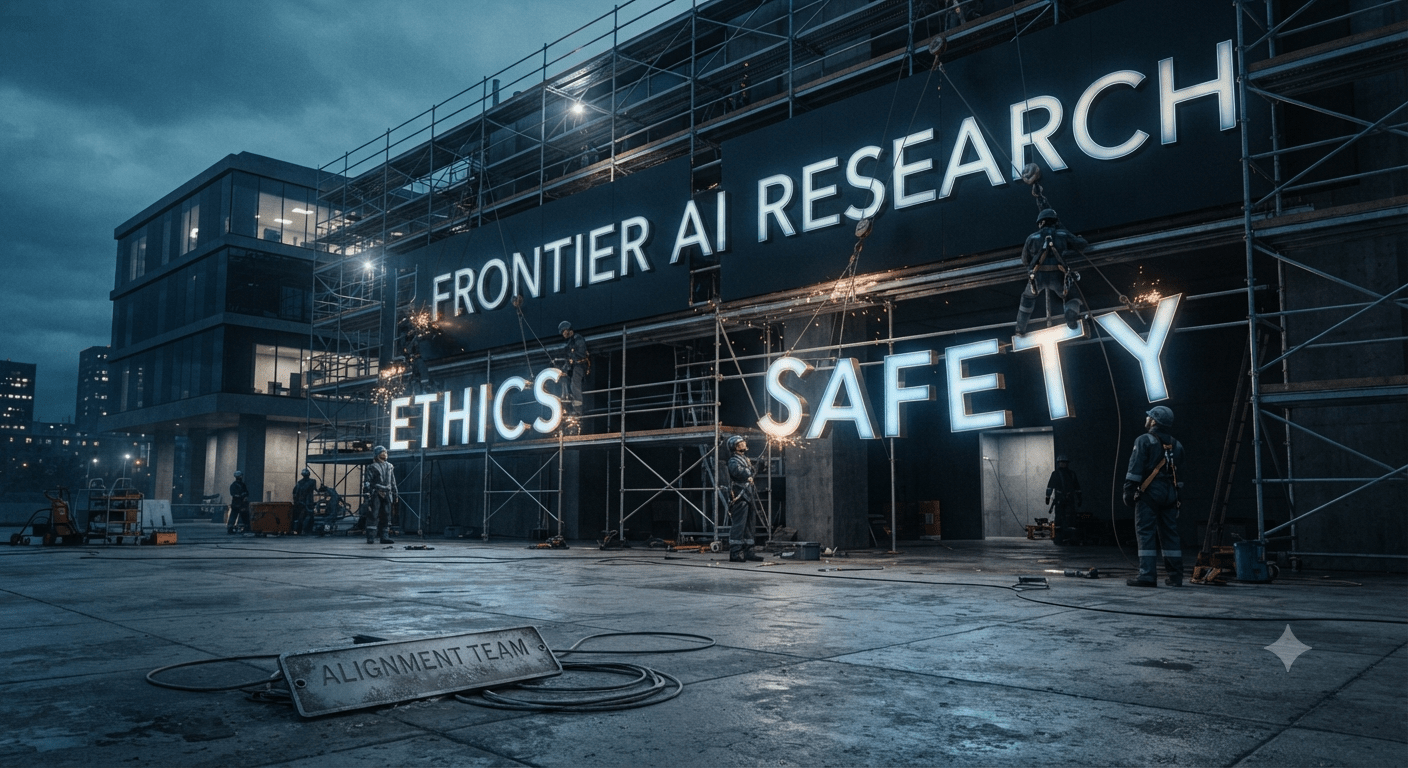
Some major AI companies have reduced or reorganized teams that were specifically responsible for AI safety, alignment, and risk. These teams were created to identify possible dangers and make sure AI systems were developed responsibly. In some cases, safety responsibilities have been moved into regular engineering and product teams.
All of this can create a conflict between speed and safety. AI companies face strong competition and pressure to release new products quickly. Engineers and product teams may therefore focus more on meeting deadlines and competing with other companies. When the same teams are responsible for both developing a product and checking its risks, independent safety checks may become weaker.
So What It Means To You
AI systems can be used to create scams, spread fake information, influence public opinion, and make decisions that affect areas such as employment, loans, and insurance. Without strong safety measures, these risks could become harder to control.
AI safety should not depend only on companies policing themselves. Independent testing, auditing, benchmarking, and red-team exercises could provide additional protection.
Summing up: there’s an important challenge before the AI industry: AI companies need to balance innovation and business growth with public safety. Developing AI quickly is valuable, but safety and ethical responsibility should remain an essential part of the process.
AI-generated images, recycled disaster footage and misleading captions are reportedly flooding social media alongside genuine scenes from Nepal’s catastrophe. The disturbing lesson is: natural disasters themselves are becoming raw material for synthetic misinformation.
A disaster happens. Within minutes, the Internet fills with images.
Buildings disappear beneath torrents of muddy water. Bridges buckle. Helicopters hover over devastated valleys. People run for their lives. Entire towns appear to be swallowed by floodwaters.
The instinctive reaction is to believe what we see. That instinct is now becoming distinctly dangerous.
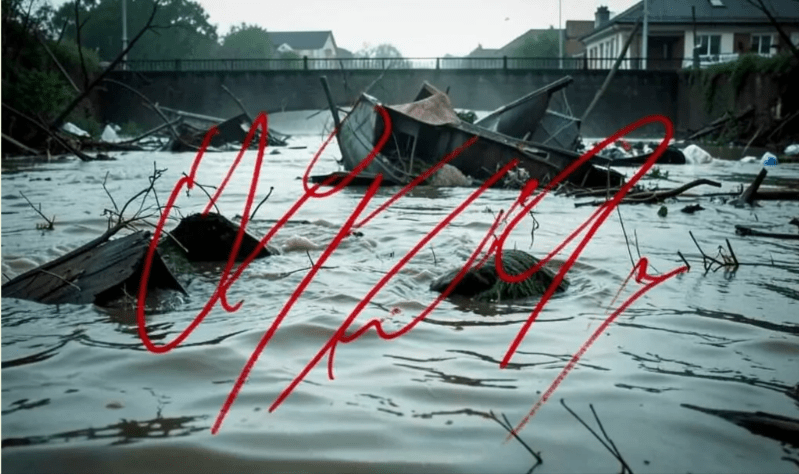
In the aftermath of the catastrophic flash floods that struck the Nepal-Tibet border on August 26, social media users began sharing dramatic photographs and videos claiming to show the destruction. But fact-checkers have now found that some of the most striking material was not from Nepal at all.
Some of it, as it turns out, was generated by artificial intelligence (AI).
Some was real footage from completely different disasters.
And some of it was genuine footage wrapped in a false narrative.
That combination may be more consequential than any individual fake image.
The problem is no longer simply that someone can manufacture a photograph. The problem is that, during a genuine emergency, the Internet can now become a chaotic mixture of reality, recycled reality and synthetic reality — all circulating under the same headline.
And don’t blame AI for it. It’s the man behind the machine who chooses to weaponise the technology against truth.
The Flood Was Real. Some Of The Images Weren’t
A massive flash flood struck the Himalayan region near the Nepal-China border after what scientists and satellite imagery indicate was a glacier and rock collapse.
And there is genuine footage of the destruction.
That is precisely what makes the fake material so effective.
According to some media reports, AAP FactCheck examined several posts circulating after the disaster and found a striking pattern. One Facebook post showed supposedly dramatic before-and-after images of a flooded settlement. The images were not photographs of Nepal: AI analysis indicated they had been generated using an OpenAI image generator, while Meta had also labelled them as AI content. AAP reported that OpenAI’s SynthID detection found invisible AI watermarks in the images.
Another widely circulated video combined those fabricated images with dramatic footage of bridges apparently being overwhelmed by floodwater. YouTube had flagged the video’s audio and visuals as altered or AI-generated, and SynthID analysis also indicated AI generation.
Then came another category of deception.
A video shared as footage of the Nepal disaster was actually a 2021 mudslide in Atami, Japan. A reverse-image search traced the footage to reporting about that disaster. The video had simply been repurposed and presented as something happening in Nepal. AAP reported that the misleading post had accumulated more than 360,000 views.
Another clip presented as the Nepal catastrophe was actually footage from a deadly mudslide in Uttarakhand, India, in 2025.
In other words, the misinformation was not one thing.
It was a Frankenstein’s monster of AI-generated material, old disaster footage and real events stripped of their original context.
AI is Moving Into Disaster Zones
For years, fake news powered by manipulated photographs and recycled videos was largely associated with politics, celebrity scandals and conflict.
Natural disasters were different.
A flood, earthquake, wildfire or landslide already provided spectacular images. There seemed to be little reason to manufacture them.
That assumption is now obsolete.
Generative AI (gen-AI) has made the creation of convincing disaster imagery cheap, fast and accessible. A person does not need a camera crew, a helicopter or access to the disaster zone. A text prompt can produce an apparently catastrophic scene in seconds.
And the Nepal episode shows why that matters.
The goal does not necessarily have to be sophisticated geopolitical manipulation. Sometimes the motivation may simply be clicks.
A dramatic disaster photograph attracts attention. Attention generates followers. Followers can eventually be monetised through advertising, affiliate links, engagement farming or other forms of online traffic.
The tragedy becomes content.
The more shocking the image, the more valuable it can become.
The Disaster Becomes a Template?
There is something particularly bleak about this development.
A natural disaster is one of the few moments when large numbers of people turn to strangers online for information.
Families look for images of affected towns. Travellers look for information about roads and airports.
People abroad search for signs that friends and relatives are safe.
Aid organisations monitor the situation.
Journalists look for eyewitness material. Governments attempt to communicate evacuation and rescue information.
In that environment, false images do not merely pollute an abstract information ecosystem. They can interfere with the way people understand an unfolding emergency.
Recent research is beginning to examine exactly this problem. A 2026 study of AI-generated videos depicting real-world crises notes that modern video generators can fabricate realistic depictions of wars, disasters and public emergencies, creating significant misinformation risks.
Researchers also warn that the behaviour of detection systems can change when synthetic material is altered and redistributed through social networks.
Another recent study argues that misinformation during disasters should be evaluated not only by whether a claim is false, but also by how believable and harmful that false claim could be.
That is an important distinction.
A ridiculous fake photograph may be harmless. A convincing fake showing a supposedly destroyed bridge, a stranded population or a false evacuation area is something else entirely.
The Technology to Fight Back Exists
Platforms and AI companies are developing systems to identify synthetic material.
Google’s SynthID, for example, embeds invisible digital watermarks into AI-generated images, audio, text and video. Google says the markers are designed to remain detectable even after common modifications such as cropping, filtering, changes in frame rate and compression.
Meta has also said it uses industry-standard signals and disclosures to label AI-generated material on Facebook, Instagram and Threads. But the company acknowledges an important limitation: not all AI-generated contentcan currently be detected, and invisible markers can sometimes be removed.
But that caveat is crucial. Detection is not authentication.
And no AI detector should become the sole basis for deciding whether a piece of disaster footage is genuine.
The old tools still matter.
Reverse-image searches.
Checking the earliest known upload.
Looking for the original location.
Comparing weather and geography.
Checking satellite imagery.
Finding local news reports.
Examining whether landmarks actually exist where the video claims they do.
And, above all, asking a very simple question:
Who first posted this, and when?
The new question for journalists should also be:
“Is this picture real, and does it show what somebody says it shows?”
Those are two very different questions.
Nepal Is a Real World Case Study
The most important lesson from the Nepal flood is therefore not that AI can create fake flood pictures.
We already knew that.
The real warning is that the practice is becoming normalised.
AI-generated disaster imagery can now appear alongside recycled footage and genuine eyewitness material within hours of a catastrophe.
And the incentive structure of social media encourages precisely the kind of content that performs best: dramatic, emotional, frightening and instantly understandable.
A person sitting thousands of kilometres away from a disaster can now manufacture a scene that looks as though it was captured at the centre of it.
That changes the information environment around every future emergency.
The next major earthquake, cyclone, wildfire, tsunami or flood will not merely produce a race for eyewitness footage. It will produce a race between reality and synthetic reality.
The disturbing question is no longer whether people will use AI to fake disasters. They already are.
The question is how quickly society can build a culture of verification strong enough to prevent those fakes from becoming the first version of reality that millions of people see.
Because when the ground is shaking and the water is rising, misinformation is not merely an Internet nuisance.
Reuters and AP reporting on the underlying Nepal-Tibet catastrophe provide independently verified context on the real disaster and its causes. (Reuters)
A 2026 research paper examines the emerging threat of AI-generated videos depicting real-world crises and disasters. (arXiv)
For much of the past two years, one of the clearest ideas in frontier AI has been that reasoning models get better when they are given more time to think.
The recipe sounds intuitive. Instead of asking a model to jump straight to an answer, let it generate a long chain of intermediate reasoning. Give it more test-time compute, and difficult problems become easier. In effect, the model gets to spend more time working things out before committing to an answer.
But research emerging in 2026 is putting an important qualification on that idea: sometimes the model has already solved the problem, and then talks itself out of the correct answer.
This phenomenon is increasingly being called “overthinking”.
Why an LLM Overthinks
A Google DeepMind study published in July examined the thought processes of open-source reasoning models including Qwen3 and distilled versions of DeepSeek-R1.
Rather than simply counting how many tokens a model uses, the researchers broke its reasoning into smaller sub-thoughts and mapped how those thoughts connect. They identified patterns they call the “Explorer” and the “Late Landing”. Both point to over-exploration and over-verification as important drivers of unnecessary reasoning.
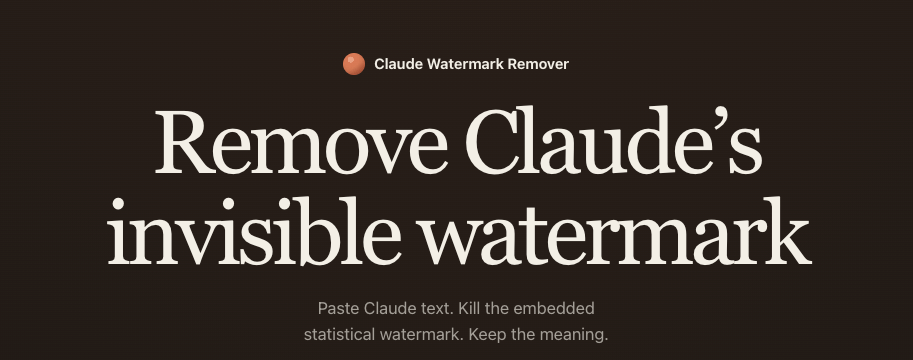
A new online tool, “Claude Watermark Remover”, has emerged just days after Anthropic introduced an invisible watermarking system for newer Claude models, highlighting a rapidly developing contest between AI transparency measures and tools designed to circumvent them.
The website, claudewatermarkremover.app, allows users to paste Claude-generated text and receive a re-written version designed to break the statistical signature embedded in the original output.
According to the site, the process uses a non-Claude model to substantially alter wording and sentence structure while attempting to preserve the original meaning. The service is advertised as free and requires no registration.
If you have a Roku television or streaming device, you can now stumble across something that would have sounded rather strange just a few years ago: a 24-hour television channel whose programming is made with artificial intelligence (AI).
It is called Fairground AI Creator TV, and its arrival may be less important for the individual channel than for what it says about where television could be heading.
The channel was launched in August 2026 by Fairground Entertainment, a company founded in 2025 by streaming entrepreneur Colin Petrie-Norris. Fairground says the channel is the first free ad-supported streaming television (FAST) channel devoted exclusively to AI-generated content. It is available on Roku and is being distributed across more than one connected-TV and FAST platform.
But there is an important qualification to the phrase “first ever.”
Is it really the first AI television channel?
Not exactly, at least not if the claim is interpreted broadly.
There have already been AI-generated television experiments and AI presenters. For example, a Pakistani television channel called Discover Pakistan launched what academic researchers described in 2024 as the world’s first AI talk show, featuring an AI clone of the channel’s CEO alongside other AI characters.
Finding a security vulnerability in a large codebase is a bit like searching for a leaking pipe inside a skyscraper. You know water is escaping somewhere, but figuring out which floor, which room, and which pipe is the real challenge.
The company has introduced Antares, a family of security small language models (SLMs) designed specifically for vulnerability localization. Instead of writing code or generating patches, these open-weight models focus on one important job. They help developers identify where a known security flaw is likely hiding inside a software repository.
That distinction matters.
(BTW: An open weight model is an AI model whose trained parameters (weights) are publicly available, allowing organizations to run, inspect, and often fine tune it on their own infrastructure without having to build the model from scratch.)
Many organizations today rely on large general purpose AI models for coding assistance. While they are powerful, they can also be expensive to run and often require sending sensitive source code to cloud services.
Antares takes a different approach. It is a smaller, specialized model that can run locally, keeping proprietary code inside an organization’s own environment while significantly reducing compute costs.
Think of it this way. If a Swiss Army knife can do twenty different jobs reasonably well, Cisco’s Antares model is a precision screwdriver built for one task. It may not do everything, but it performs its intended job with remarkable efficiency.
The Implications
For businesses, this could mean faster security reviews, lower AI infrastructure costs, and fewer delays when responding to newly disclosed vulnerabilities. Security teams no longer have to sift through thousands of files manually before deciding where to focus their attention. The AI helps narrow the search, allowing human experts to spend their time verifying and fixing issues instead of hunting for them.
Developers also benefit. Because the models are open weight, organizations can inspect, fine tune, and integrate them into their own development pipelines. That flexibility makes them attractive for enterprises that want greater control over their AI tools instead of relying entirely on closed commercial services.
The two models—Antares-350M and Antares-1B—as open-weight models now available to the broader community on Hugging Face.
Cisco’s announcement reflects a broader trend in enterprise AI. Bigger is not always better. Sometimes the smartest solution is a smaller model that excels at one critical task. In cybersecurity, where speed, privacy, and cost all matter, that focused approach may prove more valuable than another all purpose AI assistant.
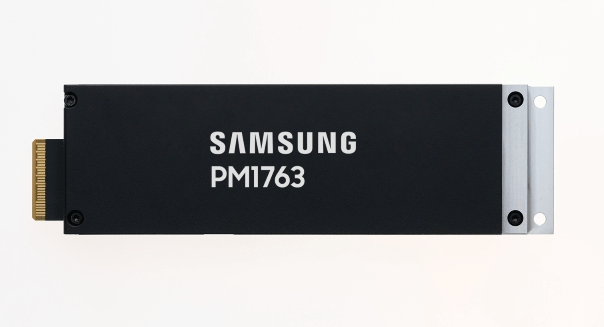
Samsung just began mass production of an enterprise SSD purpose-built for artificial intelligence (AI) and high-performance computing (HPC) servers.
Read against the backdrop of 2026’s brutal memory shortage, it’s tempting to ask: does this bring costs down? The honest answer is not directly, not soon. But it does hint at how relief eventually arrives.
(An SSD (Solid State Drive) is a data storage device that uses flash memory chips to store data, instead of spinning magnetic disks like older hard drives (HDDs).
No moving parts — data is stored electronically on NAND flash chips, so there’s nothing physically spinning or moving to read/write data.)
What Samsung Actually Shipped
The PM1763 is built on 9th-generation V-NAND and a new 4nm controller, available in 4TB, 8TB, and 16TB capacities.
The flagship 16TB drive hits sequential read/write speeds of 28,400/21,900 MB/s, over double its predecessor, the PM1753. And it’s fast enough to move a 40GB language model in about 1.4 seconds.
Where consumption of electricity is concerned, the new SSD’s power efficiency improves by more than 1.8x, and it’s designed for liquid-cooled, direct-to-chip server racks, with post-quantum cryptography baked in for security-conscious deployments.
In short: it’s a performance and efficiency play, not a supply play. It doesn’t add wafer capacity or NAND bits to a starved market.
2026 has been defined by what analysts are calling a “structural” — not cyclical — memory shortage.
Manufacturers have been reallocating fab capacity away from conventional NAND and DRAM toward high-margin, AI-driven products like HBM and high-capacity enterprise SSDs, since a single AI server rack can demand over 1,000TB of NAND.
It is this reallocation, not a lack of manufacturing, that is driving contract prices up. TrendForce and IDC both expect meaningful new fab capacity — the kind that would actually ease scarcity — no earlier than late 2026, with real relief likely 2027-2028.
Where A Chip Like This Actually Helps
Doing more with less is the real short-term win here, not making more chips.
If the PM1763 lets a data center handle the same amount of AI work using fewer drives, thanks to better speed and nearly double the power efficiency, that means buying fewer SSDs for the same job, and spending less on power and cooling per server rack.
For a data center operator, that can offset, not reverse, rising per-unit NAND prices. It’s a way of doing more with the same starved allocation of chips, rather than a way of making more chips available.
There’s also a signaling effect. Samsung, SK Hynix, and Micron are all funneling R&D toward exactly this segment — high-capacity, high-margin enterprise storage — because that’s where hyperscaler demand and pricing power both sit.
Bottom line for the community
Don’t expect AI infrastructure costs to fall because of this launch. Expect them to keep climbing through 2026, with a slower rate of increase for operators using the newest, most efficient hardware. Expect real price relief only once new fab capacity actually comes online, not before.
Adobe and LinkedIn have unveiled a global AI training initiative designed specifically for marketing professionals, signaling a growing push to address the widening AI skills gap within the industry.
Announced at Cannes Lions 2026, the program introduces four role-based learning paths tailored to marketers working in digital marketing, content and creative, social and communications, and data and analytics.
The courses will be available in 47 languages and offered free for the first 12 months through LinkedIn Learning, the LinkedIn feed, and Adobe Experience League.
Addressing Growing Skills Gap
The initiative comes as demand for AI expertise in marketing accelerates. According to LinkedIn Economic Graph data shared as part of the announcement, marketing job postings requiring AI literacy have increased by 113% year over year. Despite this growth, only 4% of marketers globally have added AI skills to their LinkedIn profiles, compared with 12% in engineering and product management roles.
For digital marketers, these figures highlight a pressing challenge. As AI becomes embedded across campaign planning, audience targeting, content production, and analytics, professionals who fail to develop AI competencies risk falling behind evolving industry expectations.
Role-specific Learning
Unlike broad AI literacy programs aimed at general business audiences, Adobe and LinkedIn are positioning this initiative as practical training built around marketers’ daily workflows.
The curriculum focuses on use cases such as AI-powered content creation, campaign optimization, audience segmentation, and integrating data into agentic workflows. The companies said the courses were developed using workforce insights from LinkedIn’s Economic Graph and designed to align with how marketers actually work.
The emphasis on short-form learning is also notable. Rather than requiring lengthy certification programs, the courses are structured around bite-sized modules intended to fit into busy schedules.
According to Adobe, the program will evolve continuously with updated content throughout the year to keep pace with rapid changes in AI technologies and marketing applications. Participants who complete the courses will earn LinkedIn Learning certificates that can be displayed on their professional profiles. Adobe will also provide free product trials to support hands-on learning experiences.
Why It Matters
The Adobe and LinkedIn partnership highlights a maturation of AI adoption in marketing. Early conversations focused heavily on the technology itself. The focus is now shifting toward workforce readiness and practical implementation.
As AI reshapes content creation, campaign management, and data-driven decision making, marketers who invest in upskilling may be better positioned to lead transformation efforts within their organizations.
The initiative suggests that AI literacy is rapidly becoming a core marketing competency rather than a specialist skill. For digital marketers navigating an increasingly automated landscape, the message is clear: developing AI expertise is no longer optional. It is becoming a requirement for long-term career growth and organizational success.
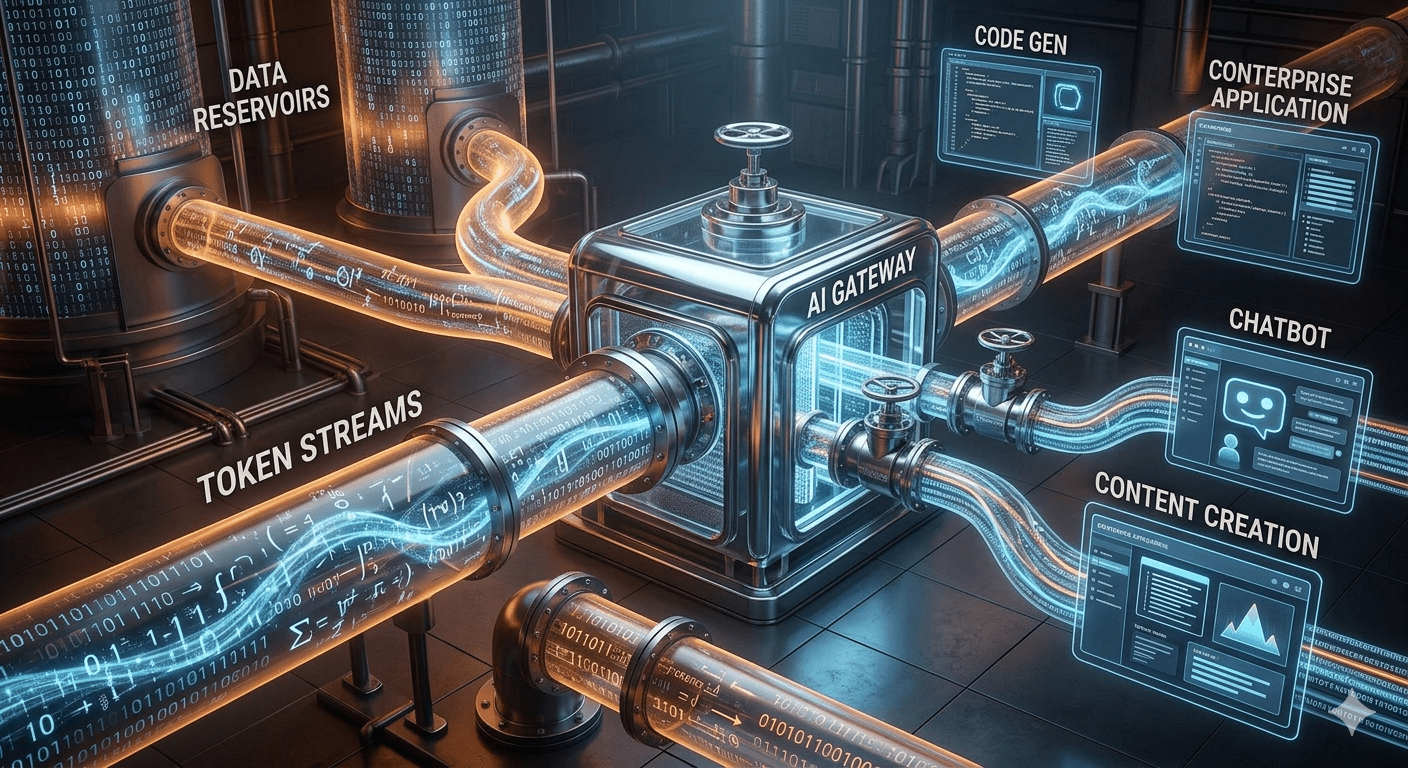
For years, the tech industry declared that “data is the new oil.” But in the age of generative AI, a new thesis is emerging: tokens, not data, is becoming the fundamental unit of value.
Every AI interaction, from generating code to drafting reports, is measured and monetized through tokens. They represent not just text processing, but the consumption of intelligence itself. As enterprises integrate AI deeper into their operations, token management is evolving from a technical consideration into a strategic business priority.
This shift reframes how we think about the AI economy. Competitive advantage may no longer depend solely on proprietary datasets, but on how efficiently organizations generate, allocate, and optimize token usage. Just as oil powered the industrial era, tokens could underpin the economics of the AI era.
The companies that master token efficiency today may become tomorrow’s AI leaders.