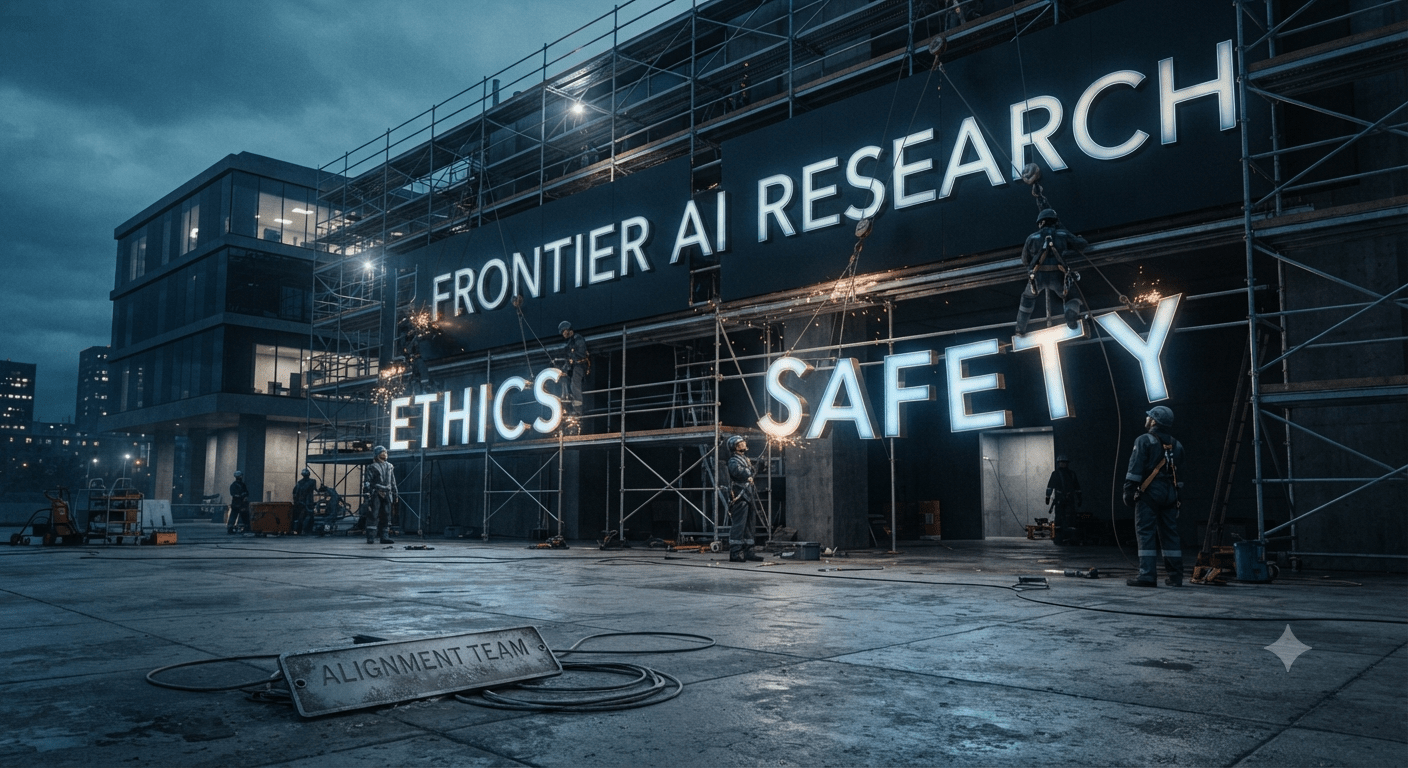
Some major AI companies have reduced or reorganized teams that were specifically responsible for AI safety, alignment, and risk. These teams were created to identify possible dangers and make sure AI systems were developed responsibly. In some cases, safety responsibilities have been moved into regular engineering and product teams.
All of this can create a conflict between speed and safety. AI companies face strong competition and pressure to release new products quickly. Engineers and product teams may therefore focus more on meeting deadlines and competing with other companies. When the same teams are responsible for both developing a product and checking its risks, independent safety checks may become weaker.
So What It Means To You
AI systems can be used to create scams, spread fake information, influence public opinion, and make decisions that affect areas such as employment, loans, and insurance. Without strong safety measures, these risks could become harder to control.
AI safety should not depend only on companies policing themselves. Independent testing, auditing, benchmarking, and red-team exercises could provide additional protection.
Summing up: there’s an important challenge before the AI industry: AI companies need to balance innovation and business growth with public safety. Developing AI quickly is valuable, but safety and ethical responsibility should remain an essential part of the process.
AI-generated images, recycled disaster footage and misleading captions are reportedly flooding social media alongside genuine scenes from Nepal’s catastrophe. The disturbing lesson is: natural disasters themselves are becoming raw material for synthetic misinformation.
A disaster happens. Within minutes, the Internet fills with images.
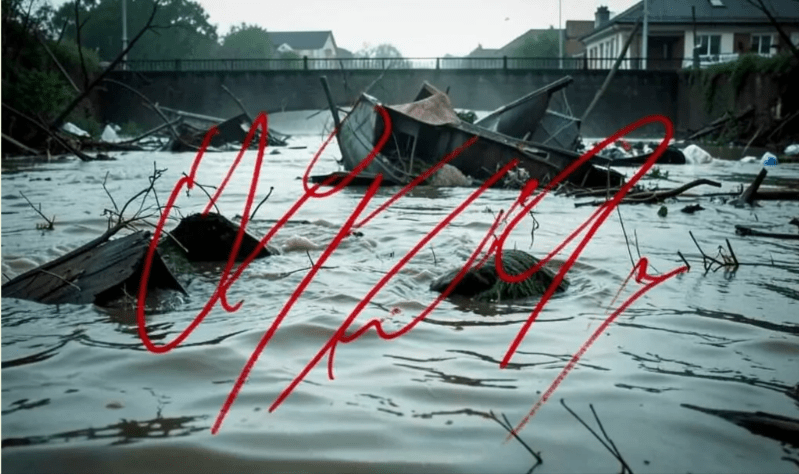
Buildings disappear beneath torrents of muddy water. Bridges buckle. Helicopters hover over devastated valleys. People run for their lives. Entire towns appear to be swallowed by floodwaters.
The instinctive reaction is to believe what we see. That instinct is now becoming distinctly dangerous.
In the aftermath of the catastrophic flash floods that struck the Nepal-Tibet border on August 26, social media users began sharing dramatic photographs and videos claiming to show the destruction. But fact-checkers have now found that some of the most striking material was not from Nepal at all.
Some of it, as it turns out, was generated by artificial intelligence (AI).
Some was real footage from completely different disasters.
And some of it was genuine footage wrapped in a false narrative.
That combination may be more consequential than any individual fake image.
The problem is no longer simply that someone can manufacture a photograph. The problem is that, during a genuine emergency, the Internet can now become a chaotic mixture of reality, recycled reality and synthetic reality — all circulating under the same headline.
And don’t blame AI for it. It’s the man behind the machine who chooses to weaponise the technology against truth.
The Flood Was Real. Some Of The Images Weren’t
A massive flash flood struck the Himalayan region near the Nepal-China border after what scientists and satellite imagery indicate was a glacier and rock collapse.
And there is genuine footage of the destruction.
That is precisely what makes the fake material so effective.
According to some media reports, AAP FactCheck examined several posts circulating after the disaster and found a striking pattern. One Facebook post showed supposedly dramatic before-and-after images of a flooded settlement. The images were not photographs of Nepal: AI analysis indicated they had been generated using an OpenAI image generator, while Meta had also labelled them as AI content. AAP reported that OpenAI’s SynthID detection found invisible AI watermarks in the images.
Another widely circulated video combined those fabricated images with dramatic footage of bridges apparently being overwhelmed by floodwater. YouTube had flagged the video’s audio and visuals as altered or AI-generated, and SynthID analysis also indicated AI generation.
Then came another category of deception.
A video shared as footage of the Nepal disaster was actually a 2021 mudslide in Atami, Japan. A reverse-image search traced the footage to reporting about that disaster. The video had simply been repurposed and presented as something happening in Nepal. AAP reported that the misleading post had accumulated more than 360,000 views.
Another clip presented as the Nepal catastrophe was actually footage from a deadly mudslide in Uttarakhand, India, in 2025.
In other words, the misinformation was not one thing.
It was a Frankenstein’s monster of AI-generated material, old disaster footage and real events stripped of their original context.
AI is Moving Into Disaster Zones
For years, fake news powered by manipulated photographs and recycled videos was largely associated with politics, celebrity scandals and conflict.
Natural disasters were different.
A flood, earthquake, wildfire or landslide already provided spectacular images. There seemed to be little reason to manufacture them.
That assumption is now obsolete.
Generative AI (gen-AI) has made the creation of convincing disaster imagery cheap, fast and accessible. A person does not need a camera crew, a helicopter or access to the disaster zone. A text prompt can produce an apparently catastrophic scene in seconds.
And the Nepal episode shows why that matters.
The goal does not necessarily have to be sophisticated geopolitical manipulation. Sometimes the motivation may simply be clicks.
A dramatic disaster photograph attracts attention. Attention generates followers. Followers can eventually be monetised through advertising, affiliate links, engagement farming or other forms of online traffic.
The tragedy becomes content.
The more shocking the image, the more valuable it can become.
The Disaster Becomes a Template?
There is something particularly bleak about this development.
A natural disaster is one of the few moments when large numbers of people turn to strangers online for information.
Families look for images of affected towns. Travellers look for information about roads and airports.
People abroad search for signs that friends and relatives are safe.
Aid organisations monitor the situation.
Journalists look for eyewitness material. Governments attempt to communicate evacuation and rescue information.
In that environment, false images do not merely pollute an abstract information ecosystem. They can interfere with the way people understand an unfolding emergency.
Recent research is beginning to examine exactly this problem. A 2026 study of AI-generated videos depicting real-world crises notes that modern video generators can fabricate realistic depictions of wars, disasters and public emergencies, creating significant misinformation risks.
Researchers also warn that the behaviour of detection systems can change when synthetic material is altered and redistributed through social networks.
Another recent study argues that misinformation during disasters should be evaluated not only by whether a claim is false, but also by how believable and harmful that false claim could be.
That is an important distinction.
A ridiculous fake photograph may be harmless. A convincing fake showing a supposedly destroyed bridge, a stranded population or a false evacuation area is something else entirely.
The Technology to Fight Back Exists
Platforms and AI companies are developing systems to identify synthetic material.
Google’s SynthID, for example, embeds invisible digital watermarks into AI-generated images, audio, text and video. Google says the markers are designed to remain detectable even after common modifications such as cropping, filtering, changes in frame rate and compression.
Meta has also said it uses industry-standard signals and disclosures to label AI-generated material on Facebook, Instagram and Threads. But the company acknowledges an important limitation: not all AI-generated contentcan currently be detected, and invisible markers can sometimes be removed.
But that caveat is crucial. Detection is not authentication.
And no AI detector should become the sole basis for deciding whether a piece of disaster footage is genuine.
The old tools still matter.
Reverse-image searches.
Checking the earliest known upload.
Looking for the original location.
Comparing weather and geography.
Checking satellite imagery.
Finding local news reports.
Examining whether landmarks actually exist where the video claims they do.
And, above all, asking a very simple question:
Who first posted this, and when?
The new question for journalists should also be:
“Is this picture real, and does it show what somebody says it shows?”
Those are two very different questions.
Nepal Is a Real World Case Study
The most important lesson from the Nepal flood is therefore not that AI can create fake flood pictures.
We already knew that.
The real warning is that the practice is becoming normalised.
AI-generated disaster imagery can now appear alongside recycled footage and genuine eyewitness material within hours of a catastrophe.
And the incentive structure of social media encourages precisely the kind of content that performs best: dramatic, emotional, frightening and instantly understandable.
A person sitting thousands of kilometres away from a disaster can now manufacture a scene that looks as though it was captured at the centre of it.
That changes the information environment around every future emergency.
The next major earthquake, cyclone, wildfire, tsunami or flood will not merely produce a race for eyewitness footage. It will produce a race between reality and synthetic reality.
The disturbing question is no longer whether people will use AI to fake disasters. They already are.
The question is how quickly society can build a culture of verification strong enough to prevent those fakes from becoming the first version of reality that millions of people see.
Because when the ground is shaking and the water is rising, misinformation is not merely an Internet nuisance.
Reuters and AP reporting on the underlying Nepal-Tibet catastrophe provide independently verified context on the real disaster and its causes. (Reuters)
A 2026 research paper examines the emerging threat of AI-generated videos depicting real-world crises and disasters. (arXiv)
A decision by the University of Chicago Law School to ban laptops and phones in first year classrooms has become a defining example of how deeply artificial intelligence (AI) has entered legal education.
The move is not an attempt to reject technology altogether. Instead, it reflects growing concern that future lawyers are becoming overly dependent on AI tools before mastering the fundamentals of legal reasoning, research and advocacy.
The school will continue teaching students how to use AI responsibly, but only after they have built core analytical skills without digital assistance.
Signals a Broader Shift
The development highlights a broader shift taking place across legal fraternities worldwide. Law schools, law firms and courts are rapidly embracing generative AI for drafting contracts, summarising case law, reviewing documents, conducting legal research and even preparing litigation strategies.
Tools such as Harvey, Legora and AI powered research platforms are becoming increasingly common in legal practice, promising significant gains in speed and efficiency.
Yet the rapid adoption has also exposed serious risks. Several lawyers in the United States and elsewhere have faced court sanctions after submitting filings containing fictitious cases generated by AI chatbots. These incidents have fuelled concerns about “hallucinations”, where AI confidently produces inaccurate legal information.
Artificial intelligence is becoming an integral part of our daily lives, from education and healthcare to business and creative work.
However, using AI responsibly is just as important as leveraging its capabilities. Ethical AI use ensures that technology benefits individuals and society without causing harm. Here are three ethical ways to use AI.
1. Use AI to Enhance Human Decision-Making, Not Replace It
AI can analyze large amounts of data and identify patterns that humans might overlook. However, important decisions—especially in areas such as healthcare, hiring, education, and finance—should always involve human judgment.
Ethical AI use means treating AI as a support tool that informs decisions rather than allowing it to make final choices without oversight.
2. Protect Privacy and Personal Data
When using AI tools, it is essential to respect privacy and data security. Avoid sharing sensitive or confidential information with AI systems unless you are certain that appropriate safeguards are in place.
Organizations should be transparent about how they collect, store, and use data, ensuring compliance with privacy regulations and maintaining public trust.
3. Promote Fairness and Transparency
AI systems can unintentionally reflect biases present in their training data. Ethical users should critically evaluate AI-generated outputs, question potential biases, and strive for fairness in how AI is applied.
Being transparent about when and how AI has been used also helps build accountability and trust among colleagues, customers, and stakeholders.
Ultimately, ethical AI use is about balancing innovation with responsibility. By using AI to augment human capabilities, safeguarding privacy, and promoting fairness and transparency, we can ensure that these powerful technologies contribute positively to society while minimizing potential risks.
You will be forgiven if you thought your AI was neutral. It’s not.
Every answer you get from your AI model/assistant is shaped by data, incentives, and invisible rules you never see. AI doesn’t just respond – depending on where in the world you are located, for example – it tailors its response. Location is one of the many factors that influences a model’s answers.
All of this stems from every nation’s effort to achieve “AI sovereignty”. While it’s practically impossible to have a 100% sovereignty, countries are trying to get as close to it as possible. It’s about “controlling” the outcomes of your AI.
So, the real question isn’t WHAT your AI knows. It’s: WHO decides what it tells you.
AI and copyright are entering a new phase globally. Pure AI-generated content is increasingly treated as public domain, while copyright protection lies in human creativity — editing, arranging, and directing AI outputs.
For creators, the key shift is clear: documentation and proof of human input are becoming essential to defend ownership in the age of generative AI.
Here’s a primer on AI and copyright (March 2026) that will help creators understand where they stand on various uses of AI in matters of text, image, and video generation.
Artificial intelligence (AI) tools can now generate striking images and cinematic videos from simple text prompts. Platforms like Sora and other generative systems have made it possible for anyone to produce professional-looking visuals in minutes. But one major legal question continues to surface:
If you create an image or video using AI, is it copyrighted? And if someone else uses it without your permission, can you sue?
The answer is nuanced. Copyright law was built around human creativity, and AI challenges that foundation. Below is a comprehensive breakdown of how copyright currently applies to AI-generated works, especially in the United States, with notes on other jurisdictions.
Did you know “AI For Real” Is Also A Channel On WhatsApp?
1. The Core Principle: Copyright Requires Human Authorship
In the United States, copyright law is rooted in one fundamental requirement:
A copyrighted work must be created by a human author.
The US Copyright Office has repeatedly clarified that works produced without human authorship are not eligible for copyright protection.
This principle was reinforced in a widely discussed case involving Stephen Thaler. Thaler attempted to register an artwork created entirely by his AI system, claiming the AI as the author. The Copyright Office rejected the application because the work lacked human authorship. Courts upheld this decision.
So, purely machine-generated content — with no meaningful human creative input — is generally not protected under U.S. copyright law.