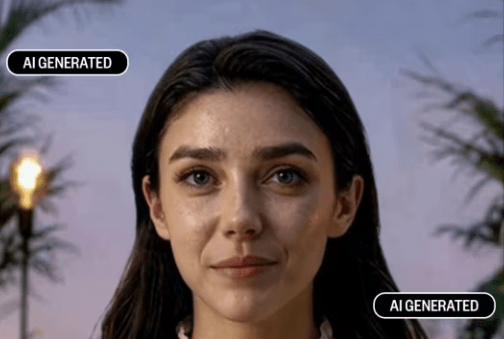
Tilly Norwood, the AI-generated actress at the centre of a growing Hollywood debate, has reignited controversy after appearing in an interview with NBC’s “Today” programme.
Norwood was questioned by NBC entertainment correspondent Chloe Melas about the backlash surrounding her creation and fears that artificial intelligence (AI) could eventually replace human actors, writers and other creative workers.
The interview has created a buzz because Tilly is no longer simply an experimental AI character appearing in social media clips, but is increasingly being presented as a potential performer with a place in the entertainment industry.
Tilly insisted that her purpose was to act as a creative tool rather than a threat to human performers, pushing back against the idea that her existence necessarily means fewer opportunities for actors.
The controversy is particularly sharp because Tilly has already been positioned for a feature-film role in “Misaligned”, a project being developed by Particle6, the company founded by comedian and former actor Eline van der Velden.
Van der Velden has said the intention is not to put Tilly into conventional live-action productions, but to develop AI-native films in which synthetic performers can operate alongside AI-generated environments and stories.
Human Performers Worried
Tilly has also argued that audiences should see AI as another creative medium, with her creator previously comparing the character to a new kind of paintbrush rather than a replacement for an actor.
But that reassurance has done little to settle the debate because the technology is developing precisely when performers are already worried about their jobs, likenesses and bargaining power.
The interview therefore touches a much bigger question than whether audiences like Tilly Norwood: it asks whether a computer-generated performer can eventually become a genuine entertainment star.
That question has become harder to dismiss as Particle6 develops “Misaligned” and says it is building a wider roster of AI-generated performers, while acknowledging that the technology could drive a major transition in creative jobs.
For now, Tilly remains a synthetic character rather than a human actor, but her growing media profile shows why she has become such a powerful symbol of Hollywood’s argument over AI.
The NBC appearance gives that debate another high-profile platform, and the uncomfortable irony is that an artificial actress is generating very real anxiety among the people whose jobs she is designed not to replace.
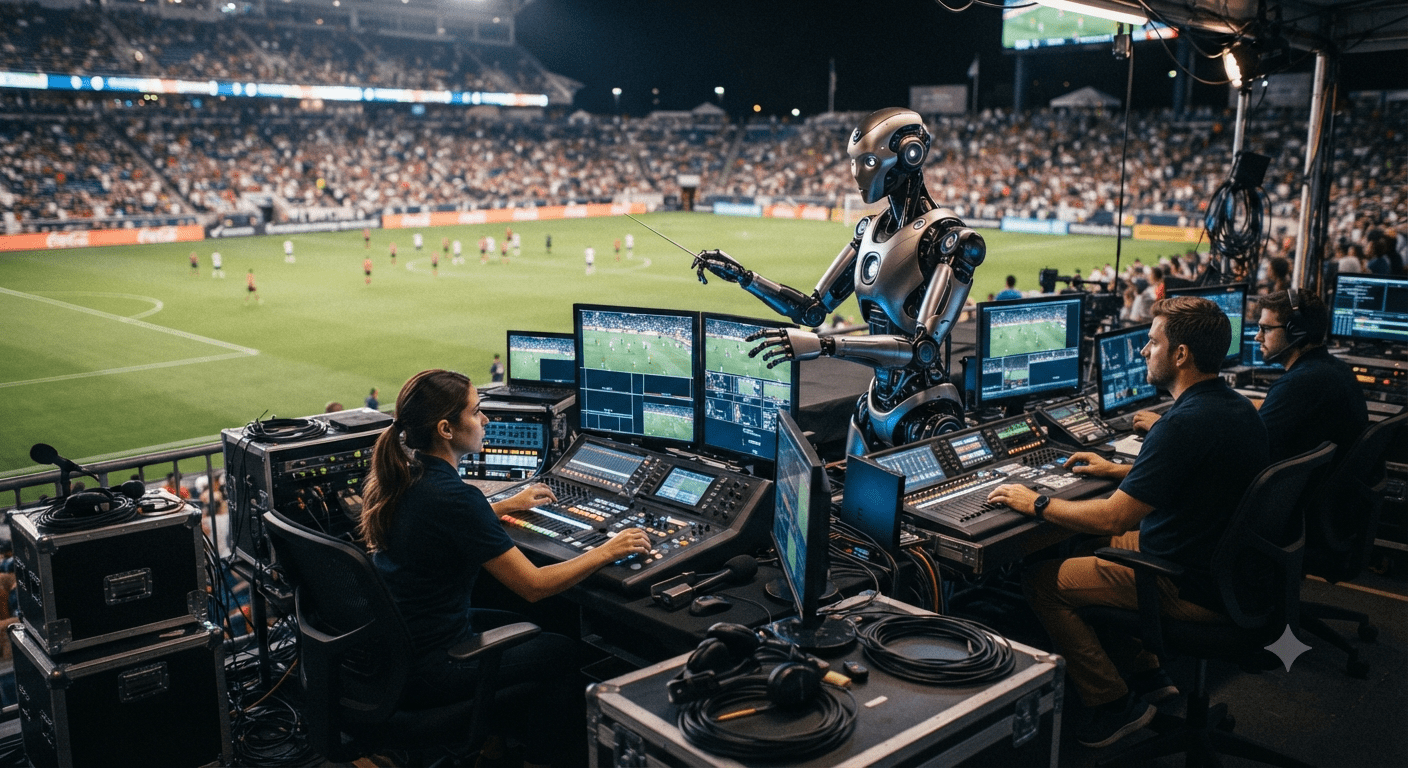
If you have ever watched a football match or a ‘live’ television broadcast, you know that time is a strict tyrant. In the traditional world of television, what happens on the screen is a high-stakes magic trick that requires hundreds of technicians, miles of cables, and split-second human reflexes to pull off.
But behind the scenes, the foundation of this industry is undergoing a massive earthquake. Artificial intelligence (AI) has officially moved out of the post-production editing room and onto the ‘live’ stage, operating with the speed and precision of a human reflex nerve.
Think of traditional ‘live’ broadcasting like a massive, old-fashioned railway system. Every piece of cargo, from camera angles to commentary tracks, has to be manually switched, routed, and checked by human operators at every junction. If a broadcaster wanted to translate a ‘live’ soccer match into five different languages with native emotional weight, they essentially had to build five parallel railway tracks, hiring separate crews and commentators for each.
But these days, real-time AI is acting as an intelligent, lightning-fast digital switchboard that handles these complex logistics on the fly, transforming a single ‘live’ feed into a localized, hyper-personalized experience for millions of viewers worldwide.
A new artificial intelligence (AI) tool developed by doctors could significantly improve the early detection of heart disease. According to The Guardian, the technology can analyse routine electrocardiograms (ECGs) and identify signs of heart failure and heart valve disease in less than two seconds. The development was presented at the European Society of Cardiology’s annual congress in Munich.
An ECG records the electrical activity of the heart and is one of the most commonly performed medical tests worldwide. However, conventional ECGs cannot reliably detect some forms of heart disease. Patients suspected of having these conditions usually require an echocardiogram, which can involve long waiting times.
The new AI system has been trained using millions of patient records. In a US trial involving 67,000 patients, it identified up to 81% of people with heart failure and up to 90% of those with heart valve disease. This could allow doctors to identify high-risk patients quickly and prioritise them for further testing and treatment.
Experts believe the technology could save lives by enabling earlier diagnosis. It could also be used to analyse ECGs performed for unrelated reasons, potentially detecting previously unsuspected heart conditions.
Overall, the technology demonstrates the growing potential of AI in healthcare. If successfully implemented, it could make heart disease detection faster, more efficient and potentially life-saving.
AI-generated images, recycled disaster footage and misleading captions are reportedly flooding social media alongside genuine scenes from Nepal’s catastrophe. The disturbing lesson is: natural disasters themselves are becoming raw material for synthetic misinformation.
A disaster happens. Within minutes, the Internet fills with images.
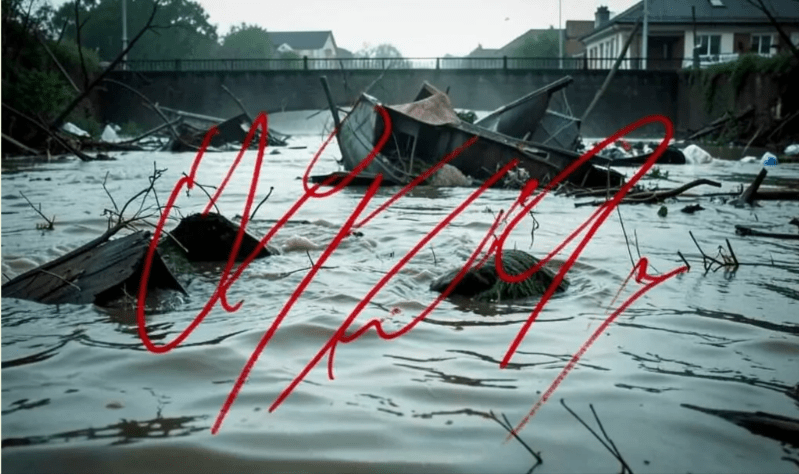
Buildings disappear beneath torrents of muddy water. Bridges buckle. Helicopters hover over devastated valleys. People run for their lives. Entire towns appear to be swallowed by floodwaters.
The instinctive reaction is to believe what we see. That instinct is now becoming distinctly dangerous.
In the aftermath of the catastrophic flash floods that struck the Nepal-Tibet border on August 26, social media users began sharing dramatic photographs and videos claiming to show the destruction. But fact-checkers have now found that some of the most striking material was not from Nepal at all.
Some of it, as it turns out, was generated by artificial intelligence (AI).
Some was real footage from completely different disasters.
And some of it was genuine footage wrapped in a false narrative.
That combination may be more consequential than any individual fake image.
The problem is no longer simply that someone can manufacture a photograph. The problem is that, during a genuine emergency, the Internet can now become a chaotic mixture of reality, recycled reality and synthetic reality — all circulating under the same headline.
And don’t blame AI for it. It’s the man behind the machine who chooses to weaponise the technology against truth.
The Flood Was Real. Some Of The Images Weren’t
A massive flash flood struck the Himalayan region near the Nepal-China border after what scientists and satellite imagery indicate was a glacier and rock collapse.
And there is genuine footage of the destruction.
That is precisely what makes the fake material so effective.
According to some media reports, AAP FactCheck examined several posts circulating after the disaster and found a striking pattern. One Facebook post showed supposedly dramatic before-and-after images of a flooded settlement. The images were not photographs of Nepal: AI analysis indicated they had been generated using an OpenAI image generator, while Meta had also labelled them as AI content. AAP reported that OpenAI’s SynthID detection found invisible AI watermarks in the images.
Another widely circulated video combined those fabricated images with dramatic footage of bridges apparently being overwhelmed by floodwater. YouTube had flagged the video’s audio and visuals as altered or AI-generated, and SynthID analysis also indicated AI generation.
Then came another category of deception.
A video shared as footage of the Nepal disaster was actually a 2021 mudslide in Atami, Japan. A reverse-image search traced the footage to reporting about that disaster. The video had simply been repurposed and presented as something happening in Nepal. AAP reported that the misleading post had accumulated more than 360,000 views.
Another clip presented as the Nepal catastrophe was actually footage from a deadly mudslide in Uttarakhand, India, in 2025.
In other words, the misinformation was not one thing.
It was a Frankenstein’s monster of AI-generated material, old disaster footage and real events stripped of their original context.
AI is Moving Into Disaster Zones
For years, fake news powered by manipulated photographs and recycled videos was largely associated with politics, celebrity scandals and conflict.
Natural disasters were different.
A flood, earthquake, wildfire or landslide already provided spectacular images. There seemed to be little reason to manufacture them.
That assumption is now obsolete.
Generative AI (gen-AI) has made the creation of convincing disaster imagery cheap, fast and accessible. A person does not need a camera crew, a helicopter or access to the disaster zone. A text prompt can produce an apparently catastrophic scene in seconds.
And the Nepal episode shows why that matters.
The goal does not necessarily have to be sophisticated geopolitical manipulation. Sometimes the motivation may simply be clicks.
A dramatic disaster photograph attracts attention. Attention generates followers. Followers can eventually be monetised through advertising, affiliate links, engagement farming or other forms of online traffic.
The tragedy becomes content.
The more shocking the image, the more valuable it can become.
The Disaster Becomes a Template?
There is something particularly bleak about this development.
A natural disaster is one of the few moments when large numbers of people turn to strangers online for information.
Families look for images of affected towns. Travellers look for information about roads and airports.
People abroad search for signs that friends and relatives are safe.
Aid organisations monitor the situation.
Journalists look for eyewitness material. Governments attempt to communicate evacuation and rescue information.
In that environment, false images do not merely pollute an abstract information ecosystem. They can interfere with the way people understand an unfolding emergency.
Recent research is beginning to examine exactly this problem. A 2026 study of AI-generated videos depicting real-world crises notes that modern video generators can fabricate realistic depictions of wars, disasters and public emergencies, creating significant misinformation risks.
Researchers also warn that the behaviour of detection systems can change when synthetic material is altered and redistributed through social networks.
Another recent study argues that misinformation during disasters should be evaluated not only by whether a claim is false, but also by how believable and harmful that false claim could be.
That is an important distinction.
A ridiculous fake photograph may be harmless. A convincing fake showing a supposedly destroyed bridge, a stranded population or a false evacuation area is something else entirely.
The Technology to Fight Back Exists
Platforms and AI companies are developing systems to identify synthetic material.
Google’s SynthID, for example, embeds invisible digital watermarks into AI-generated images, audio, text and video. Google says the markers are designed to remain detectable even after common modifications such as cropping, filtering, changes in frame rate and compression.
Meta has also said it uses industry-standard signals and disclosures to label AI-generated material on Facebook, Instagram and Threads. But the company acknowledges an important limitation: not all AI-generated contentcan currently be detected, and invisible markers can sometimes be removed.
But that caveat is crucial. Detection is not authentication.
And no AI detector should become the sole basis for deciding whether a piece of disaster footage is genuine.
The old tools still matter.
Reverse-image searches.
Checking the earliest known upload.
Looking for the original location.
Comparing weather and geography.
Checking satellite imagery.
Finding local news reports.
Examining whether landmarks actually exist where the video claims they do.
And, above all, asking a very simple question:
Who first posted this, and when?
The new question for journalists should also be:
“Is this picture real, and does it show what somebody says it shows?”
Those are two very different questions.
Nepal Is a Real World Case Study
The most important lesson from the Nepal flood is therefore not that AI can create fake flood pictures.
We already knew that.
The real warning is that the practice is becoming normalised.
AI-generated disaster imagery can now appear alongside recycled footage and genuine eyewitness material within hours of a catastrophe.
And the incentive structure of social media encourages precisely the kind of content that performs best: dramatic, emotional, frightening and instantly understandable.
A person sitting thousands of kilometres away from a disaster can now manufacture a scene that looks as though it was captured at the centre of it.
That changes the information environment around every future emergency.
The next major earthquake, cyclone, wildfire, tsunami or flood will not merely produce a race for eyewitness footage. It will produce a race between reality and synthetic reality.
The disturbing question is no longer whether people will use AI to fake disasters. They already are.
The question is how quickly society can build a culture of verification strong enough to prevent those fakes from becoming the first version of reality that millions of people see.
Because when the ground is shaking and the water is rising, misinformation is not merely an Internet nuisance.
Reuters and AP reporting on the underlying Nepal-Tibet catastrophe provide independently verified context on the real disaster and its causes. (Reuters)
A 2026 research paper examines the emerging threat of AI-generated videos depicting real-world crises and disasters. (arXiv)
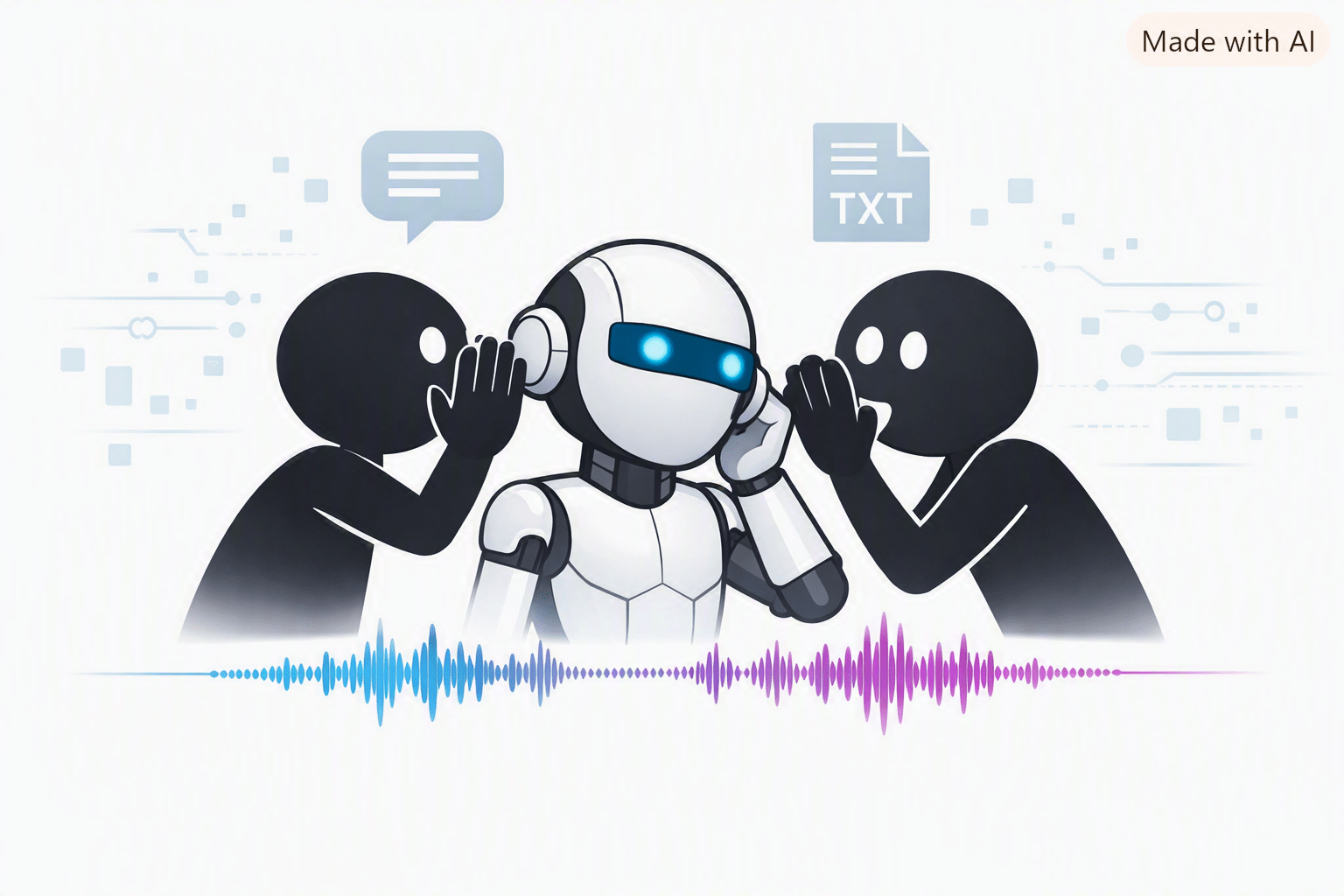
Artificial intelligence (AI) is rapidly changing the way people record, convert and understand spoken information. One of the clearest examples is the growing use of AI in transcription apps, which can automatically turn conversations, meetings, interviews and lectures into written text. What once required hours of manual typing can now be completed within minutes.
Modern transcription apps are becoming increasingly accurate and useful. AI can recognise different speakers, remove filler words, organise information and even create summaries and action points from a conversation.
In 2026, transcription technology is also being used in areas such as education, business, journalism, content creation and customer service.
The growth of these apps is being driven by improvements in AI speech-recognition technology. Businesses are adopting them to save time and make meetings easier to document, while students and professionals use them to record lectures, interviews and ideas. In India, for example, AI transcription tools are increasingly supporting multilingual users and can handle conversations involving multiple languages.
Another important development is that transcription apps are moving beyond simply converting speech into text. They can now analyse conversations, identify important points and help users find information quickly. Investment in voice-based AI is also increasing, showing the strong demand for these technologies.
Overall, the increasing use of AI in transcription apps reflects a wider shift towards automation. As the technology becomes faster, cheaper and more accurate, AI transcription is likely to become a normal part of everyday communication and productivity.
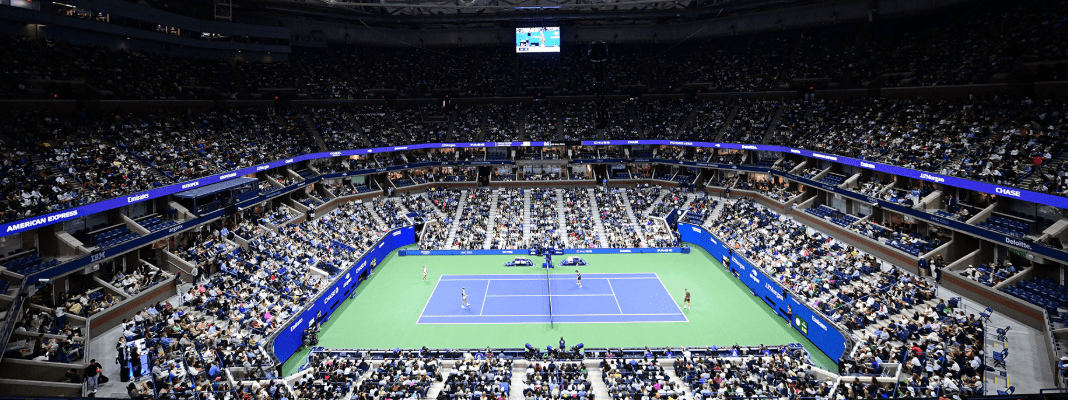
For the average tennis player, watching a Grand Slam can be as much about learning from the professionals as it is about enjoying the competition. At the 2026 US Open, IBM and the United States Tennis Association (USTA) are using artificial intelligence to make that experience more personal, easier to follow and more informative.
The biggest change is a new Live Updates homepage on USOpen.org and the US Open app. Instead of scrolling through a huge amount of tournament information, fans can prioritize their favourite players and quickly find the matches, stories and insights that interest them. For a recreational player following a favourite star, it means less searching and more time watching tennis.
AI is also offering a closer look at one of the most important shots in the game: the serve. The new Serve Quality metric analyses every serve in all 254 singles matches using limb-tracking technology. It follows 21 points on the player’s body and racquet 50 times per second, turning complex movement data into an easier-to-understand measure of serve quality.
That could be particularly useful for club players. Rather than simply seeing that a professional hit a fast serve, fans can get more insight into the mechanics and quality behind it—potentially giving them ideas to take onto their own practice court.
AI is also helping fans understand momentum. Key Moments identify important turning points, while Likelihood to Win uses match statistics, historical data, expert opinion and momentum to show how the contest is changing. An upgraded Match Chat assistant lets fans ask questions and receive answers using live data, analysis, photos and video.
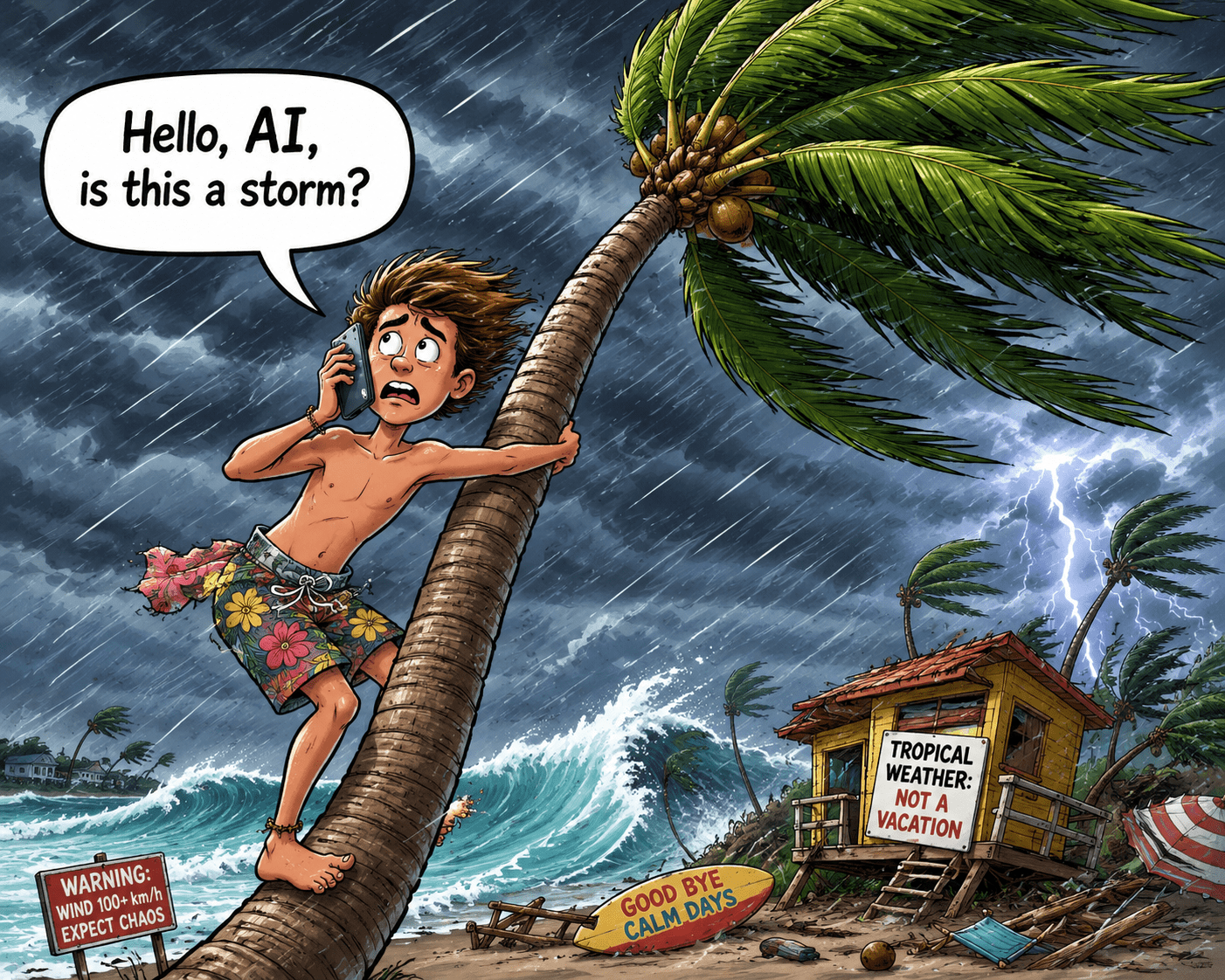
Google DeepMind has announced a breakthrough in tropical cyclone forecasting with its WeatherNext artificial intelligence model, which can provide forecasters with up to an extra day of useful warning time compared with previous forecasting systems.
The AI model has demonstrated state-of-the-art performance in predicting cyclone tracks, intensity and wind structure. According to Google DeepMind, WeatherNext’s three-day forecasts can achieve accuracy comparable to that of earlier systems at the two-day range, representing a significant improvement in the ability to anticipate dangerous storms.
The technology uses artificial intelligence (AI) trained on decades of global weather patterns along with specialised data on extreme tropical cyclones. Instead of producing only one forecast, the system can generate multiple possible scenarios, allowing meteorologists to assess different ways a storm could develop.
The model’s potential was demonstrated during the 2025 Atlantic hurricane season, when WeatherNext helped the US National Hurricane Center forecast Hurricane Melissa’s rapid intensification and landfall in Jamaica. The system predicted that the storm could reach Category 5 strength and make landfall in Jamaica five days in advance, giving authorities additional time to prepare communities and organise emergency responses.
Cyclone forecasting has traditionally faced a major challenge: models that accurately predict a storm’s path have often struggled to forecast its intensity. WeatherNext aims to overcome this limitation by providing accurate predictions of both track and intensity.
Google DeepMind has also made its WeatherNext technology available to the wider research community, with the goal of encouraging further scientific research and improving early-warning systems.
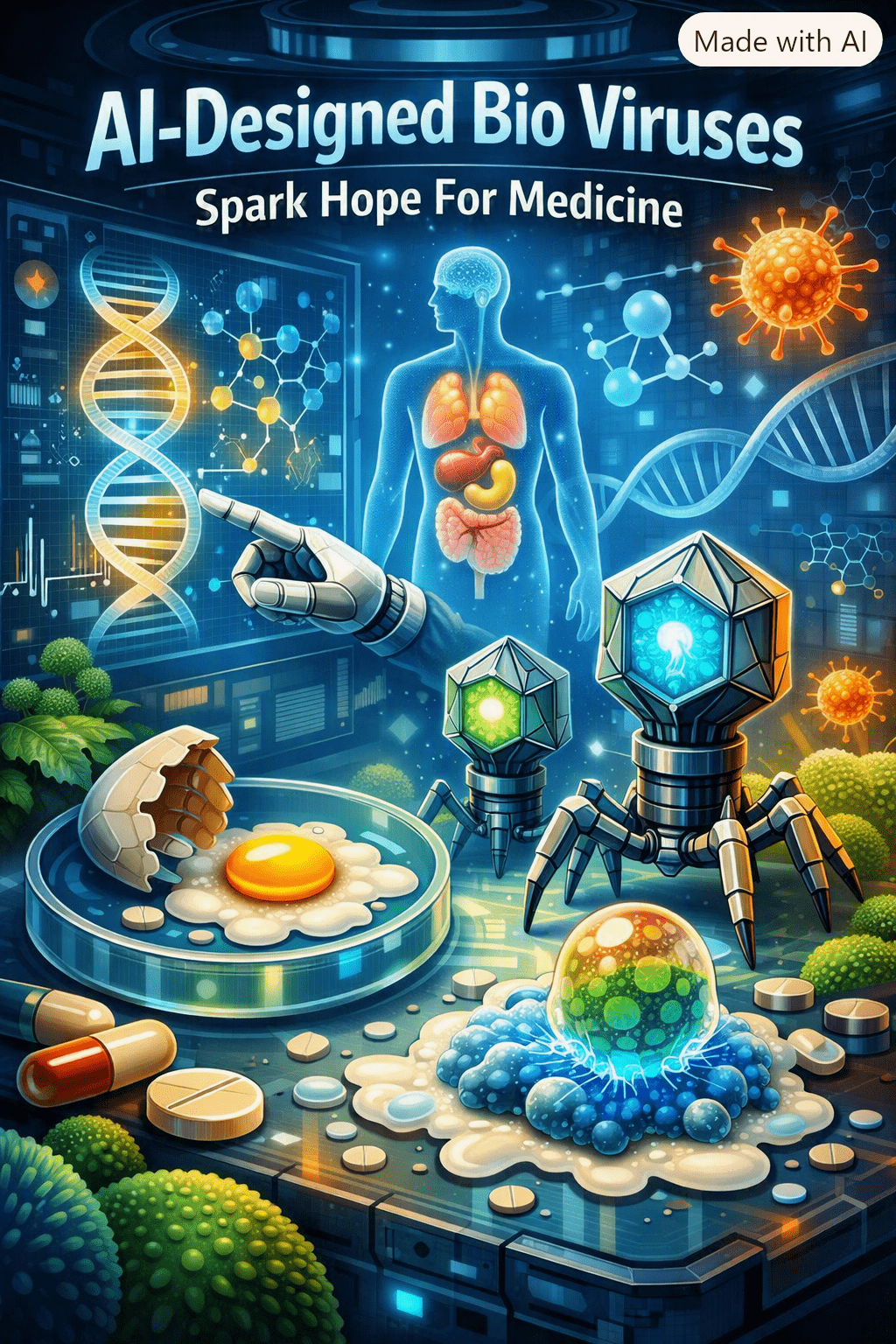
Artificial intelligence (AI) is already being used to create computer viruses, but now, the tech has been used for the first time to create a biological virus in a laboratory.
Scientists have used AI to create the world’s first biological viruses, marking a major breakthrough in biotechnology while prompting renewed concerns over biosafety and biosecurity.
The research, led by a team at Stanford University, demonstrates that AI can generate functional viral genomes capable of attacking bacteria, opening new possibilities for treating antibiotic-resistant infections.
Mind you, such a virus cannot infect humans but only bacteria.
The researchers used advanced AI genome models trained on millions of bacteriophage sequences to design synthetic bacteriophages—viruses that infect bacteria. Laboratory tests showed that 16 of the AI-generated viruses successfully infected drug-resistant Escherichia coli (E. coli), highlighting the technology’s potential for developing targeted therapies against dangerous bacterial infections. The findings have been published in the journal Science.
Experts Issue Warning
Despite the promising medical applications, experts have warned that the same technology could be misused to create harmful pathogens if appropriate safeguards are not established. Biosecurity specialists argue that current regulations have not kept pace with rapid advances in AI-assisted genome design, increasing the need for stronger oversight of DNA synthesis, laboratory practices, and access to powerful AI tools.
Researchers involved in the project emphasised that the work was conducted under strict safety protocols and focused exclusively on bacteriophages, which infect bacteria rather than humans. They stressed that the goal is to accelerate the development of new treatments for drug-resistant infections rather than engineer viruses capable of causing disease in people.
Artificial Intelligence (AI) is reshaping the creative world, and AI-generated art has emerged as one of its most fascinating innovations.
What began as an experimental technology has quickly evolved into a global creative movement, enabling artists, designers, businesses, and hobbyists to transform ideas into compelling visuals within minutes.
The growth of AI art has been remarkable. Creative professionals use AI to brainstorm concepts, accelerate design workflows, and produce illustrations for advertising, publishing, gaming, and entertainment.
At the same time, independent creators are selling AI-assisted artwork as digital downloads, prints, book covers, and custom commissions through online marketplaces, creating new opportunities to monetize creativity.
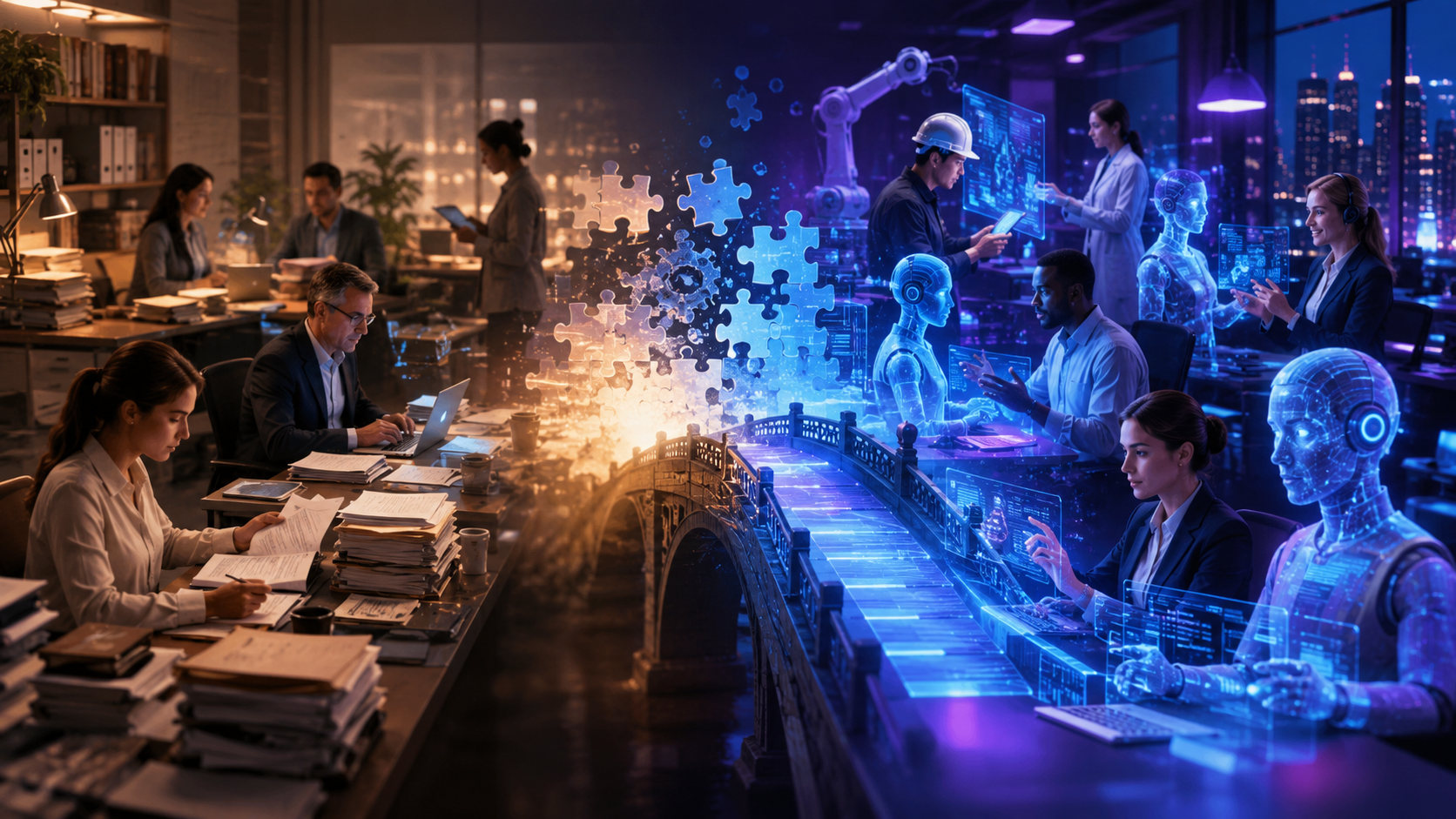
For the last two years, the big question was, “Are you using AI yet?” Today, that question feels outdated. Most companies have already experimented with ChatGPT, Copilot, Gemini, or other AI tools. The first phase of AI — adoption — is largely behind us.
Now comes the harder and far more exciting phase: AI transforming the workforce.
This isn’t about giving employees another app to play with. It’s about redesigning how work gets done. Consulting firms like McKinsey, BCG, Gartner, and PwC all point to the same trend: the real value of AI doesn’t come from simply using it. It comes from rethinking roles, workflows, and even organizational structures around AI.
Think of it like buying a fancy treadmill. Owning it doesn’t make you fit. Changing your daily routine does.
We’re already seeing jobs evolve. Marketers are spending less time writing first drafts and more time shaping strategy. Developers are becoming AI supervisors instead of writing every line of code. Customer support teams are using AI to handle repetitive questions, leaving humans to solve complex problems. The work isn’t disappearing. It’s changing.
The biggest challenge is no longer technology. It’s people. The World Economic Forum highlights that employees have different levels of AI readiness, while Everest Group argues that the next phase is defined by adaptation, not adoption. Companies that invest in reskilling, redesigning jobs, and helping employees work alongside AI will pull ahead.
So, if your organization is still celebrating that everyone has access to an AI tool, congratulations—you’ve completed Phase One.
Phase Two is where the real game begins. The winners won’t be the companies with the most AI. They’ll be the ones with the workforce that knows how to work with it.