Artificial intelligence (AI) has made it remarkably easy to create essays, articles, social-media posts, reviews and even books within seconds. But this convenience has created a new problem: How do we know whether something was actually written by a person? This is the question behind the growing popularity of “Pangram”, an AI-content detection tool.
There’s a new voice-to-text tool that’s in the market that everyone’s talking about. Well, almost everyone.
“Wispr Flow” is an AI-powered voice-to-text tool that turns spoken thoughts into clean, structured writing across your apps. Unlike basic dictation, it uses AI to clean up speech, remove filler words, add formatting and adapt to your vocabulary.
🚀 What Wispr Flow Does
Voice-to-text everywhere: Works across apps including Gmail, Slack, Notion, Google Docs, code editors and AI tools such as ChatGPT.
Smart cleanup: Removes filler words, false starts and repetitions while adding punctuation and formatting.
Fast dictation: Wispr Flow says users can dictate at up to 220 words per minute, potentially making voice input several times faster than conventional typing.
Personal vocabulary: Learns and remembers words, names and terminology that are specific to you.
Snippets & shortcuts: Create reusable text shortcuts for things such as emails, links, bios and frequently used phrases.
Multilingual: Supports 100+ languages, although performance can vary between languages.
Cross-platform: Available on Mac, Windows, iPhone and Android.
🛠 How to Use Wispr Flow
Download Flow and set it up on your device.
Open any supported app and place your cursor where you want the text.
Speak naturally. Flow converts your speech into polished, formatted text rather than simply reproducing every word.
Personalize it with your vocabulary, snippets and preferences.
Upgrade to Pro if you need unlimited dictation and additional features.
⚡ Why It’s Different
Beyond basic transcription: Flow doesn’t simply convert speech to text; it interprets spoken language and cleans it up as it goes.
Formatting on the fly: It can turn spoken instructions into paragraphs, lists and structured messages.
Personalized writing: It adapts to words and terminology you commonly use.
Works across platforms: Your voice-based workflow can follow you across desktop and mobile devices.
⚠️ Cons & Limitations
Free-tier limits: The basic plan has a weekly word limit, while Pro offers unlimited dictation.
Audio quality matters: Wispr recommends avoiding Bluetooth earbuds such as AirPods because audio compression can affect recognition.
Some setup helps: Adding personal vocabulary and snippets can improve the experience for specialized workflows.
Not a replacement for editing: AI-generated dictation can still require manual refinement, particularly for complex or highly precise writing.
Bottom line:Wispr Flow turns voice into more than transcription. Its real appeal is the ability to speak naturally and get writing-ready text back, making it particularly interesting for professionals, creators, developers and anyone who finds typing slower than thinking.
Image credit: WisprFlow
(Disclaimer: Community members/readers must do their own due diligence before buying this app. This is just an explainer post published from publicly available material.)
A new online tool, “Claude Watermark Remover”, has emerged just days after Anthropic introduced an invisible watermarking system for newer Claude models, highlighting a rapidly developing contest between AI transparency measures and tools designed to circumvent them.
The website, claudewatermarkremover.app, allows users to paste Claude-generated text and receive a re-written version designed to break the statistical signature embedded in the original output.
According to the site, the process uses a non-Claude model to substantially alter wording and sentence structure while attempting to preserve the original meaning. The service is advertised as free and requires no registration.
Finding a security vulnerability in a large codebase is a bit like searching for a leaking pipe inside a skyscraper. You know water is escaping somewhere, but figuring out which floor, which room, and which pipe is the real challenge.
The company has introduced Antares, a family of security small language models (SLMs) designed specifically for vulnerability localization. Instead of writing code or generating patches, these open-weight models focus on one important job. They help developers identify where a known security flaw is likely hiding inside a software repository.
That distinction matters.
(BTW: An open weight model is an AI model whose trained parameters (weights) are publicly available, allowing organizations to run, inspect, and often fine tune it on their own infrastructure without having to build the model from scratch.)
Many organizations today rely on large general purpose AI models for coding assistance. While they are powerful, they can also be expensive to run and often require sending sensitive source code to cloud services.
Antares takes a different approach. It is a smaller, specialized model that can run locally, keeping proprietary code inside an organization’s own environment while significantly reducing compute costs.
Think of it this way. If a Swiss Army knife can do twenty different jobs reasonably well, Cisco’s Antares model is a precision screwdriver built for one task. It may not do everything, but it performs its intended job with remarkable efficiency.
The Implications
For businesses, this could mean faster security reviews, lower AI infrastructure costs, and fewer delays when responding to newly disclosed vulnerabilities. Security teams no longer have to sift through thousands of files manually before deciding where to focus their attention. The AI helps narrow the search, allowing human experts to spend their time verifying and fixing issues instead of hunting for them.
Developers also benefit. Because the models are open weight, organizations can inspect, fine tune, and integrate them into their own development pipelines. That flexibility makes them attractive for enterprises that want greater control over their AI tools instead of relying entirely on closed commercial services.
The two models—Antares-350M and Antares-1B—as open-weight models now available to the broader community on Hugging Face.
Cisco’s announcement reflects a broader trend in enterprise AI. Bigger is not always better. Sometimes the smartest solution is a smaller model that excels at one critical task. In cybersecurity, where speed, privacy, and cost all matter, that focused approach may prove more valuable than another all purpose AI assistant.
Who says you need a supercomputer to build artificial intelligence (AI)? Today, something as powerful as AI can run on something as small as a Raspberry Pi!
This tiny, affordable computer is opening the doors to a world of smart technology, allowing students, makers, and tech enthusiasts to create everything from face-recognition systems and voice assistants to robots and smart home gadgets.
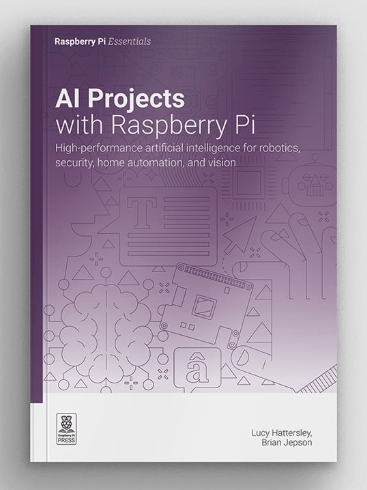
With “AI Projects with Raspberry Pi”, learning AI is no longer limited to experts. It’s now fun, hands-on, and within reach of anyone with curiosity and a Raspberry Pi.
The new guide is packed with hands-on projects that enable students, hobbyists, educators, and makers to explore the rapidly growing world of artificial intelligence using Raspberry Pi hardware.
The publication introduces readers to essential AI concepts such as computer vision, machine learning, and natural language processing through practical, project-based learning. Instead of focusing only on theory, it encourages users to build real-world applications, including smart cameras, voice-controlled assistants, environmental monitoring systems, and intelligent automation projects. Many of these applications run directly on Raspberry Pi devices, showcasing the power of edge AI, where data is processed locally for faster performance, enhanced privacy, and reduced reliance on cloud services.
What’s Raspberry Pi?
Raspberry Pi is a series of compact, affordable single-board computers developed to make computing, programming, and digital innovation accessible to everyone.
Since its launch in 2012, Raspberry Pi has become a global favourite among students, educators, hobbyists, and professionals for learning coding, building electronics projects, and developing applications in robotics, IoT, AI, and automation. Despite its small size, a Raspberry Pi delivers impressive computing power and supports a wide range of programming languages, operating systems, and hardware accessories. With a strong emphasis on hands-on learning and innovation, Raspberry Pi has empowered millions of people worldwide to turn creative ideas into real-world technology solutions.
Beyond teaching technical skills, “AI Projects with Raspberry Pi” inspires creativity and innovation. It highlights how affordable computing can be transformed into intelligent systems capable of solving real-world problems across education, robotics, smart homes, and environmental monitoring. By combining powerful AI tools with easy-to-use hardware, Raspberry Pi continues to empower the next generation of innovators.
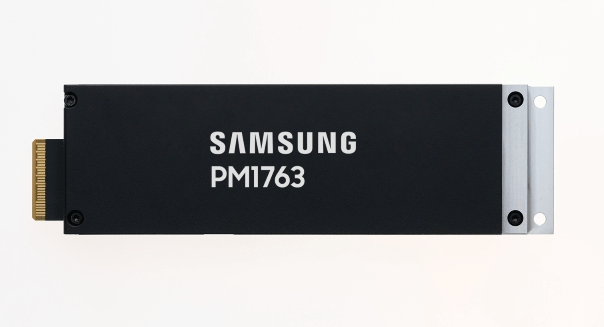
Samsung just began mass production of an enterprise SSD purpose-built for artificial intelligence (AI) and high-performance computing (HPC) servers.
Read against the backdrop of 2026’s brutal memory shortage, it’s tempting to ask: does this bring costs down? The honest answer is not directly, not soon. But it does hint at how relief eventually arrives.
(An SSD (Solid State Drive) is a data storage device that uses flash memory chips to store data, instead of spinning magnetic disks like older hard drives (HDDs).
No moving parts — data is stored electronically on NAND flash chips, so there’s nothing physically spinning or moving to read/write data.)
What Samsung Actually Shipped
The PM1763 is built on 9th-generation V-NAND and a new 4nm controller, available in 4TB, 8TB, and 16TB capacities.
The flagship 16TB drive hits sequential read/write speeds of 28,400/21,900 MB/s, over double its predecessor, the PM1753. And it’s fast enough to move a 40GB language model in about 1.4 seconds.
Where consumption of electricity is concerned, the new SSD’s power efficiency improves by more than 1.8x, and it’s designed for liquid-cooled, direct-to-chip server racks, with post-quantum cryptography baked in for security-conscious deployments.
In short: it’s a performance and efficiency play, not a supply play. It doesn’t add wafer capacity or NAND bits to a starved market.
2026 has been defined by what analysts are calling a “structural” — not cyclical — memory shortage.
Manufacturers have been reallocating fab capacity away from conventional NAND and DRAM toward high-margin, AI-driven products like HBM and high-capacity enterprise SSDs, since a single AI server rack can demand over 1,000TB of NAND.
It is this reallocation, not a lack of manufacturing, that is driving contract prices up. TrendForce and IDC both expect meaningful new fab capacity — the kind that would actually ease scarcity — no earlier than late 2026, with real relief likely 2027-2028.
Where A Chip Like This Actually Helps
Doing more with less is the real short-term win here, not making more chips.
If the PM1763 lets a data center handle the same amount of AI work using fewer drives, thanks to better speed and nearly double the power efficiency, that means buying fewer SSDs for the same job, and spending less on power and cooling per server rack.
For a data center operator, that can offset, not reverse, rising per-unit NAND prices. It’s a way of doing more with the same starved allocation of chips, rather than a way of making more chips available.
There’s also a signaling effect. Samsung, SK Hynix, and Micron are all funneling R&D toward exactly this segment — high-capacity, high-margin enterprise storage — because that’s where hyperscaler demand and pricing power both sit.
Bottom line for the community
Don’t expect AI infrastructure costs to fall because of this launch. Expect them to keep climbing through 2026, with a slower rate of increase for operators using the newest, most efficient hardware. Expect real price relief only once new fab capacity actually comes online, not before.
Whether you are a developer writing these skills or a business leader deploying agents in your enterprise, this new development fundamentally rewrites how AI security is handled.
NVIDIA recently introduced “NVIDIA-Verified Agent Skills”. This capability governance framework provides a standardized way to inspect, verify, and monitor the tools we give our AI agents.
Before NVIDIA’s new standard, the online marketplace was completely unregulated.
Right now, there may perhaps be scores of businesses that might be hesitant to fully deploy AI, because of the fear it will make a massive, costly mistake or get hacked.
NVIDIA, and soon some other tech giants, are building the safety rails these businesses need. They are turning AI agents from unpredictable, risky “mad scientists” into vetted, background-checked, predictable digital employees.
So for those in our community who may have missed this – Google has introduced a new feature today called “Daily Brief”, an AI-powered productivity agent within its Gemini app.
The tool is designed to deliver personalized morning digests by scanning Gmail, Calendar, and Gemini chats to highlight urgent updates, prioritize tasks, and suggest next steps. Announced at Google I/O 2026, Daily Brief is now rolling out to US subscribers of Gemini Plus, Pro, and Ultra, marking a significant step in Google’s shift toward proactive AI assistance.
But is it Different From the Rest of the Pack?
So the real question here is – does this new agentic AI truly stand apart from other agentic AI tools already in the market? At its core, Daily Brief offers a personalized morning digest by pulling information from Gmail, Calendar, and Gemini chats, then suggesting immediate actions. But this is similar in spirit to Microsoft Copilot’s daily briefing emails, which summarize meetings, tasks, and emails, and maybe even to Apple’s rumored AI assistant, expected to integrate deeply with iOS productivity apps.
Where Daily Brief differs, say some, is in its agentic design. Unlike Copilot, which primarily delivers static summaries, Google’s tool emphasizes proactive orchestration, from suggesting replies, scheduling events, and learning from user feedback to refine future briefs. It also integrates with Gemini Spark, a 24/7 agent capable of executing tasks across Google Workspace and third-party apps, positioning Daily Brief as part of a larger, continuous AI ecosystem rather than a standalone feature.
However, the distinction may blur in practice. There are other assistants already offer contextual task suggestions, and startups like Notion AI and Reclaim provide similar proactive planning.
Google’s edge lies in its “Neural Expressive design language”, which makes briefs visually dynamic with graphics and narration, potentially enhancing engagement.
The Verdict For Now
Ultimately, Daily Brief is less a radical departure than a polished iteration. Its success will depend on whether users see value in Google’s integrated, ecosystem-first approach compared to competitors’ offerings.
Open-source, standalone AI models represent a fundamental shift in how we interact with machine intelligence, moving from “renting” a service in the Cloud to “owning” a tool on our own hardware. Unlike browser-based assistants that require a constant Internet connection and transmit your data to remote servers, standalone models are self-contained files — the “weights” — that run entirely on your local computer’s processor and memory.
This architecture grants users complete data sovereignty, allowing for a “zero-leakage” environment where sensitive documents, private research, and intellectual property never leave the physical device. Beyond privacy, these models offer operational resilience, functioning at full capacity during internet outages and providing infinite use without recurring subscription fees or “per-token” costs.
Introducing Google’s Gemma 4: Frontier Power, Local Control
Released on April 2, 2026, Gemma 4 is the latest generation of open-weight models from Google DeepMind, designed to bring the “frontier-class” reasoning of the flagship Gemini 3 models to the open-source community. For the first time in the series’ history, Gemma 4 is released under a fully permissive Apache 2.0 license….which means it allows developers and individuals total commercial freedom to modify and deploy the models as they see fit.
This 4th-generation family includes at least 4 variants — ranging from the mobile-optimized “E2B” to the high-performance “31B” Dense variant. All have multimodal capabilities (processing text, images, and audio) and an expanded 256K context window.