Tag: AI

  • Cognizant’s AI Hiring Push Shows How New Jobs Could Emerge As Old Ones Change

    Cognizant’s AI Hiring Push Shows How New Jobs Could Emerge As Old Ones Change

    For years, one of the biggest fears surrounding artificial intelligence (AI) has been simple: if machines can do more of the work, what will people be left to do?

    A recent move by Cognizant offers a different way of looking at the question.

    The technology services company says it plans to hire 1,500 US college graduates and expand two new roles, called Frontier Certified Engineers and Frontier Business Operators, to a combined 15,000 people.

    These are jobs that are emerging specifically because companies are trying to put AI to work.

    The example is important because it shows that AI does not only replace existing tasks. It can also create demand for people who know how to build, manage, check and apply AI systems.

    As businesses adopt these tools, they need employees who understand both the technology and the business problems it is supposed to solve.

    Cognizant says one of its teams recently redesigned an account-management process for a food-service company using 17 AI agents, saving account managers around 11 hours a week.

    That does not necessarily mean the account managers became unnecessary. Instead, some of their routine work was taken over by AI, potentially leaving more time for work that requires judgement, communication and decision-making.

    But there is another side to the story. A company announcing thousands of new AI-related positions does not prove that AI will create enough jobs to replace every job it disrupts.

    Some roles will almost certainly shrink or disappear, particularly where work consists largely of repetitive and predictable tasks. And not everyone whose job changes will automatically have the skills needed for the new positions.

    That is why the more useful question for graduates may not be whether AI will take jobs or create jobs. It is how quickly the nature of work will change, and whether education and training can keep up.

    Cognizant says it has already trained more than one million people through its global skilling programme and now aims to reach two million by 2030.

    For graduates entering the workforce, the lesson is neither to fear AI nor to assume it will solve the jobs problem. The safer bet is to understand how AI works, learn how to use it, and develop the human skills that remain difficult to automate.

    What do you have to say about this? Do write in the “Comments” section.

  • Daybreak: OpenAI’s $1 Billion Push To Reinforce Global Cybersecurity

    Daybreak: OpenAI’s $1 Billion Push To Reinforce Global Cybersecurity

    OpenAI has launched “Daybreak for Frontline Defenders”, a global cybersecurity initiative designed to help organizations protect essential services from increasingly sophisticated AI-enabled cyberattacks.

    The initiative represents a $1 billion commitment to subsidized access to AI-powered cybersecurity tools, training, technical assistance, and partnerships.

    The program focuses particularly on organizations that often have significant security responsibilities but limited resources. These include water and wastewater utilities, electric-grid operators, state and local governments, community and regional banks, nonprofits, and open-source software maintainers.

    OpenAI says its tools can assist defenders with reviewing legacy code, investigating suspicious activity, identifying and validating vulnerabilities, prioritizing risks, and developing and testing security fixes.

    In simple terms, OpenAI’s Daybreak program is an effort to help organizations that protect essential services, such as electricity, water, local governments, banks, and nonprofits defend themselves against cyberattacks using AI.

    These organizations may not have the same cybersecurity resources as large corporations, so OpenAI plans to provide subsidized access to AI-powered security tools, training, and technical support. Daybreak is about using AI to help the people defending critical systems become faster and more capable at stopping cyber threats, while keeping human experts responsible for making decisions and verifying the results.

    A major component of the initiative is Daybreak for America, which initially concentrates on US essential services before expanding to partner countries.

    OpenAI says it intends to expand the model to partner countries in the coming weeks. Access is being rolled out progressively rather than being universally available worldwide from day one.

    The initiative reflects OpenAI’s broader view that AI should strengthen cybersecurity defenses as AI-powered attacks become more capable. However, the program also highlights the importance of human oversight: Daybreak is designed around verification, monitoring, safeguards, and authorized defensive use.

  • Samsung’s New AI SSD Won’t Fix the Memory Crisis. But It’s A Sign Of Where Relief Will Come From

    Samsung’s New AI SSD Won’t Fix the Memory Crisis. But It’s A Sign Of Where Relief Will Come From

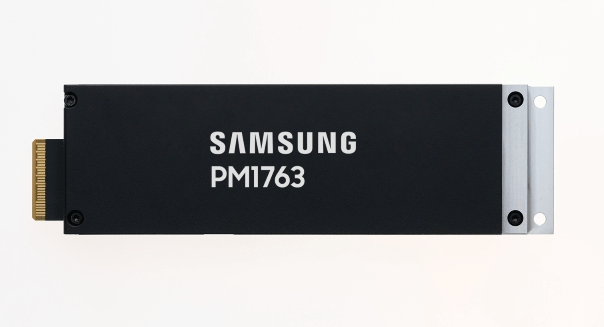
    Samsung just began mass production of an enterprise SSD purpose-built for artificial intelligence (AI) and high-performance computing (HPC) servers.

    Read against the backdrop of 2026’s brutal memory shortage, it’s tempting to ask: does this bring costs down? The honest answer is not directly, not soon. But it does hint at how relief eventually arrives.

    (An SSD (Solid State Drive) is a data storage device that uses flash memory chips to store data, instead of spinning magnetic disks like older hard drives (HDDs).

    No moving parts — data is stored electronically on NAND flash chips, so there’s nothing physically spinning or moving to read/write data.)

    What Samsung Actually Shipped

    The PM1763 is built on 9th-generation V-NAND and a new 4nm controller, available in 4TB, 8TB, and 16TB capacities.

    The flagship 16TB drive hits sequential read/write speeds of 28,400/21,900 MB/s, over double its predecessor, the PM1753. And it’s fast enough to move a 40GB language model in about 1.4 seconds.

    Where consumption of electricity is concerned, the new SSD’s power efficiency improves by more than 1.8x, and it’s designed for liquid-cooled, direct-to-chip server racks, with post-quantum cryptography baked in for security-conscious deployments.

    In short: it’s a performance and efficiency play, not a supply play. It doesn’t add wafer capacity or NAND bits to a starved market.


    Why That Distinction Matters Right Now

    2026 has been defined by what analysts are calling a “structural” — not cyclical — memory shortage.

    Manufacturers have been reallocating fab capacity away from conventional NAND and DRAM toward high-margin, AI-driven products like HBM and high-capacity enterprise SSDs, since a single AI server rack can demand over 1,000TB of NAND.

    It is this reallocation, not a lack of manufacturing, that is driving contract prices up. TrendForce and IDC both expect meaningful new fab capacity — the kind that would actually ease scarcity — no earlier than late 2026, with real relief likely 2027-2028.

    Where A Chip Like This Actually Helps

    Doing more with less is the real short-term win here, not making more chips.

    If the PM1763 lets a data center handle the same amount of AI work using fewer drives, thanks to better speed and nearly double the power efficiency, that means buying fewer SSDs for the same job, and spending less on power and cooling per server rack.

    For a data center operator, that can offset, not reverse, rising per-unit NAND prices. It’s a way of doing more with the same starved allocation of chips, rather than a way of making more chips available.

    There’s also a signaling effect. Samsung, SK Hynix, and Micron are all funneling R&D toward exactly this segment — high-capacity, high-margin enterprise storage — because that’s where hyperscaler demand and pricing power both sit.

    Bottom line for the community

    Don’t expect AI infrastructure costs to fall because of this launch. Expect them to keep climbing through 2026, with a slower rate of increase for operators using the newest, most efficient hardware. Expect real price relief only once new fab capacity actually comes online, not before.

    Image credit: Samsung