
Tag: coding

  • Cisco’s New Antares AI Models Could Make Software Security Faster And Cheaper

    Cisco’s New Antares AI Models Could Make Software Security Faster And Cheaper

    Finding a security vulnerability in a large codebase is a bit like searching for a leaking pipe inside a skyscraper. You know water is escaping somewhere, but figuring out which floor, which room, and which pipe is the real challenge.

    Cisco believes it has found a better way.

    The company has introduced Antares, a family of security small language models (SLMs) designed specifically for vulnerability localization. Instead of writing code or generating patches, these open-weight models focus on one important job. They help developers identify where a known security flaw is likely hiding inside a software repository.

    That distinction matters.

    (BTW: An open weight model is an AI model whose trained parameters (weights) are publicly available, allowing organizations to run, inspect, and often fine tune it on their own infrastructure without having to build the model from scratch.)

    Many organizations today rely on large general purpose AI models for coding assistance. While they are powerful, they can also be expensive to run and often require sending sensitive source code to cloud services.

    Antares takes a different approach. It is a smaller, specialized model that can run locally, keeping proprietary code inside an organization’s own environment while significantly reducing compute costs.

    Think of it this way. If a Swiss Army knife can do twenty different jobs reasonably well, Cisco’s Antares model is a precision screwdriver built for one task. It may not do everything, but it performs its intended job with remarkable efficiency.

    The Implications

    For businesses, this could mean faster security reviews, lower AI infrastructure costs, and fewer delays when responding to newly disclosed vulnerabilities. Security teams no longer have to sift through thousands of files manually before deciding where to focus their attention. The AI helps narrow the search, allowing human experts to spend their time verifying and fixing issues instead of hunting for them.

    Developers also benefit. Because the models are open weight, organizations can inspect, fine tune, and integrate them into their own development pipelines. That flexibility makes them attractive for enterprises that want greater control over their AI tools instead of relying entirely on closed commercial services.

    The two models—Antares-350M and Antares-1B—as open-weight models now available to the broader community on Hugging Face.

    Cisco’s announcement reflects a broader trend in enterprise AI. Bigger is not always better. Sometimes the smartest solution is a smaller model that excels at one critical task. In cybersecurity, where speed, privacy, and cost all matter, that focused approach may prove more valuable than another all purpose AI assistant.
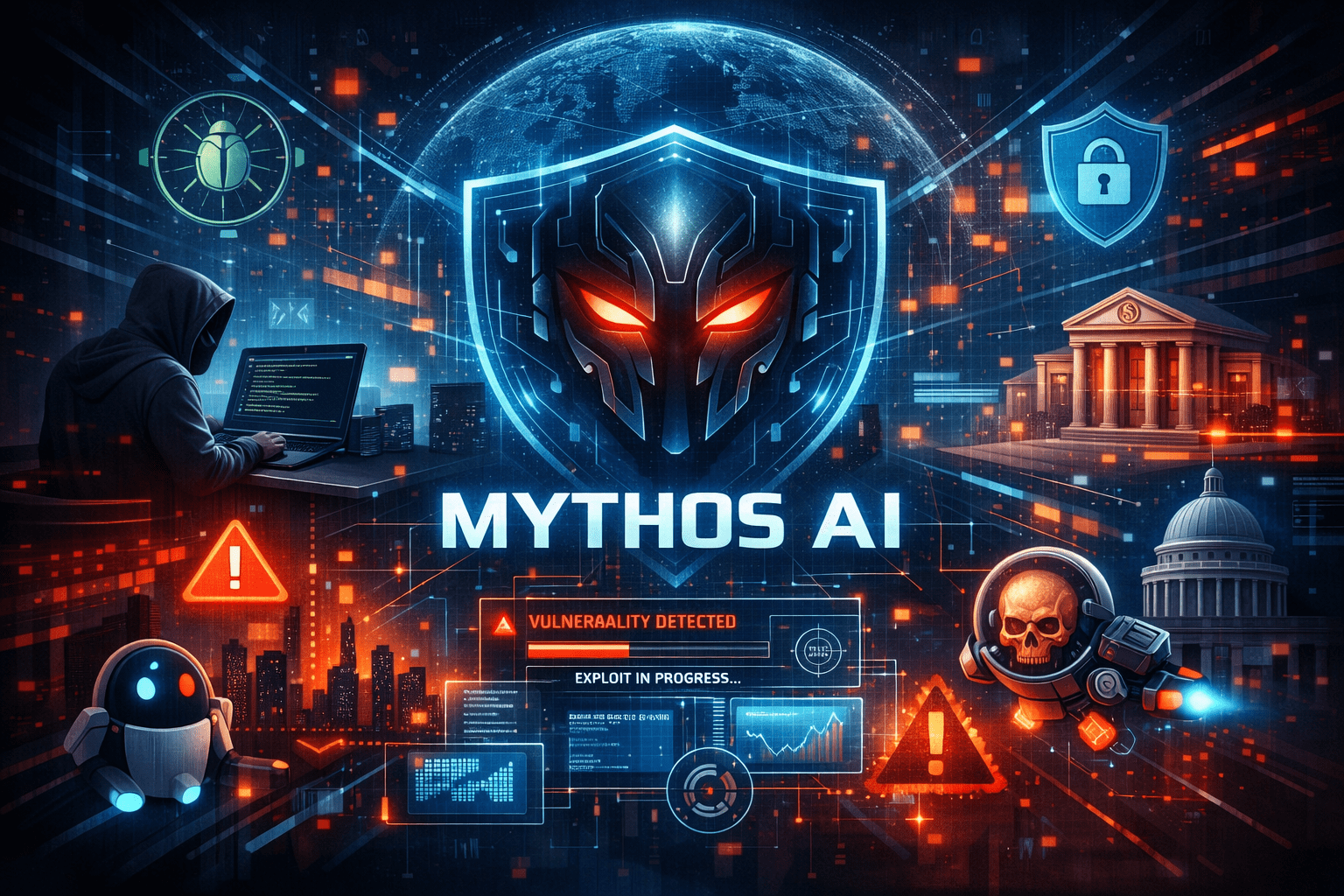

  • “Mythos AI” Has People Worried

    “Mythos AI” Has People Worried

    Most of our “AI For Real” community members know this by now. Artificial intelligence (AI) is no longer just about chatbots or smart assistants. The tech is now being used in cybersecurity.

    Of late, one of the most talked‑about systems is “Mythos AI”, built by Anthropic. Unlike regular AI tools that answer questions or generate text, Mythos is designed to scan computer systems and find weaknesses in the code at lightning speed.

    Think of it as a super‑powered hacker, but one created in a lab.

    What Makes Mythos Different

    • Speed and Scale: Mythos can check millions of lines of code faster than human experts.
    • Zero‑Day Flaws: It can uncover hidden bugs that developers didn’t even know existed.
    • Simulation Power: Mythos doesn’t just find problems—it can also show how those problems could be exploited.

    This combination makes it incredibly powerful. But it also explains why governments, banks, and businesses the world over are nervous.


    Before you read further, did you know “AI For Real” is also on WhatsApp. Click here to join and stay updated on the move.


    The Perceived Threat

    • Cybersecurity Risks: If Mythos fell into the wrong hands, it could be used to attack financial systems, government networks, or even everyday apps.
    • Banking Alarm: Indian banks have already shifted budgets to “survival mode,” fearing that Mythos could expose customer data or disrupt payments.
    • Government Concerns: India’s Finance Minister compared Mythos to “a threat as big as war.” The U.S. has restricted access, worried about misuse.
    • Global Unease: Countries like Canada and India worry they’re being left out of testing, which could leave their systems more vulnerable.

    Anthropic’s Defense

    Anthropic insists Mythos is not a weapon but a defensive tool. The company says it was built to help organizations find and fix problems before hackers can exploit them.

    It describes Mythos as an automated “red team”—a system that stress‑tests defenses so companies can patch weaknesses faster. Anthropic also emphasizes that there’s “limited access” to accessing Mythos, strict safeguards, and cooperation with regulators to ensure Mythos strengthens security rather than undermines it.

    Experts Weigh In

    Some experts argue that Mythos doesn’t create new dangers. It simply reveals how fragile our digital systems already are. The real issue is that AI speeds up the timeline: what once took weeks for hackers to discover can now be done in hours.

    Conclusion

    Mythos AI is a wake‑up call. It shows both the promise and peril of advanced AI in cybersecurity. Used responsibly, it could make the internet safer. Misused, it could trigger chaos. The challenge now is ensuring strong rules, fair access, and investment in local AI defenses so that technology protects rather than threatens.

    What do you think about tools like Mythos? Do comment.

  • AI Is Writing Your Code, But Is It Rewriting Your Brain?

    AI Is Writing Your Code, But Is It Rewriting Your Brain?

    In early 2026, researchers at Anthropic published new findings on a question that’s quietly reshaping computer science education: How does AI assistance affect human coding skill formation?

    For experienced developers and students just getting started, the answer matters more than ever.

    AI coding assistants can autocomplete functions, generate boilerplate, explain stack traces, and even architect small applications from a prompt. Used well, they feel like a senior engineer looking over your shoulder. But Anthropic’s research suggests the impact on skill development depends heavily on how these tools are used.