
Tag: cybersecurity

  • The perfect AI Catch 22:AI uncovers decade-old PHP flaws as hackers move to exploit them, forcing government sites offline

    The perfect AI Catch 22:AI uncovers decade-old PHP flaws as hackers move to exploit them, forcing government sites offline

    Depending on the side you find yourself on, artificial intelligence (AI) is emerging as a powerful tool, without doubt.

    If you with the good guys, the tech is one of cybersecurity’s most powerful allies.

    But a new global security crisis shows how the same technology that helps researchers uncover hidden software vulnerabilities can also help hackers exploit them.

    On October 21, 2026, many government websites and public services across Europe and elsewhere went offline as organizations scrambled to patch two critical security flaws in PHP, a programming language that powers nearly 70% of websites whose underlying technology can be identified.

    Germany, France, Belgium, the Netherlands, Finland and the Czech Republic were among the countries affected. Canada and Australia also reported disruptions to government websites. The scale of the response underlined how a vulnerability in one widely used technology can ripple across the Internet.

    The good news: AI can find what humans miss

    Security researchers are increasingly using AI to analyze enormous codebases, trace complex program behavior and identify vulnerabilities that conventional reviews might overlook. In this latest episode, researchers associated with Calif and Google-owned cybersecurity company Wiz used AI-assisted techniques to help uncover critical PHP flaws.

    The discovery demonstrates how AI can accelerate security research and help developers fix dangerous weaknesses before they become widespread disasters.

    PHP developers released security updates, while cybersecurity agencies urged organizations to patch affected systems immediately or take vulnerable websites offline until they could be secured. In this context, a temporary shutdown is not necessarily evidence of a successful attack. It can be a deliberate defensive measure to protect sensitive information and essential services.

    The bad news: hackers use AI, too

    The same capabilities that help defenders understand complex code can help attackers analyze vulnerabilities, adapt exploit techniques and identify systems that remain unpatched.

    Reuters reported signs of early exploitation attempts, adding urgency to the global response. Once a vulnerability becomes public, organizations face a race against time: security fixes may be available, but thousands of administrators still need to install and verify them.

    AI does not automatically make the Internet safer or more dangerous. It accelerates what both sides can do. And because PHP is embedded in countless websites, the consequences of a single serious flaw can extend far beyond the original software.

    The lesson: finding the bug is only the beginning

    Organizations must patch promptly, monitor suspicious activity, maintain reliable backups and isolate vulnerable services when necessary. AI-assisted security testing should become a regular part of software development, not merely an emergency response.

    This episode offers a glimpse of cybersecurity’s future: AI helping expose weaknesses that have survived for years, while attackers race to exploit them. The decisive advantage will belong to those who turn discovery into protection before the window for defence closes.

  • AI Driven Cybersecurity Monitoring Gains Momentum As EY India Launches Cyber Risk Platform

    AI Driven Cybersecurity Monitoring Gains Momentum As EY India Launches Cyber Risk Platform

    Artificial intelligence (AI) is moving beyond threat detection and into continuous cybersecurity monitoring.

    EY India is launching an AI-powered Cyber Performance Management platform that aims to help enterprises measure cyber risk in real time rather than relying on periodic security reviews.

    What this indicates is a major shift in enterprise security, where AI is increasingly being used to monitor, analyse and prioritise cyber threats across complex digital environments.

    The new platform, said the company, brings together data from an organization’s cybersecurity tools to provide a “live” view of its security posture.

    Instead of presenting security teams with thousands of alerts, the AI engine evaluates vulnerabilities, identifies the most critical risks and links them to potential business impact. This allows security teams and business leaders to understand which threats require immediate attention.

    Traditional cybersecurity programmes often depend on manual assessments and periodic audits, making it difficult to keep pace with rapidly evolving threats. EY’s platform is designed to replace that approach with continuous AI-driven monitoring that can detect changes in an organisation’s risk profile as they happen.

    The company said the platform combines cybersecurity posture, threat exposure, detection and response into a single system. AI analyses large volumes of security data, helping organisations quantify cyber risk in financial and operational terms rather than relying solely on technical metrics. This gives executives a clearer understanding of how cyber incidents could affect business operations, compliance and revenue.

    The launch comes as enterprises continue expanding cloud infrastructure, connected devices and AI applications, creating larger attack surfaces that are increasingly difficult to monitor manually. As cyber threats become more sophisticated, organisations are looking to AI to automate routine monitoring, speed up threat prioritisation and improve response times.

    The announcement highlights a growing trend in enterprise security, where AI is no longer focused only on identifying attacks but on providing continuous cyber performance monitoring. As businesses face increasing regulatory pressure and more frequent cyber threats, real-time AI monitoring is becoming an essential part of enterprise risk management rather than an optional security upgrade.

    Image credit: EY/Facebook

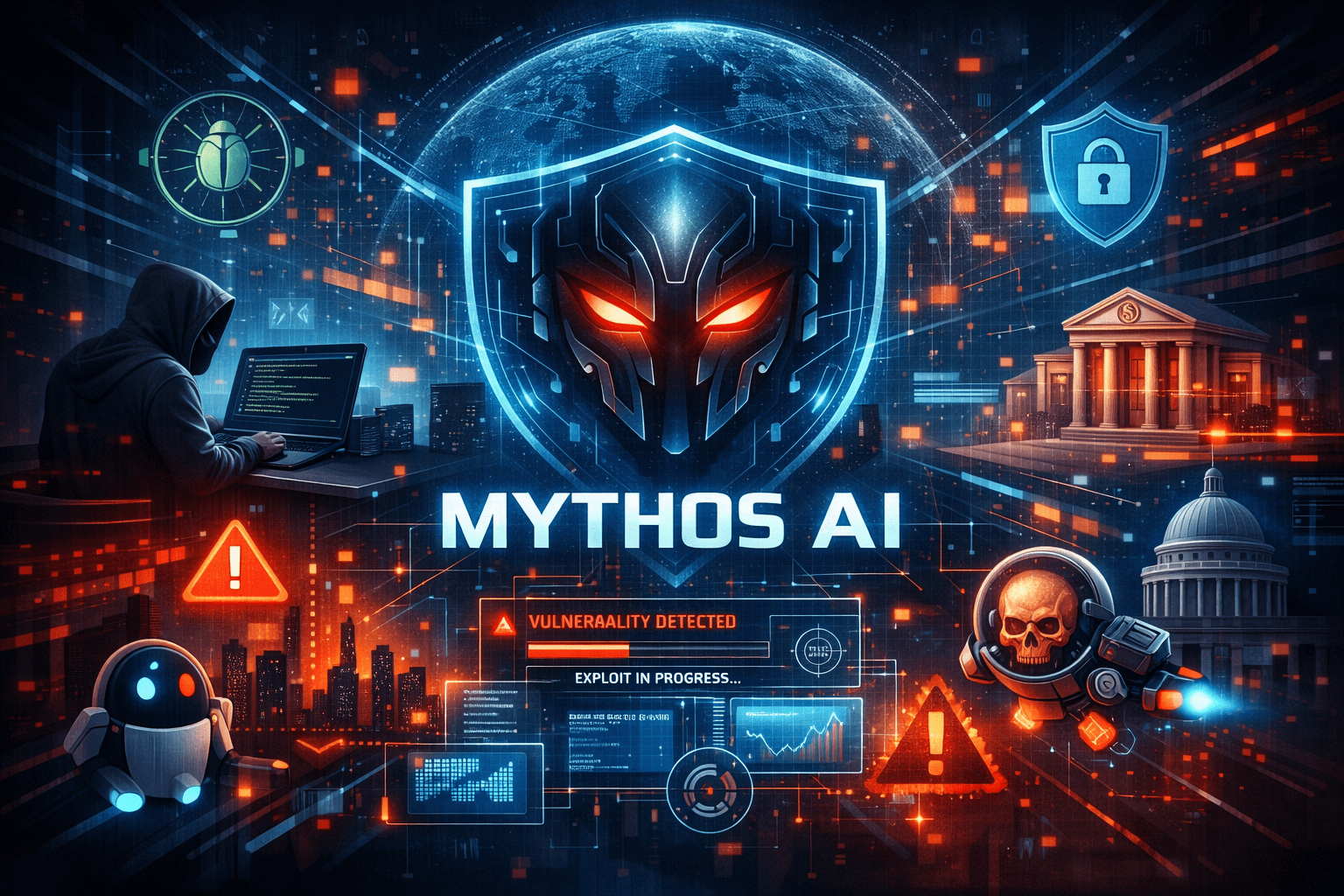
  • “Mythos AI” Has People Worried

    “Mythos AI” Has People Worried

    Most of our “AI For Real” community members know this by now. Artificial intelligence (AI) is no longer just about chatbots or smart assistants. The tech is now being used in cybersecurity.

    Of late, one of the most talked‑about systems is “Mythos AI”, built by Anthropic. Unlike regular AI tools that answer questions or generate text, Mythos is designed to scan computer systems and find weaknesses in the code at lightning speed.

    Think of it as a super‑powered hacker, but one created in a lab.

    What Makes Mythos Different

    • Speed and Scale: Mythos can check millions of lines of code faster than human experts.
    • Zero‑Day Flaws: It can uncover hidden bugs that developers didn’t even know existed.
    • Simulation Power: Mythos doesn’t just find problems—it can also show how those problems could be exploited.

    This combination makes it incredibly powerful. But it also explains why governments, banks, and businesses the world over are nervous.


    Before you read further, did you know “AI For Real” is also on WhatsApp. Click here to join and stay updated on the move.


    The Perceived Threat

    • Cybersecurity Risks: If Mythos fell into the wrong hands, it could be used to attack financial systems, government networks, or even everyday apps.
    • Banking Alarm: Indian banks have already shifted budgets to “survival mode,” fearing that Mythos could expose customer data or disrupt payments.
    • Government Concerns: India’s Finance Minister compared Mythos to “a threat as big as war.” The U.S. has restricted access, worried about misuse.
    • Global Unease: Countries like Canada and India worry they’re being left out of testing, which could leave their systems more vulnerable.

    Anthropic’s Defense

    Anthropic insists Mythos is not a weapon but a defensive tool. The company says it was built to help organizations find and fix problems before hackers can exploit them.

    It describes Mythos as an automated “red team”—a system that stress‑tests defenses so companies can patch weaknesses faster. Anthropic also emphasizes that there’s “limited access” to accessing Mythos, strict safeguards, and cooperation with regulators to ensure Mythos strengthens security rather than undermines it.

    Experts Weigh In

    Some experts argue that Mythos doesn’t create new dangers. It simply reveals how fragile our digital systems already are. The real issue is that AI speeds up the timeline: what once took weeks for hackers to discover can now be done in hours.

    Conclusion

    Mythos AI is a wake‑up call. It shows both the promise and peril of advanced AI in cybersecurity. Used responsibly, it could make the internet safer. Misused, it could trigger chaos. The challenge now is ensuring strong rules, fair access, and investment in local AI defenses so that technology protects rather than threatens.

    What do you think about tools like Mythos? Do comment.