Tag: Google

  • Help! I Just Found An AI Agent In My Google Search

    Help! I Just Found An AI Agent In My Google Search

    For more than 20 years, search engines worked like a digital library desk. You typed in a few keywords, got a list of links, and did the research yourself — opening tabs, comparing sources, and piecing together answers manually.

    That era is starting to fade.

    At Google I/O 2026, Google introduced the Gemini 3.5 Flash search experience, a major shift toward what it calls “agentic search” and the “intelligent search box.” Instead of simply pointing you to websites, search is becoming an AI-powered assistant that can research, summarize, organize, and act on your behalf.

    For everyday users, this changes the role of the search bar entirely. It’s no longer just a gateway to the web. It’s becoming a 24/7 digital assistant that does the heavy lifting for you.

    To know more, click here.

  • Google’s “Daily Brief”: A Fresh Spin On Agentic AI?

    Google’s “Daily Brief”: A Fresh Spin On Agentic AI?

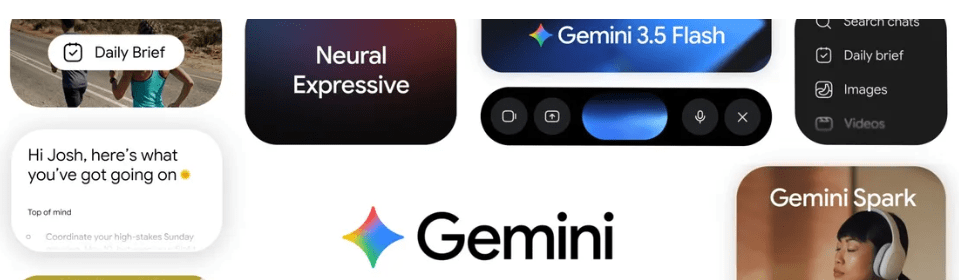
    So for those in our community who may have missed this – Google has introduced a new feature today called “Daily Brief”, an AI-powered productivity agent within its Gemini app.

    The tool is designed to deliver personalized morning digests by scanning Gmail, Calendar, and Gemini chats to highlight urgent updates, prioritize tasks, and suggest next steps. Announced at Google I/O 2026, Daily Brief is now rolling out to US subscribers of Gemini Plus, Pro, and Ultra, marking a significant step in Google’s shift toward proactive AI assistance.

    But is it Different From the Rest of the Pack?

    So the real question here is – does this new agentic AI truly stand apart from other agentic AI tools already in the market? At its core, Daily Brief offers a personalized morning digest by pulling information from Gmail, Calendar, and Gemini chats, then suggesting immediate actions. But this is similar in spirit to Microsoft Copilot’s daily briefing emails, which summarize meetings, tasks, and emails, and maybe even to Apple’s rumored AI assistant, expected to integrate deeply with iOS productivity apps.

    Where Daily Brief differs, say some, is in its agentic design. Unlike Copilot, which primarily delivers static summaries, Google’s tool emphasizes proactive orchestration, from suggesting replies, scheduling events, and learning from user feedback to refine future briefs. It also integrates with Gemini Spark, a 24/7 agent capable of executing tasks across Google Workspace and third-party apps, positioning Daily Brief as part of a larger, continuous AI ecosystem rather than a standalone feature.

    However, the distinction may blur in practice. There are other assistants already offer contextual task suggestions, and startups like Notion AI and Reclaim provide similar proactive planning.

    Google’s edge lies in its “Neural Expressive design language”, which makes briefs visually dynamic with graphics and narration, potentially enhancing engagement.

    The Verdict For Now

    Ultimately, Daily Brief is less a radical departure than a polished iteration. Its success will depend on whether users see value in Google’s integrated, ecosystem-first approach compared to competitors’ offerings.

    Image credit: Google ‘The Keyword’

  • Introducing “Gemma 4” And How To Download It On Your PC

    Introducing “Gemma 4” And How To Download It On Your PC

    Open-source, standalone AI models represent a fundamental shift in how we interact with machine intelligence, moving from “renting” a service in the Cloud to “owning” a tool on our own hardware. Unlike browser-based assistants that require a constant Internet connection and transmit your data to remote servers, standalone models are self-contained files — the “weights” — that run entirely on your local computer’s processor and memory.

    This architecture grants users complete data sovereignty, allowing for a “zero-leakage” environment where sensitive documents, private research, and intellectual property never leave the physical device. Beyond privacy, these models offer operational resilience, functioning at full capacity during internet outages and providing infinite use without recurring subscription fees or “per-token” costs.

    Introducing Google’s Gemma 4: Frontier Power, Local Control

    Released on April 2, 2026, Gemma 4 is the latest generation of open-weight models from Google DeepMind, designed to bring the “frontier-class” reasoning of the flagship Gemini 3 models to the open-source community. For the first time in the series’ history, Gemma 4 is released under a fully permissive Apache 2.0 license….which means it allows developers and individuals total commercial freedom to modify and deploy the models as they see fit.

    This 4th-generation family includes at least 4 variants — ranging from the mobile-optimized “E2B” to the high-performance “31B” Dense variant. All have multimodal capabilities (processing text, images, and audio) and an expanded 256K context window.


  • Top AI Coding Assistants in 2026: How Tools Like GitHub Copilot, Cursor And Agent Smith Are Transforming Everyday Development

    Top AI Coding Assistants in 2026: How Tools Like GitHub Copilot, Cursor And Agent Smith Are Transforming Everyday Development

    AI coding assistants have quickly become a part of everyday life for developers. What started as simple autocomplete tools has evolved into something much more powerful; tools that feel like intelligent agents, almost like having your own “Agent Smith” sitting beside you, helping you write, debug, and understand code.

    One of the most widely used tools today is “GitHub Copilot”. It acts like a reliable pair programmer who is always available. As you write code, it suggests entire lines or even full functions based on your comments. For many developers, this means spending less time on boilerplate code and more time focusing on logic and problem-solving. You can simply write a comment describing what you want, and Copilot often fills in the rest in seconds.


    Join The AI For Real Community on WhatsApp.

  • Startups And AI Wrappers

    Startups And AI Wrappers

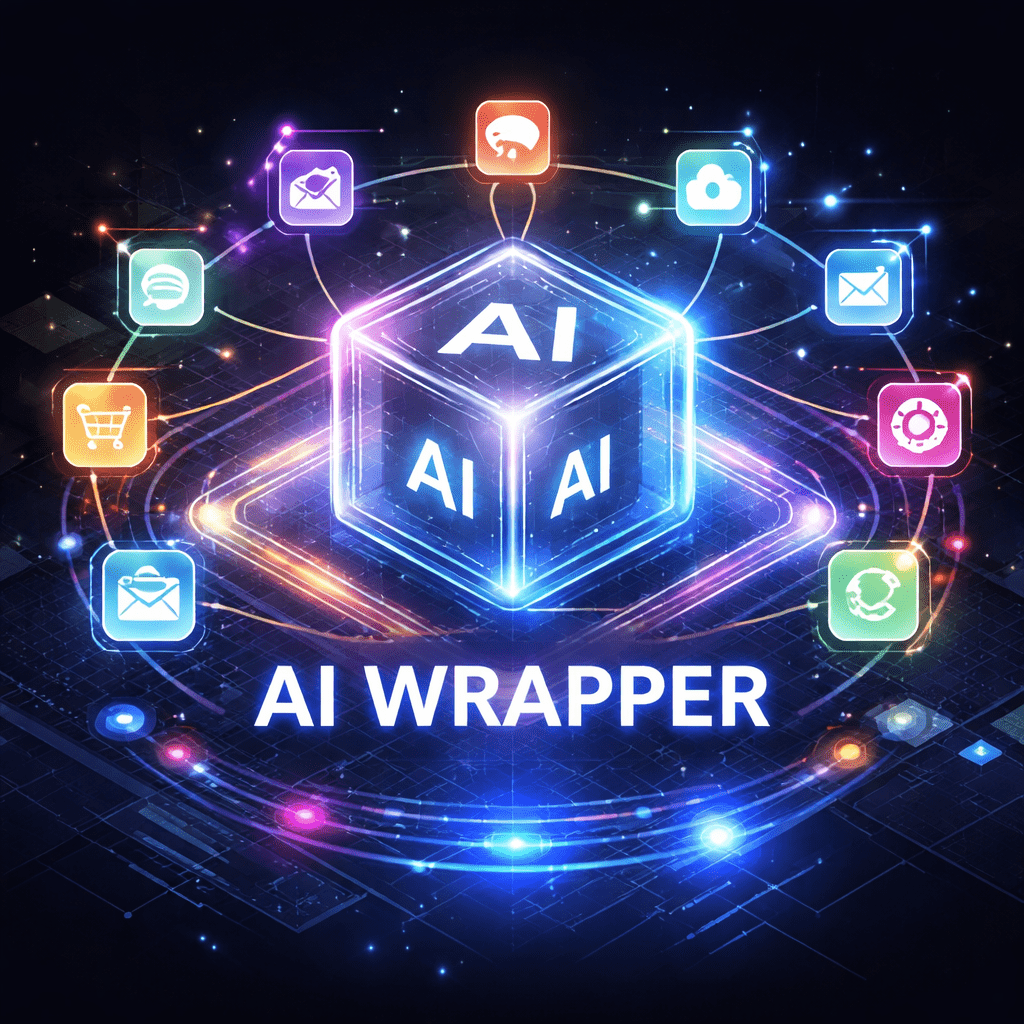
    Some of you may have heard the word “AI wrappers” but not know what the term means. These are software layers that sit on top of existing AI models, providing a user-friendly interface but often without deep innovation. They make AI easier to use but are sometimes criticized for being “thin” solutions that don’t fundamentally transform workflows.

    ⚙️ How They Work

    • Intermediary Layer: Wrappers act as a bridge between the AI model and the end-user.
    • Customization: They may add domain-specific prompts, templates, or workflows.
    • Examples:
      • Jasper – a content creation tool built on top of GPT.
      • Harvey – legal workflow automation using AI.
      • Cursor – developer tools enhanced with AI.

    Join Us On WhatsApp.


    Now, Google has decided to support early-stage AI ventures in India. The program, called “Atoms”, was launched in November to support early-stage AI ventures in India. Each selected startup will receive up to $2 million in funding from Accel and Google’s AI Futures Fund, along with $350,000 in Cloud and AI compute credits from Google.

    According to Accel partner Prayank Swaroop, nearly 70% of the 4,000 applications were rejected for being wrappers, while others fell into oversaturated categories such as marketing automation and recruitment tools. Instead, the chosen startups focus on areas with stronger potential for real-world adoption.

    Google’s AI Futures Fund director Jonathan Silber has emphasized that the program does not require startups to use Google’s models exclusively. Instead, the initiative aims to gather feedback on how different AI models perform in practice, feeding insights back to Google DeepMind to improve future systems. Silber described this as a “flywheel” effect — where startup experimentation accelerates AI development.

    India’s AI ecosystem remains largely enterprise-focused, with 62% of applications centered on productivity tools and 13% on software development and coding. Swaroop noted he had hoped to see more innovation in healthcare and education, areas still underrepresented in submissions.

    The announcement underscores both the promise and challenges of India’s AI startup scene: while enthusiasm is high, investors are increasingly cautious of superficial solutions. By backing startups that go beyond wrappers, Google and Accel are signaling a preference for deeper, workflow-transforming AI applications.

  • Google Maps Introduces AI-Powered Features

    Google Maps Introduces AI-Powered Features

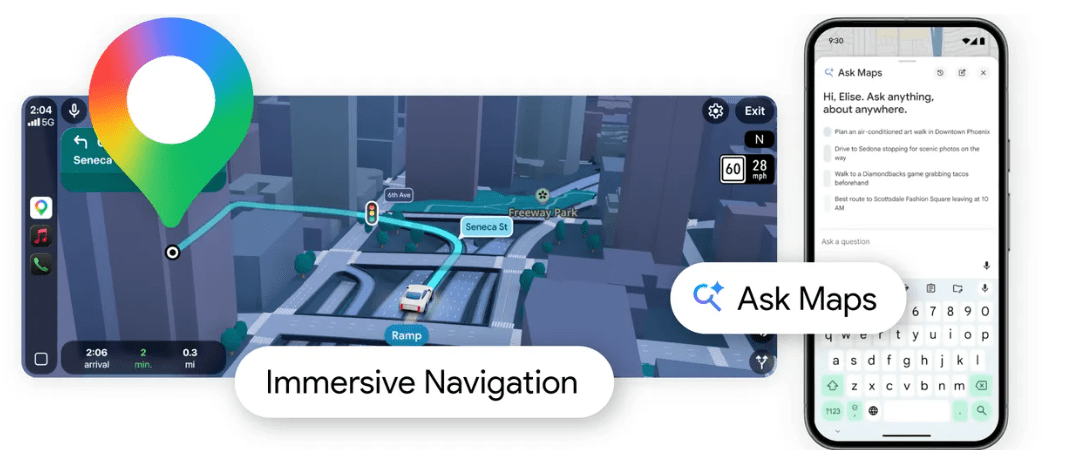
    Google has announced a major upgrade to its Maps platform, unveiling two new AI-driven tools: “Ask Maps and Immersive Navigation”.

    Ask Maps allows users to interact with Google Maps conversationally, posing complex questions such as where to find a tennis court with lights or a charging station with minimal wait times. Drawing on data from over 300 million places and insights from 500 million contributors, the feature provides tailored recommendations, trip planning, and seamless booking options.

    Meanwhile, Immersive Navigation enhances the driving experience with vivid 3D visuals, highlighting lanes, crosswalks, and traffic lights. Powered by Google’s Gemini AI models, it integrates Street View and aerial imagery to deliver realistic guidance. Features include natural voice directions, smarter zooms, real-time traffic updates, and detailed final-stretch assistance for entrances and parking.

    Together, these tools position Google Maps not just as a navigation app but as a comprehensive AI assistant for everyday mobility, blending real-world data with advanced machine learning to improve convenience and safety.

    (Image credit: Google)


    Join The AI For Real Community on WhatsApp.