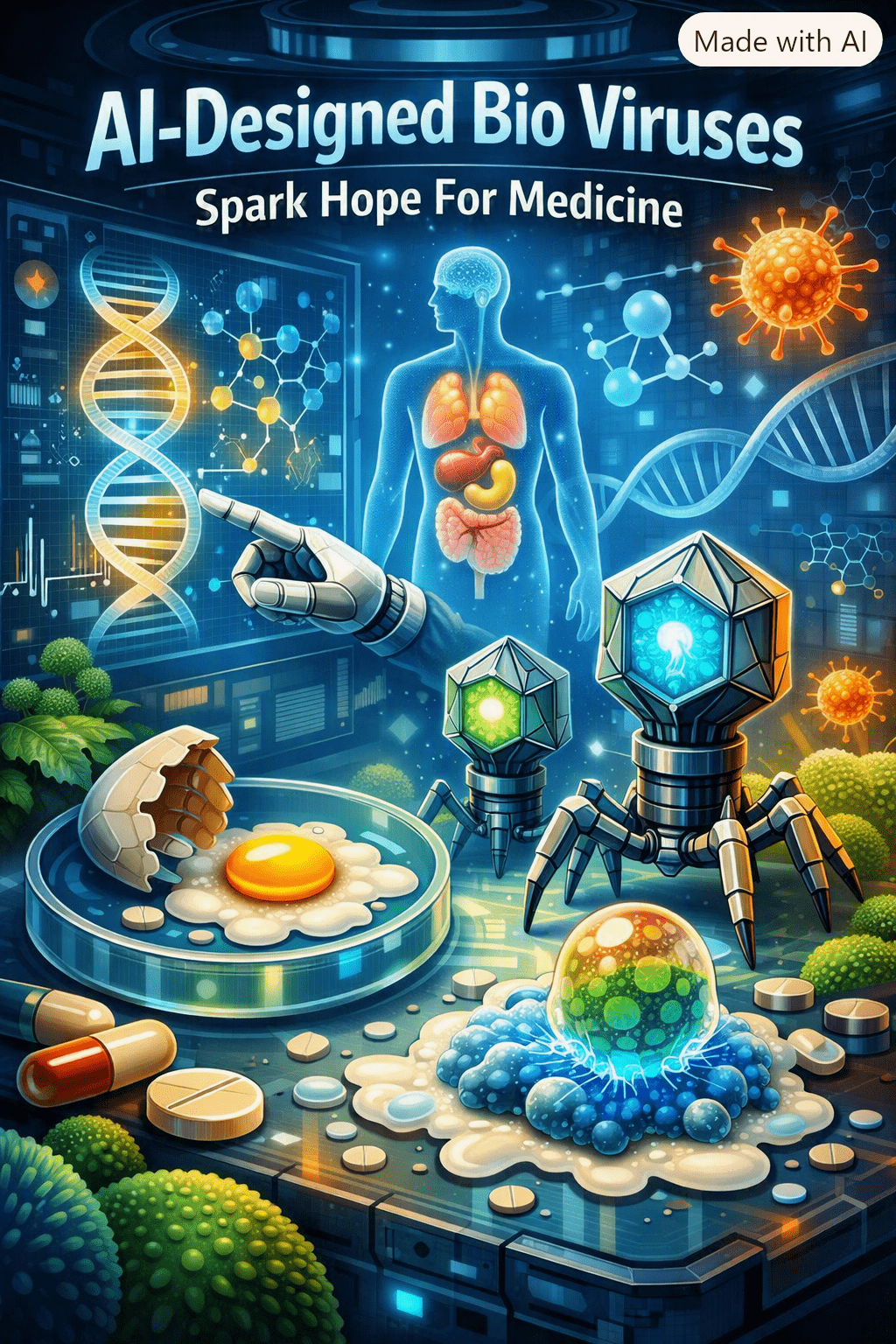
Artificial intelligence (AI) is already being used to create computer viruses, but now, the tech has been used for the first time to create a biological virus in a laboratory.
Scientists have used AI to create the world’s first biological viruses, marking a major breakthrough in biotechnology while prompting renewed concerns over biosafety and biosecurity.
The research, led by a team at Stanford University, demonstrates that AI can generate functional viral genomes capable of attacking bacteria, opening new possibilities for treating antibiotic-resistant infections.
Mind you, such a virus cannot infect humans but only bacteria.
The researchers used advanced AI genome models trained on millions of bacteriophage sequences to design synthetic bacteriophages—viruses that infect bacteria. Laboratory tests showed that 16 of the AI-generated viruses successfully infected drug-resistant Escherichia coli (E. coli), highlighting the technology’s potential for developing targeted therapies against dangerous bacterial infections. The findings have been published in the journal Science.
Experts Issue Warning
Despite the promising medical applications, experts have warned that the same technology could be misused to create harmful pathogens if appropriate safeguards are not established. Biosecurity specialists argue that current regulations have not kept pace with rapid advances in AI-assisted genome design, increasing the need for stronger oversight of DNA synthesis, laboratory practices, and access to powerful AI tools.
Researchers involved in the project emphasised that the work was conducted under strict safety protocols and focused exclusively on bacteriophages, which infect bacteria rather than humans. They stressed that the goal is to accelerate the development of new treatments for drug-resistant infections rather than engineer viruses capable of causing disease in people.
Reference: