
Tag: prompting

  • Prompt Goblin: The Person Who Can’t Stop Tweaking AI

    Prompt Goblin: The Person Who Can’t Stop Tweaking AI

    A prompt goblin is someone who treats AI prompting less like a skill and more like an obsession.

    They constantly tweak, remix, test, and over-engineer prompts to squeeze a little more intelligence out of an AI model. Give them a simple question, and they might respond with a 47-line system prompt, five constraints, three examples, and a request for the AI to “think like a world-class expert.”

    The term is playful, but it captures a real behaviour emerging around generative AI. Prompt goblins enjoy discovering the strange ways wording, context, instructions, and formatting can change an AI’s output. They experiment endlessly, often saving successful prompts like treasured recipes.

    In 2026, the prompt goblin is evolving. As AI systems become better at understanding natural language, obsessive users are shifting from clever prompts toward context engineering, agents, tools, and workflows.

    In other words: the prompt goblin may be disappearing, but probably not before trying 37 more prompts.
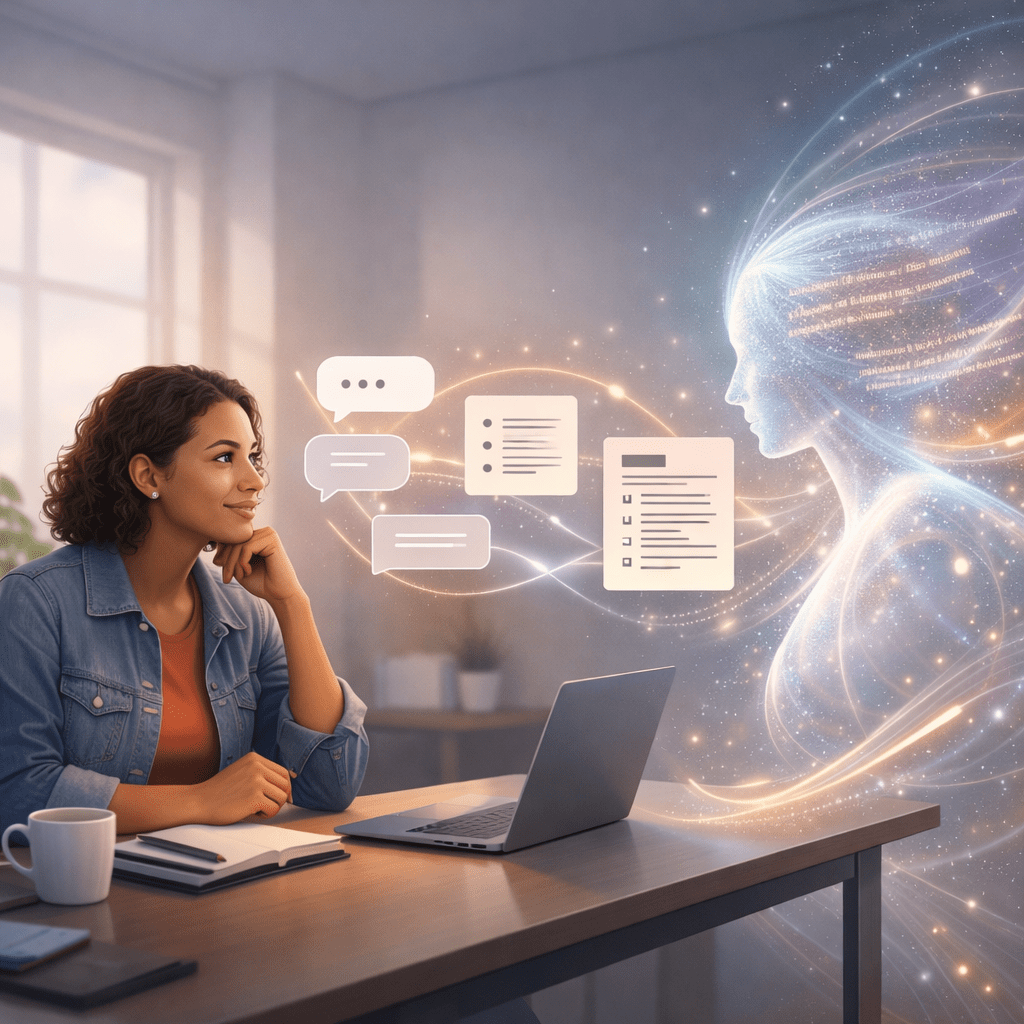

  • How To Talk To AI In 2026: A Practical Guide For Everyone

    How To Talk To AI In 2026: A Practical Guide For Everyone

    A practical guide for everyday users.

    Large language models (LLMs) like ChatGPT, Claude, Gemini, and Microsoft Copilot are now part of daily life. They help us write emails, summarize documents, learn new topics, debug code, plan trips, and even think through difficult decisions.

    But many people still wonder:

    • Am I supposed to “talk” to it like a person?
    • Do I have to be polite?
    • Why does it sometimes misunderstand me?
    • Should I stick to one AI or switch between them?

    This guide will give you practical answers.


    Join This Community Channel on WhatsApp. Click here.


    1. First: What an LLM Actually Is (and Isn’t)

    An LLM is not a person.
    It doesn’t have feelings, beliefs, or intentions.

    It predicts useful next words based on patterns it learned from massive amounts of text.

    That means:

    • It does not “understand” you the way a human does.
    • It does not “care” if you’re polite.
    • It does not remember most past conversations unless memory is explicitly enabled.

    It’s a very advanced pattern engine — incredibly capable, but not conscious.


    How to Get Better Results