Tag: robots

  • How AI Is Reshaping The Classroom Blackboard

    How AI Is Reshaping The Classroom Blackboard

    Imagine this: You are a student in a classroom looking at the class blackboard when suddenly, Albert Einstein appears on it and teaches you aspects of his Theory of Relativity. Fiction? No, it’s real. (Only, Einstein is AI created.)

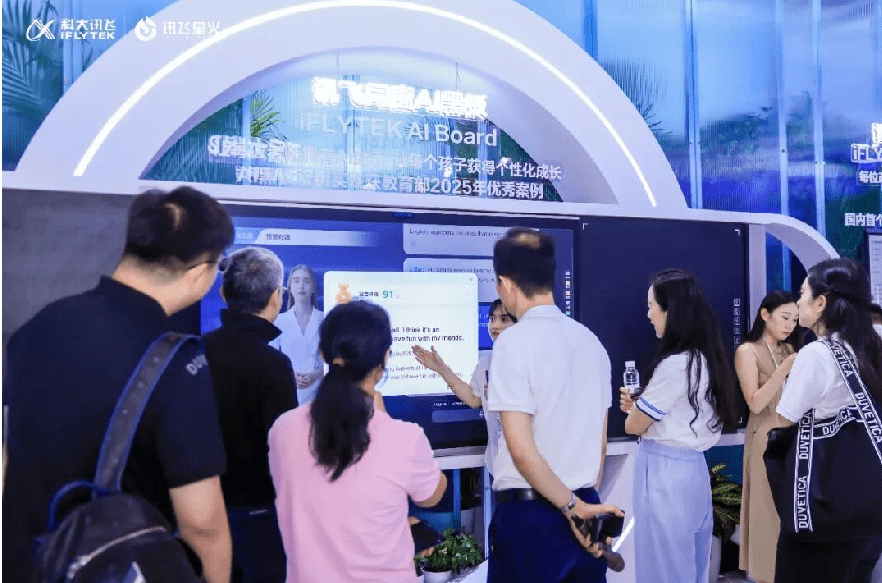
    A Chinese company, “iFLYTEK” showcased its AI Blackboard at the recent 2026 World Artificial Intelligence Conference (WAIC), presenting the AI school blackboard device as part of its AI-powered education portfolio designed for classroom teaching.

    The AI Blackboard combines a traditional writing surface with artificial intelligence (AI) features intended to support classroom instruction.

    According to iFLYTEK, this is no ordinary blackboard but “an intelligent hub integrated into the entire teaching process”.

    Here are some of its features:

    • Handwritten content on the board can be recognized and converted into standardized graphics, while the system can identify related knowledge points and recommend teaching resources.
    • In mathematics lessons, the AI Blackboard can transform two-dimensional geometric figures into three-dimensional models for classroom display.
    • The system also includes AI virtual human technology that allows students to interact with AI representations of historical and cultural figures, including Confucius, Albert Einstein and the Tang Dynasty poet Li Bai.
    • Teachers can also customize their own “digital clones,” replicating their voices with a single sentence to provide personalized Q&A for students after class, making individualized teaching a reality rather than just a concept.
    • It can even be used to remotely conduct a class in another classroom thousands of miles away, and also eliminates language barriers.
    • Separately, teachers can create AI-powered digital avatars using voice-cloning technology to answer students’ questions after class.

    Background

    iFLYTEK is a Chinese artificial intelligence company founded in 1999 and headquartered in Hefei, Anhui Province. The company specializes in speech recognition, natural language processing, machine translation, and other AI technologies, with products and services spanning education, healthcare, smart cities, finance, and enterprise applications.

    In education, iFLYTEK develops AI-powered learning platforms, digital classroom technologies, and teaching tools for schools and universities. Its education portfolio includes smart classrooms, AI-assisted teaching systems, language learning solutions, and interactive devices such as the AI Blackboard.

    The company has expanded its presence in China’s education sector through partnerships with schools and local governments, while also promoting selected education technologies in international markets.

    For classroom documentation, the AI Blackboard uses a “4+1” camera system and AI audio processing to automatically record lessons. The system can generate lesson records and produce short instructional video clips from classroom sessions, according to the company.

    iFLYTEK said the AI Blackboard has been deployed in all 33 provincial-level administrative regions in China and is used in more than 1,400 counties and districts. The company’s announcement also highlighted a demonstration in which the system supported a joint lesson between a school in Zhejiang Province and a school in Indonesia using AI capabilities to facilitate cross-language communication.

    Image credit: iFLYTEK

  • AI Tools May Be Eroding Professionals’ Skills, Researchers Warn

    AI Tools May Be Eroding Professionals’ Skills, Researchers Warn

    Artificial intelligence (AI) tools are helping professionals work faster, but growing evidence suggests they could also weaken the very skills people have spent years developing, prompting researchers to call for urgent studies on how to prevent AI driven deskilling.

    The concern is particularly strong in medicine. A survey of US health care workers published this month in nature found that 70% of nurses and 77% of physicians worry that over reliance on AI systems could reduce their clinical skills.

    Researchers say those fears are beginning to find support in real world evidence. The study published last October in The Lancet Gastroenterology and Hepatology found that experienced physicians became less effective at detecting precancerous intestinal growths when an AI tool they had grown accustomed to using was suddenly unavailable.

    The study followed physicians in Poland who specialized in endoscopy and had each performed at least 2,000 colonoscopies during their careers. Researchers introduced an AI system that analysed colonoscopy images in real time and highlighted adenomas, a type of precancerous lesion. The system was available only on certain days, allowing researchers to compare doctors’ performance with and without AI assistance.

    Before the technology was introduced, doctors detected at least one adenoma in 28.4% of colonoscopies. After three months of using the AI system, the detection rate during procedures performed without AI assistance fell to 22.4%.

    The findings suggest that even highly experienced clinicians may become less effective at tasks they routinely perform if they become dependent on AI, researchers said. The study authors argued that continuous exposure to AI tools could leave clinicians less motivated, less focused and less responsible when making decisions without technological support.

    The issue is not limited to medicine. Researchers at AI company Anthropic have also begun investigating whether software engineers lose skills when they rely heavily on AI coding assistants.

    In a randomized controlled trial involving 52 software engineers, participants completed a basic coding task with access to online resources, while half were also encouraged to use an AI assistant. The study is part of a broader effort to understand how AI affects long term expertise.

    As AI becomes a routine part of workplaces across industries, researchers say the challenge will be finding ways to capture the technology’s productivity benefits without allowing essential human expertise to fade.

  • AI Learns House Cleaning Through Human Helpers

    AI Learns House Cleaning Through Human Helpers

    There’s a meme somewhere that says, ” I want AI to do this”, depicting a robot doing kitchen work in a house. Well, that wish is coming true, at least in New York.

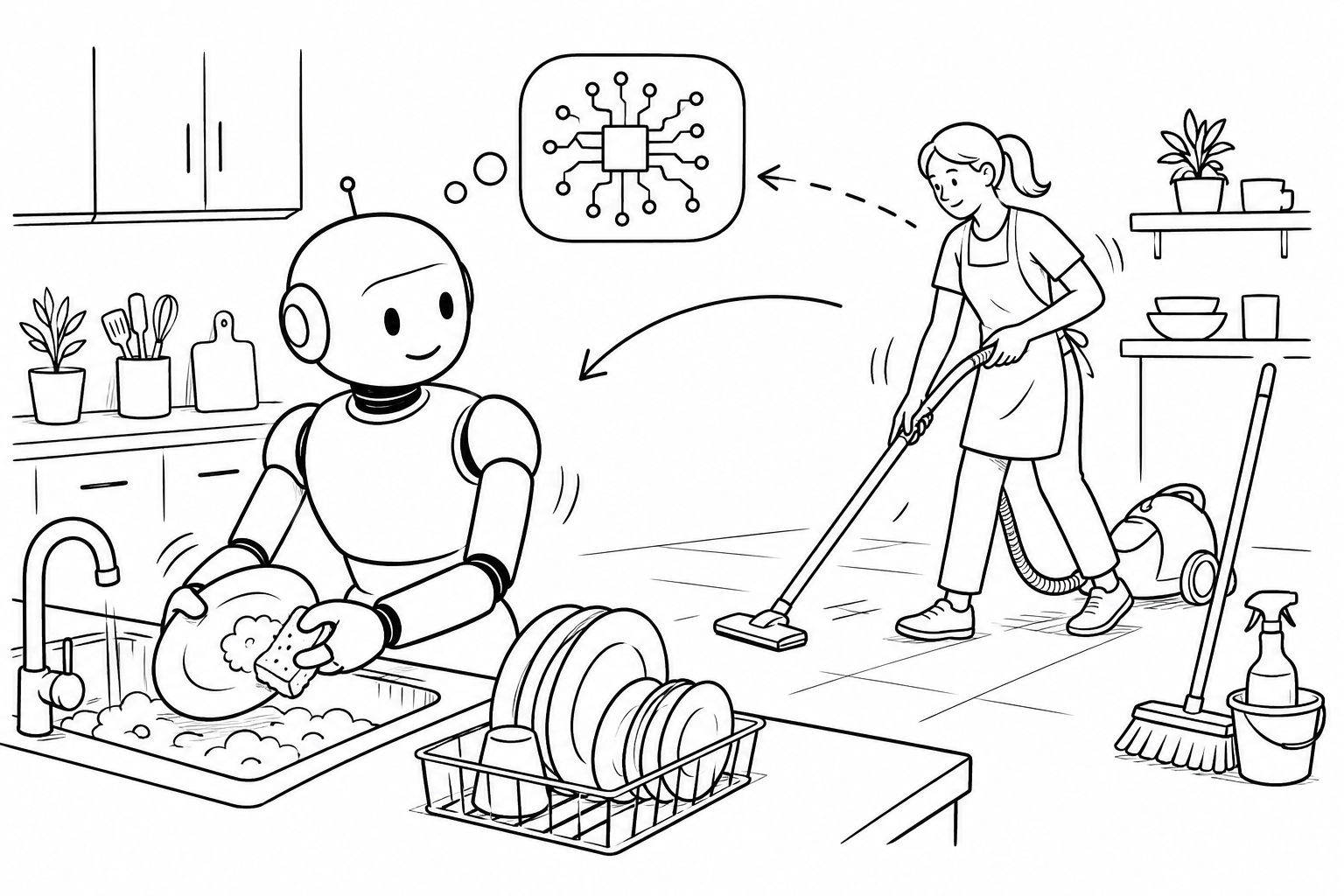
    Imagine opening your front door to a team of cleaners and a private chef offering their services for free. It sounds like winning a bizarre lottery, but there is one small catch: every sponge wipe, saucepan scrub and misplaced sock is being recorded for science, or more specifically, for robots.

    According to this report, a New York-based initiative called “Shift”, run by AI company “Micro AGI”, is sending camera-equipped workers into people’s homes to collect data that could help train future household robots. The goal is ambitious: teach machines how to navigate the chaos of real homes, where every kitchen is different and every junk drawer appears to operate under its own laws of physics.

    Workers wear cameras mounted on their caps, capturing detailed footage of cleaning and cooking tasks. Founder Bercan Kilic says the effort is necessary because robots need vast amounts of real-world data to learn how to interact with objects under constantly changing conditions. The company plans to sell anonymised datasets to robotics and AI firms.

    For now, New Yorkers must decide whether a spotless apartment is worth helping train the robot butler of the future, and whether that future knows where they keep the good towels.

  • Robots Break Records, Industries Break Barriers: Humanoid Marathon Marks Robotics’ Leap From Labs to Real‑World Scale

    Robots Break Records, Industries Break Barriers: Humanoid Marathon Marks Robotics’ Leap From Labs to Real‑World Scale

    While most of the world is focused only on generative artificial intelligence (gen-AI), humanoid robotics, meanwhile, has moved from spectacle to serious industrial progress.

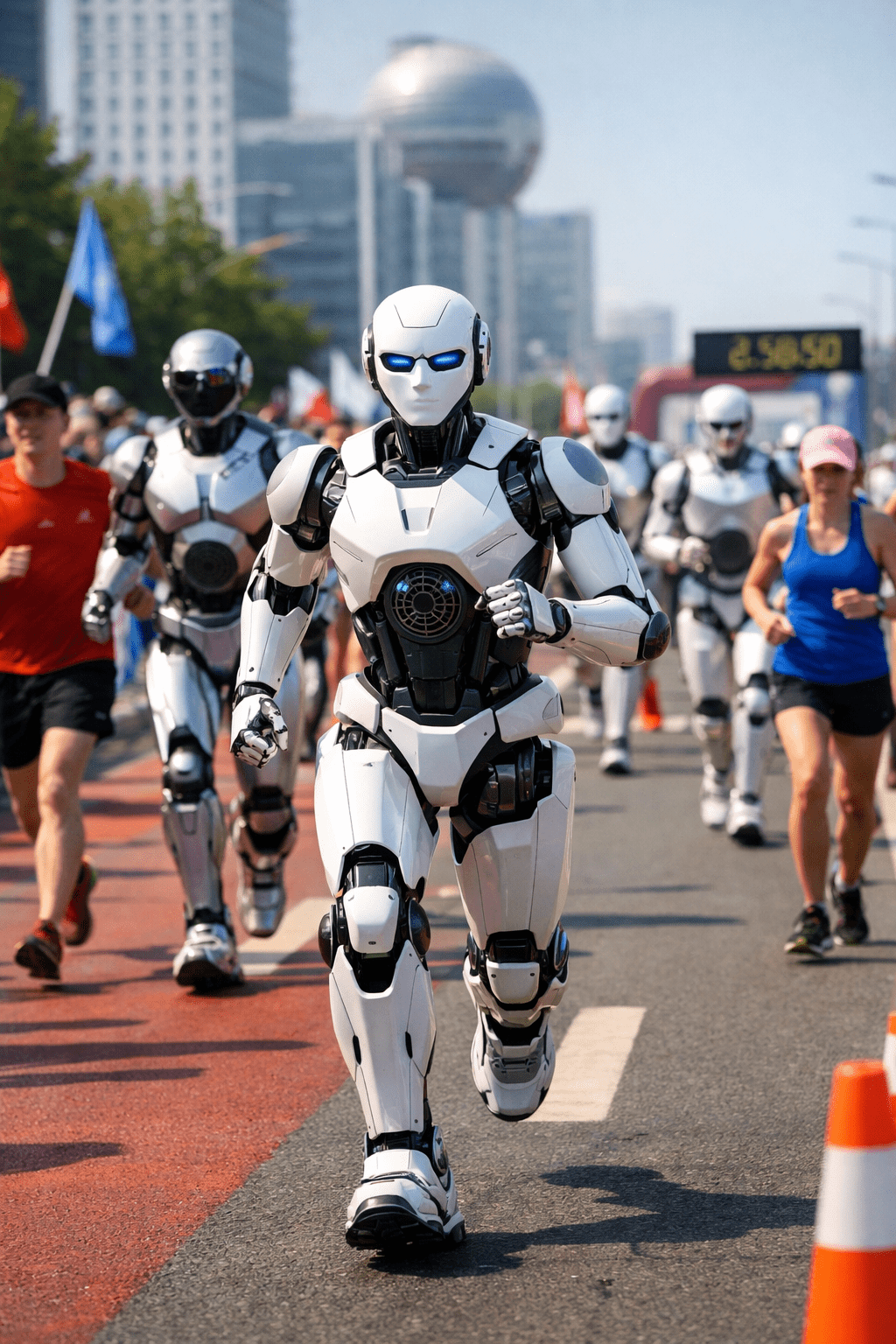
    About a fortnight ago, a humanoid robot named “Lightning” stunned the world by completing the Beijing E‑Town Half Marathon in just 50 minutes and 26 seconds. This was faster than the men’s human world record, signaling a dramatic leap in AI‑powered robotics. Bloomberg Qiushi

    The Beijing robot half marathon was a headline moment, but the broader story is that humanoid robots are scaling toward commercialization, with global shipments projected to exceed 510,000 units by 2030 and a potential multi‑trillion‑dollar market by 2050.

    A humanoid robot is a machine built to resemble the human body—with a head, torso, arms, and legs—so it can operate in spaces designed for people. Powered by artificial intelligence, these robots use AI to process sensory data, navigate environments, make decisions, and adapt their movements in real time, turning mechanical hardware into autonomous, human‑like systems.


    Broader Ramifications

    • Labor Shortages: With working‑age populations projected to decline by 22% in some regions by 2050, humanoid robots could fill structural labor gaps.
    • Efficiency Gains: Operating costs as low as $2/hour make humanoid robots a cost‑effective alternative to human labor.
    • Strategic Competition: Tech giants and consumer electronics firms are entering the space, leveraging ecosystem scale and edge AI to accelerate adoption

    Bottom Line: The Beijing robot half marathon wasn’t just a spectacle. It was a proof point of AI’s accelerating physical capabilities, suggesting humanoid robots may soon rival humans not only in speed but in practical, everyday tasks.