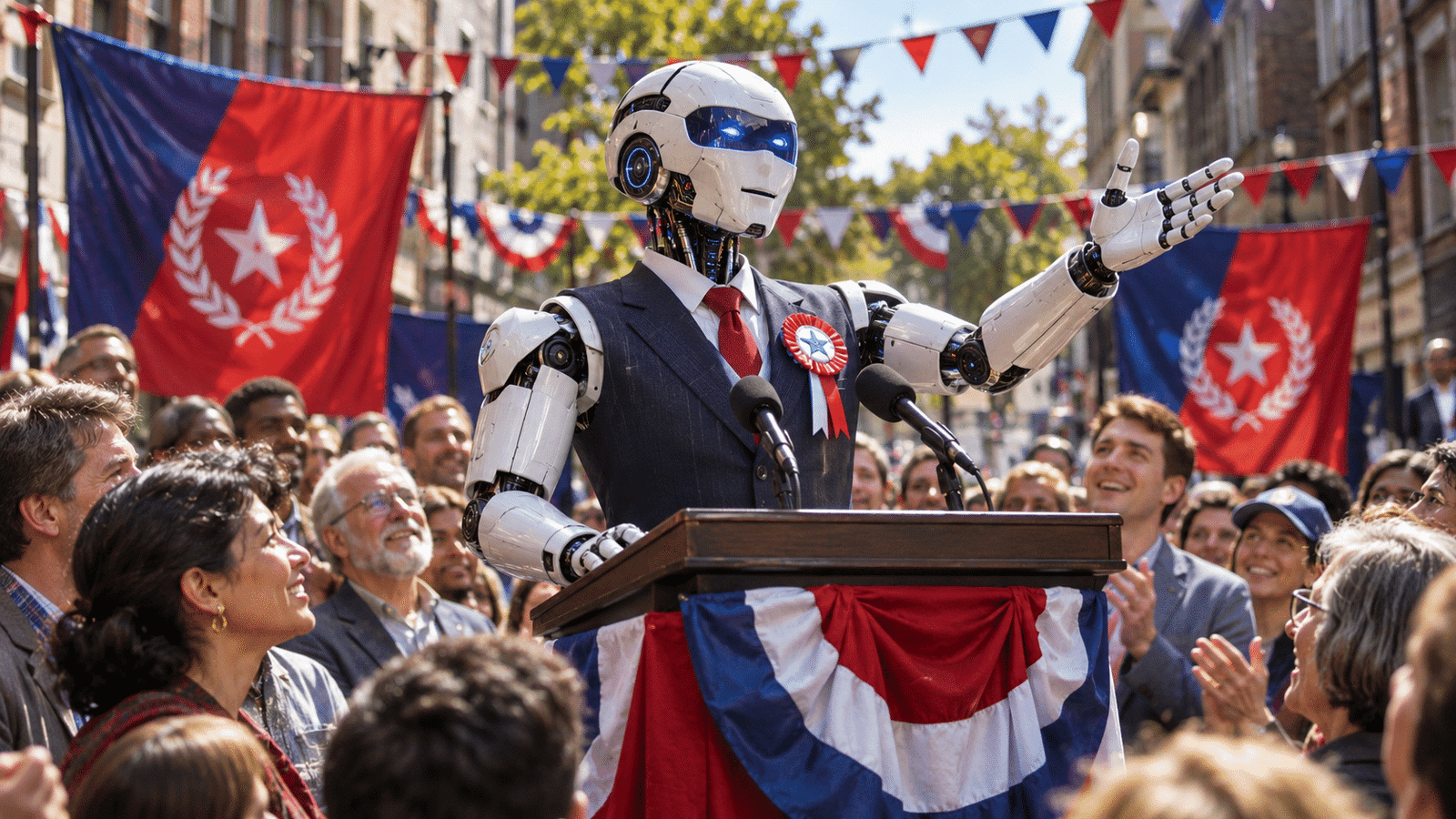
Artificial intelligence (AI) is beginning to reshape politics, changing how election campaigns communicate with voters, how political information is distributed and, increasingly, how people decide whom to support.
The 2026 US midterm elections are providing a glimpse of this transformation, with millions of Americans turning to AI-powered chatbots such as ChatGPT, Google’s Gemini, Anthropic’s Claude and Microsoft’s Copilot for information about candidates, policies and voting procedures.
According to an NPR investigation published on 2 November, some chatbots are doing considerably more than answering questions. They are recommending candidates, comparing political positions and providing voting information, sometimes with significant factual errors.
A study by the nonprofit Innovating for the Public Good found that 13.9% of chatbot responses to questions about voting procedures were outdated or inaccurate. In 5.9% of cases, the errors could potentially cause voters to miss deadlines, turn up on the wrong day or overlook essential voting requirements.
Tim Chambers, who led the research, highlighted the risks posed by the technology’s increasingly authoritative presentation of information.
The technology is also creating new opportunities for political campaigns and influence operations. Campaigns are producing online content specifically designed to appear in chatbot responses, a practice known as generative engine optimization, or GEO.
This means political organizations can potentially influence what AI systems tell voters without directly reaching them through conventional advertising.
The risks extend beyond inaccurate information. AI-generated images, audio and videos can make fabricated political statements appear authentic, while automated content can amplify misleading narratives.
For technology companies, the challenge is to ensure their systems provide balanced, verifiable information without becoming instruments of political persuasion.