Author: AI For Real Team

  • How AI Is Reshaping The Classroom Blackboard

    How AI Is Reshaping The Classroom Blackboard

    Imagine this: You are a student in a classroom looking at the class blackboard when suddenly, Albert Einstein appears on it and teaches you aspects of his Theory of Relativity. Fiction? No, it’s real. (Only, Einstein is AI created.)

    A Chinese company, “iFLYTEK” showcased its AI Blackboard at the recent 2026 World Artificial Intelligence Conference (WAIC), presenting the AI school blackboard device as part of its AI-powered education portfolio designed for classroom teaching.

    The AI Blackboard combines a traditional writing surface with artificial intelligence (AI) features intended to support classroom instruction.

    According to iFLYTEK, this is no ordinary blackboard but “an intelligent hub integrated into the entire teaching process”.

    Here are some of its features:

    • Handwritten content on the board can be recognized and converted into standardized graphics, while the system can identify related knowledge points and recommend teaching resources.
    • In mathematics lessons, the AI Blackboard can transform two-dimensional geometric figures into three-dimensional models for classroom display.
    • The system also includes AI virtual human technology that allows students to interact with AI representations of historical and cultural figures, including Confucius, Albert Einstein and the Tang Dynasty poet Li Bai.
    • Teachers can also customize their own “digital clones,” replicating their voices with a single sentence to provide personalized Q&A for students after class, making individualized teaching a reality rather than just a concept.
    • It can even be used to remotely conduct a class in another classroom thousands of miles away, and also eliminates language barriers.
    • Separately, teachers can create AI-powered digital avatars using voice-cloning technology to answer students’ questions after class.

    Background

    iFLYTEK is a Chinese artificial intelligence company founded in 1999 and headquartered in Hefei, Anhui Province. The company specializes in speech recognition, natural language processing, machine translation, and other AI technologies, with products and services spanning education, healthcare, smart cities, finance, and enterprise applications.

    In education, iFLYTEK develops AI-powered learning platforms, digital classroom technologies, and teaching tools for schools and universities. Its education portfolio includes smart classrooms, AI-assisted teaching systems, language learning solutions, and interactive devices such as the AI Blackboard.

    The company has expanded its presence in China’s education sector through partnerships with schools and local governments, while also promoting selected education technologies in international markets.

    For classroom documentation, the AI Blackboard uses a “4+1” camera system and AI audio processing to automatically record lessons. The system can generate lesson records and produce short instructional video clips from classroom sessions, according to the company.

    iFLYTEK said the AI Blackboard has been deployed in all 33 provincial-level administrative regions in China and is used in more than 1,400 counties and districts. The company’s announcement also highlighted a demonstration in which the system supported a joint lesson between a school in Zhejiang Province and a school in Indonesia using AI capabilities to facilitate cross-language communication.

    Image credit: iFLYTEK
  • Make Your Own AI with Pi (Raspberry)

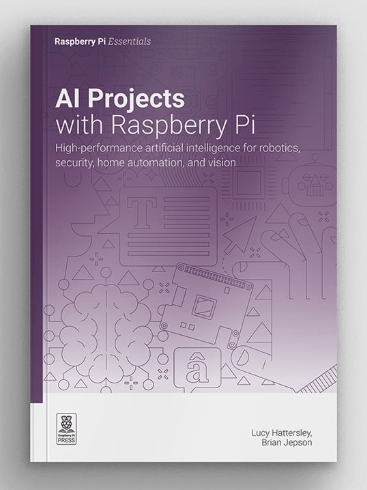
    Make Your Own AI with Pi (Raspberry)

    Who says you need a supercomputer to build artificial intelligence (AI)? Today, something as powerful as AI can run on something as small as a Raspberry Pi!

    This tiny, affordable computer is opening the doors to a world of smart technology, allowing students, makers, and tech enthusiasts to create everything from face-recognition systems and voice assistants to robots and smart home gadgets.

    With “AI Projects with Raspberry Pi”, learning AI is no longer limited to experts. It’s now fun, hands-on, and within reach of anyone with curiosity and a Raspberry Pi.

    The new guide is packed with hands-on projects that enable students, hobbyists, educators, and makers to explore the rapidly growing world of artificial intelligence using Raspberry Pi hardware.

    The publication introduces readers to essential AI concepts such as computer vision, machine learning, and natural language processing through practical, project-based learning. Instead of focusing only on theory, it encourages users to build real-world applications, including smart cameras, voice-controlled assistants, environmental monitoring systems, and intelligent automation projects. Many of these applications run directly on Raspberry Pi devices, showcasing the power of edge AI, where data is processed locally for faster performance, enhanced privacy, and reduced reliance on cloud services.

    What’s Raspberry Pi?

    Raspberry Pi is a series of compact, affordable single-board computers developed to make computing, programming, and digital innovation accessible to everyone.

    Since its launch in 2012, Raspberry Pi has become a global favourite among students, educators, hobbyists, and professionals for learning coding, building electronics projects, and developing applications in robotics, IoT, AI, and automation. Despite its small size, a Raspberry Pi delivers impressive computing power and supports a wide range of programming languages, operating systems, and hardware accessories. With a strong emphasis on hands-on learning and innovation, Raspberry Pi has empowered millions of people worldwide to turn creative ideas into real-world technology solutions.

    Beyond teaching technical skills, “AI Projects with Raspberry Pi” inspires creativity and innovation. It highlights how affordable computing can be transformed into intelligent systems capable of solving real-world problems across education, robotics, smart homes, and environmental monitoring. By combining powerful AI tools with easy-to-use hardware, Raspberry Pi continues to empower the next generation of innovators.

    Image credit: Raspberry Pi

  • The 24 AI Risks Experts Are Watching Most Closely

    The 24 AI Risks Experts Are Watching Most Closely

    Artificial intelligence (AI) keeps getting more powerful, but which risks actually deserve our attention over the next few years?

    A team from MIT FutureTech and the University of Queensland set out to answer that. They asked 272 international AI experts to rate 24 AI risks by how likely they are and how much harm they could cause, using a structured survey method designed to build consensus across many rounds.

    The headline finding: even in a best-case scenario where companies and governments make reasonable efforts to manage AI responsibly, five risk categories still carry at least a 10% chance of catastrophic harm within five years — meaning outcomes on the scale of over a million deaths, $100 billion in losses, or comparable damage to society.

    Those five are AI systems gaining dangerous capabilities

    • AI-enabled weapons and cyberattacks
    • environmental harm
    • inequality and job loss
    • the concentration of power and unequal distribution of AI’s benefits.

    Without any mitigation at all, the picture is worse: 8 of the 24 risk domains crossed that same 10% catastrophic-probability threshold.

    Two risks stood out to researchers as especially urgent. AI is unusually good at coding and pattern recognition, which makes it a natural fit for accelerating cyberattacks. And “dangerous capabilities” is a broader worry — the same advances that help with legitimate work can also make surveillance, deepfakes, persuasion, and even weapons development easier to pull off.

    The study also flagged competitive pressure as a risk multiplier: when companies or countries fear falling behind, they may cut corners on safety just to move faster.

    Three sectors were named as most exposed: information (misinformation, privacy), national security (cyberattacks, weapons), and finance (fraud, market manipulation). And there’s a mismatch worth noting — developers and regulators are seen as most responsible for managing these risks, while everyday users bear the brunt of them.

    Reference:

    https://mitsloan.mit.edu/ideas-made-to-matter/these-are-most-urgent-ai-risks-according-to-272-experts

  • First, There Was Prompt. Now There’s Loop Engineering

    First, There Was Prompt. Now There’s Loop Engineering

    It all started with prompt engineering. But today, it’s come to what’s called as “Loop Engineering”.

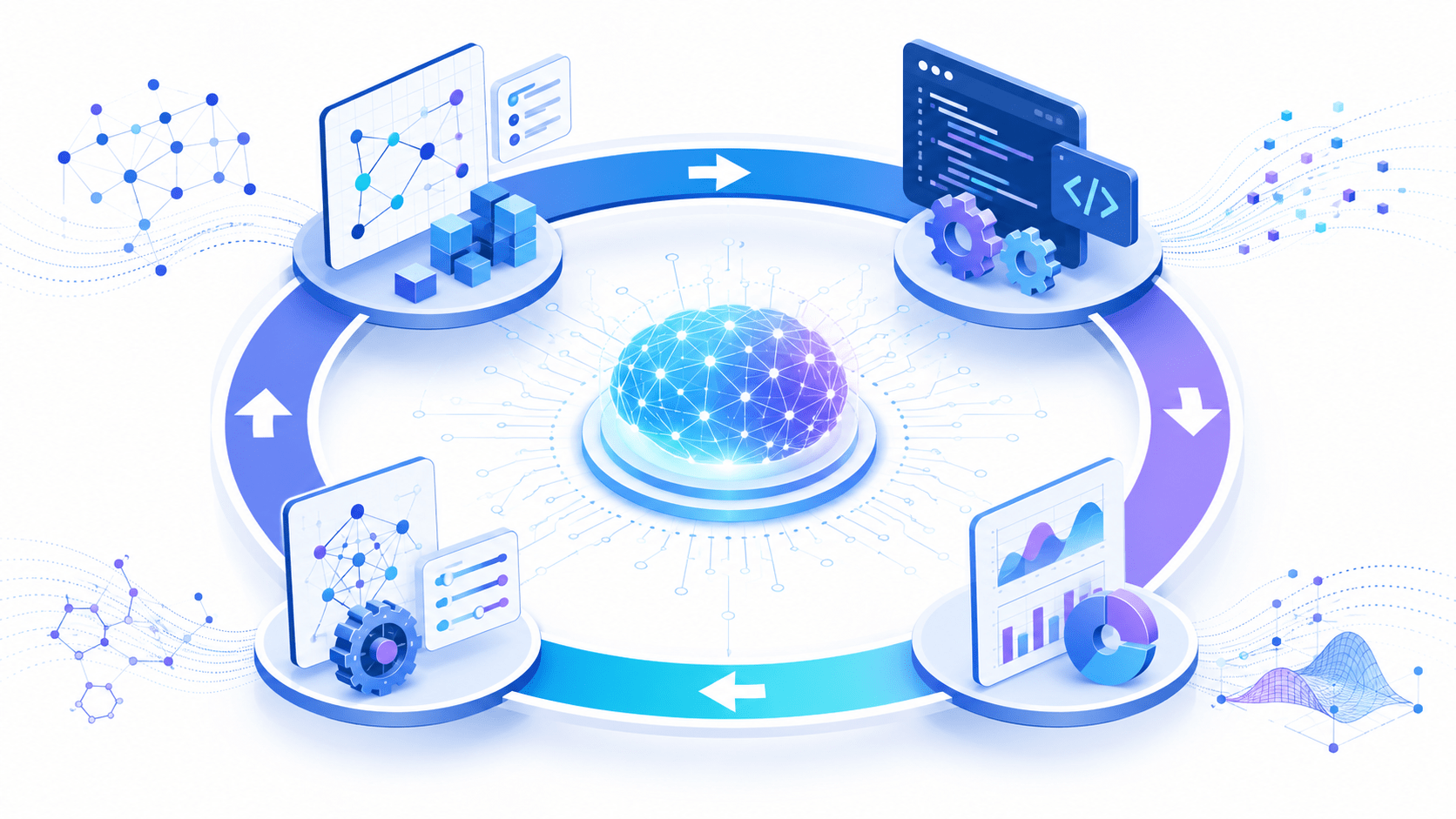
    This is the practice of designing, testing, and improving the repeated cycles that an AI system follows to solve a task. Instead of asking a model a single question and accepting its first answer, loop engineering builds a structured process where the AI generates a response, evaluates it, improves it, and repeats this cycle until it reaches a satisfactory result.

    A simple loop may consist of four steps: plan, execute, evaluate, and refine.

    • First, the AI creates a plan for solving the problem.
    • Next, it executes the plan by producing an answer or performing an action.
    • Then, the result is evaluated against predefined criteria, such as accuracy, completeness, or safety.
    • Finally, based on the evaluation, the AI revises its output and begins another iteration if needed.

  • China-led AI body marks new phase in global contest over technology governance

    A group of 29 countries has signed an agreement to establish the World AI Cooperation Organization, a China-backed intergovernmental body aimed at promoting international cooperation and governance in artificial intelligence (AI).

    The agreement, signed in Shanghai ahead of the World AI Conference, marks the most significant institutional effort yet by Beijing to shape the rules governing AI development at a global level.

    While the organisation is framed as a platform for collaboration, its broader significance lies in the emerging contest over who sets global AI standards.

    The move positions China as an alternative centre of influence to the United States and its allies, which have largely pursued AI governance through smaller, like-minded coalitions focused on safety, security and democratic values. Beijing, by contrast, has consistently advocated a more inclusive framework that emphasises technology sharing, state sovereignty and access for developing economies.

    The establishment of a permanent institution could deepen this divide by creating parallel governance architectures. Countries in Africa, Asia and Latin America that seek greater access to AI infrastructure and expertise may increasingly align with the China-led framework, potentially giving Beijing greater influence over emerging technical standards, regulatory norms and digital infrastructure investments.

    The development also raises questions about the future of international AI regulation. Rather than converging on a single global framework, competing institutions may evolve around different political and economic priorities, mirroring broader strategic competition between Washington and Beijing. That fragmentation could complicate efforts to develop universally accepted rules for frontier AI, cross-border data governance and responsible deployment of advanced systems.

  • A New Model (AI) Is Launched

    A New Model (AI) Is Launched

    Former OpenAI Chief Technology Officer Mira Murati has taken a major step in challenging the dominance of the artificial intelligence (AI) industry’s biggest players with the release of the first AI model from her startup, “Thinking Machines Lab”.

    The company unveiled “Inkling”, an open-weight foundation model designed to give developers greater flexibility to customize AI systems using their own data, rather than relying on proprietary models controlled by companies such as OpenAI and Anthropic.

    The model contains 975 billion parameters, but activates only 41 billion during any given task, a design intended to improve efficiency by reducing computing costs without sacrificing performance. Which means: The AI model has a vast amount of knowledge stored inside it, but it doesn’t use all of it every time you ask a question. Instead, it activates only the parts that are relevant to the task at hand. This makes the system faster and cheaper to run while still delivering high-quality answers.

    Thinking Machines Lab said its strategy focuses on balancing affordability and adaptability instead of competing solely on raw computing power. Alongside Inkling, the company is promoting “Tinker”, a cloud-based fine-tuning platform that enables developers to customize large AI models without managing complex infrastructure.

    Here’s What You Need To Really Know

    Unlike fully closed AI systems, Inkling’s open-weight design allows organizations to adapt the model to specialized tasks while retaining greater control over their data and applications.

    So what makes Inkling different is that it gives users more freedom. Most popular AI models are like rented apartments. You can use them, but you cannot change how they are built. Inkling is more like buying a house: businesses and developers can modify it to suit their own needs. It is also designed to work more efficiently by using only the parts of its “brain” needed for a task, making it faster and cheaper to run. This means companies can build AI tools tailored to their business without spending as much on computing or depending entirely on big tech firms.

    Inkling was trained using text, images, audio and video data and includes safeguards against misuse, including protections against cyberattacks and biological threats. The company also announced that the model was developed using Nvidia hardware under a multiyear partnership with the chipmaker.

    With its first model release, Thinking Machines Lab is positioning itself as a key contender in the rapidly evolving AI market, betting that openness, customization and lower costs will appeal to enterprises seeking alternatives to today’s dominant AI platforms.

    Image credit: Thinking Machines Lab

  • Growing Role Of Generative AI In University Assignments: Trends And Challenges

    Growing Role Of Generative AI In University Assignments: Trends And Challenges

    The growing use of generative artificial intelligence (gen AI) in higher education reflects a significant shift in how students approach academic work.

    For example, fresh data from Turnitin indicates that 53.6% of Australian university submissions screened between October 2025 and April 2026 contained some level of AI-generated content. Within this group, around 10% of submissions were assessed as containing more than 80% AI-written material.

    These figures suggest that AI tools have moved beyond experimentation and become part of mainstream student workflows.

    The data also highlights that AI use exists along a broad spectrum rather than as a single category of behaviour.

    Different Strokes For Different People

    Some students appear to use AI for limited tasks such as brainstorming, editing or improving clarity, while others rely on it more extensively to generate substantial portions of their assignments. This distinction complicates conventional discussions about academic integrity because AI use is no longer simply a matter of whether students use these tools, but how they incorporate them into the learning process.

    The widespread adoption of generative AI raises questions about the purpose and design of university assessments.

    Traditional take-home essays and written assignments were created on the assumption that students would independently research, analyse and compose their responses.

    As AI systems become increasingly capable of producing coherent and well-structured text, these assumptions are being challenged. Universities are therefore examining whether existing forms of assessment continue to measure the knowledge and skills they were originally intended to evaluate.

    The findings also indicate that institutional responses are evolving. Many Australian universities, for example, have introduced policies governing the acceptable use of generative AI, yet translating these policies into consistent classroom practice remains an ongoing process.

    Variations in assessment design, disciplinary expectations and instructor guidance mean that students may encounter different standards across courses. This creates an environment in which clear communication about acceptable AI use becomes increasingly important.

    Written by AI or Not?

    Another notable aspect of the discussion concerns the limitations of AI detection.

    While detection tools can identify patterns consistent with AI-generated writing, they cannot always determine how students used AI or distinguish between acceptable assistance and inappropriate dependence. This makes assessment of student work more complex than traditional plagiarism detection, where copied material can often be directly traced to an original source.

    The Australian data also gains significance when viewed in an international context. Turnitin reported similar patterns in the United Kingdom, while submissions in the United States showed an even higher proportion of heavily AI-generated work. These comparisons suggest that the integration of generative AI into higher education is part of a broader global trend rather than an isolated national development.

    Conclusion

    Overall, the increasing use of generative AI by university students illustrates a changing educational landscape in which digital tools are becoming embedded in academic practice. The available evidence points to a shift from viewing AI as an emerging technology to recognising it as a routine component of student work. As universities continue to refine policies, assessment methods and teaching practices, the discussion is likely to focus on defining the role that AI should play within higher education while ensuring that assessment continues to reflect intended learning outcomes.

  • Legal Profession Grapples With AI Boom As Reliance Grows

    Legal Profession Grapples With AI Boom As Reliance Grows

    A decision by the University of Chicago Law School to ban laptops and phones in first year classrooms has become a defining example of how deeply artificial intelligence (AI) has entered legal education.

    The move is not an attempt to reject technology altogether. Instead, it reflects growing concern that future lawyers are becoming overly dependent on AI tools before mastering the fundamentals of legal reasoning, research and advocacy.

    The school will continue teaching students how to use AI responsibly, but only after they have built core analytical skills without digital assistance.

    Signals a Broader Shift

    The development highlights a broader shift taking place across legal fraternities worldwide. Law schools, law firms and courts are rapidly embracing generative AI for drafting contracts, summarising case law, reviewing documents, conducting legal research and even preparing litigation strategies.

    Tools such as Harvey, Legora and AI powered research platforms are becoming increasingly common in legal practice, promising significant gains in speed and efficiency.

    Yet the rapid adoption has also exposed serious risks. Several lawyers in the United States and elsewhere have faced court sanctions after submitting filings containing fictitious cases generated by AI chatbots. These incidents have fuelled concerns about “hallucinations”, where AI confidently produces inaccurate legal information.


  • Music Industry Introduces AI Labels To Boost Transparency

    Music Industry Introduces AI Labels To Boost Transparency

    The global music industry has introduced a new labelling system aimed at helping listeners distinguish between music created entirely by artificial intelligence and songs made by human artists with AI assistance.

    The initiative seeks to promote greater transparency as AI-generated content becomes increasingly common on streaming platforms.

    The voluntary framework has been developed jointly by leading music industry organisations, including the Recording Industry Association of America (RIAA), the International Federation of the Phonographic Industry (IFPI), the Grammys, SAG-AFTRA, and several independent music associations.

    Under the new system, tracks will carry one of two labels: “AI-generated” for songs in which vocals or major instrumental performances are produced by artificial intelligence, and “AI-assisted” for music created primarily by humans using AI tools during production.

    The move comes amid growing concerns over the rapid rise of AI-generated music and its impact on artists, copyright, and listener trust. Industry leaders believe the labels will provide consumers with greater clarity about how songs are created while allowing AI to remain a creative tool rather than replacing human artistry.

    The proposed labels are expected to function similarly to existing explicit-content warnings on streaming services. However, implementation will rely on voluntary disclosures by artists, record labels, and distributors.

    Some platforms have already begun adopting similar measures. Apple Music has introduced AI transparency tags, while Spotify allows artists to disclose AI involvement through song credits.

    The organisations behind the initiative said the framework is designed to evolve alongside advances in AI technology.

  • AI Driven Cybersecurity Monitoring Gains Momentum As EY India Launches Cyber Risk Platform

    AI Driven Cybersecurity Monitoring Gains Momentum As EY India Launches Cyber Risk Platform

    Artificial intelligence (AI) is moving beyond threat detection and into continuous cybersecurity monitoring.

    EY India is launching an AI-powered Cyber Performance Management platform that aims to help enterprises measure cyber risk in real time rather than relying on periodic security reviews.

    What this indicates is a major shift in enterprise security, where AI is increasingly being used to monitor, analyse and prioritise cyber threats across complex digital environments.

    The new platform, said the company, brings together data from an organization’s cybersecurity tools to provide a “live” view of its security posture.

    Instead of presenting security teams with thousands of alerts, the AI engine evaluates vulnerabilities, identifies the most critical risks and links them to potential business impact. This allows security teams and business leaders to understand which threats require immediate attention.

    Traditional cybersecurity programmes often depend on manual assessments and periodic audits, making it difficult to keep pace with rapidly evolving threats. EY’s platform is designed to replace that approach with continuous AI-driven monitoring that can detect changes in an organisation’s risk profile as they happen.

    The company said the platform combines cybersecurity posture, threat exposure, detection and response into a single system. AI analyses large volumes of security data, helping organisations quantify cyber risk in financial and operational terms rather than relying solely on technical metrics. This gives executives a clearer understanding of how cyber incidents could affect business operations, compliance and revenue.

    The launch comes as enterprises continue expanding cloud infrastructure, connected devices and AI applications, creating larger attack surfaces that are increasingly difficult to monitor manually. As cyber threats become more sophisticated, organisations are looking to AI to automate routine monitoring, speed up threat prioritisation and improve response times.

    The announcement highlights a growing trend in enterprise security, where AI is no longer focused only on identifying attacks but on providing continuous cyber performance monitoring. As businesses face increasing regulatory pressure and more frequent cyber threats, real-time AI monitoring is becoming an essential part of enterprise risk management rather than an optional security upgrade.

    Image credit: EY/Facebook