We’ve all seen the marketing demos. A sleek AI assistant effortlessly cruises through a complex workflow: it checks your calendar, reads your emails, updates your project management board, and fires off a summary report. All while you sip your morning coffee.
It looks like magic. But for many of us, the reality of “Living With AI” feels a lot less like a magic show and more like trying to teach a brilliant, hyper-fast toddler to organize a library.
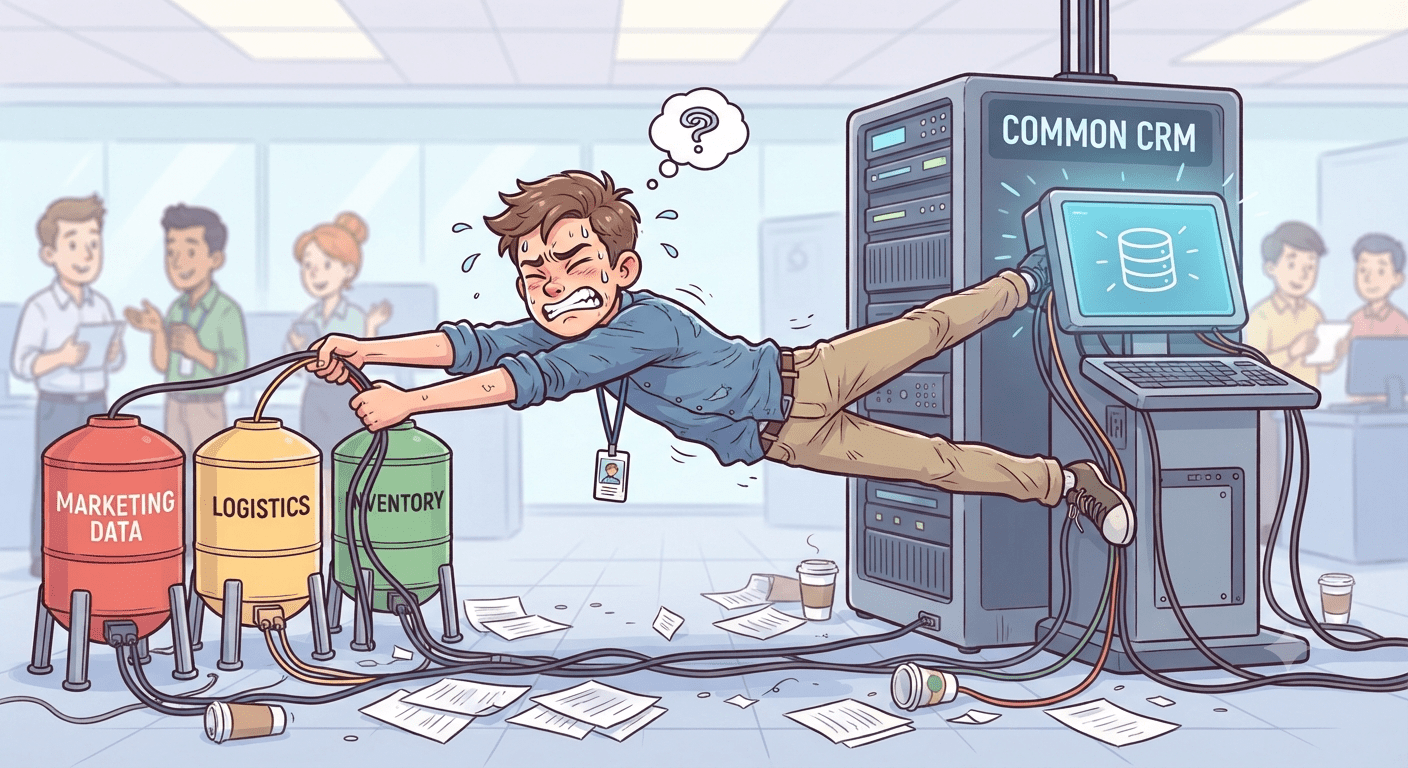
You’ve likely asked an AI a question about your work and gotten a brilliant, concise answer. But when you asked it to actually do something across your company’s software ecosystem, it hit a wall. Why can your AI explain a concept in seconds, but struggle to move a simple task from your inbox to your task tracker?
The answer lies in a problem as old as computers themselves: the “Digital Silo”.
Artificial intelligence (AI) tools are helping professionals work faster, but growing evidence suggests they could also weaken the very skills people have spent years developing, prompting researchers to call for urgent studies on how to prevent AI driven deskilling.
The concern is particularly strong in medicine. A survey of US health care workers published this month in nature found that 70% of nurses and 77% of physicians worry that over reliance on AI systems could reduce their clinical skills.
Researchers say those fears are beginning to find support in real world evidence. The study published last October in The Lancet Gastroenterology and Hepatology found that experienced physicians became less effective at detecting precancerous intestinal growths when an AI tool they had grown accustomed to using was suddenly unavailable.
The study followed physicians in Poland who specialized in endoscopy and had each performed at least 2,000 colonoscopies during their careers. Researchers introduced an AI system that analysed colonoscopy images in real time and highlighted adenomas, a type of precancerous lesion. The system was available only on certain days, allowing researchers to compare doctors’ performance with and without AI assistance.
Before the technology was introduced, doctors detected at least one adenoma in 28.4% of colonoscopies. After three months of using the AI system, the detection rate during procedures performed without AI assistance fell to 22.4%.
The findings suggest that even highly experienced clinicians may become less effective at tasks they routinely perform if they become dependent on AI, researchers said. The study authors argued that continuous exposure to AI tools could leave clinicians less motivated, less focused and less responsible when making decisions without technological support.
The issue is not limited to medicine. Researchers at AI company Anthropic have also begun investigating whether software engineers lose skills when they rely heavily on AI coding assistants.
In a randomized controlled trial involving 52 software engineers, participants completed a basic coding task with access to online resources, while half were also encouraged to use an AI assistant. The study is part of a broader effort to understand how AI affects long term expertise.
As AI becomes a routine part of workplaces across industries, researchers say the challenge will be finding ways to capture the technology’s productivity benefits without allowing essential human expertise to fade.
It may well prove to be a first in the global corporate world insofar as sheer numbers are concerned.
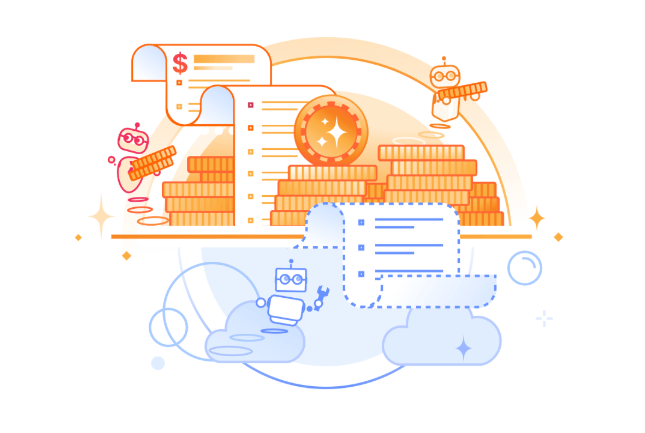
Cisco will begin deploying personalised AI agents to its entire workforce of around 90,000 employees starting this August, marking one of the largest enterprise-wide AI rollouts to date.
The initiative is aimed at boosting productivity by giving every employee an AI assistant capable of answering questions, automating routine tasks, and routing requests to the most suitable AI model.
According to Cisco Chief Financial Officer Mark Patterson, the company has designed the system to dynamically select the best AI model for each task, helping optimise both performance and costs. Much of the AI infrastructure will also run on Cisco’s own systems to improve control over data and reduce token usage.
The rollout will be accompanied by employee upskilling programmes and is expected to support innovation across functions such as finance and operations. However, Cisco executives acknowledged that adopting AI at this scale will not be without challenges.
But what makes this move historic? Many other companies before Cisco have done this. Like Microsoft and Salesforce.
What makes the announcement notable is its scale. Around 90,000 employees will each get a personalized AI agent. Multiple reports describe it as “one of the largest” enterprise-wide AI agent deployments.
Here’s some good news for website owners globally. Cloudflare has expanded its tools for managing artificial intelligence (AI) web crawlers, giving website owners more control over how AI companies access their content as concerns grow over declining referral traffic and content monetization. The announcement marks the company’s second annual “Content Independence Day” initiative.
The company said its previous approach, which allowed customers to block AI bots with a single setting, did not provide enough flexibility.
Instead, website owners can now distinguish between three categories of AI traffic: Search crawlers that index content for search engines, Agent crawlers that retrieve information on behalf of AI assistants, and Training crawlers that collect data for developing AI models. Customers can choose which categories to allow or block, including those using Cloudflare’s free tier.
Cloudflare also announced new default settings that will take effect on September 15, 2026. For new domains, Training and Agent crawlers will be blocked by default on pages displaying advertisements, while Search crawlers will remain allowed. The company argues that ad-supported pages are designed for human visitors and that unrestricted AI access could undermine publisher revenue. Existing customers will be able to opt out of the new defaults before they are applied.
Another significant change targets AI companies that use a single crawler for multiple purposes. Under the updated system, multi-purpose crawlers will be evaluated based on all of their activities. This means a crawler used for both search indexing and AI training could be blocked if a website owner chooses to restrict training access. Cloudflare said it encourages AI companies to separate their crawlers to improve transparency for publishers.
For enterprise customers, Cloudflare also introduced BotBase, a searchable database of verified bots and automated agents designed to improve visibility into automated traffic. The company said the new controls reflect a broader effort to help publishers balance AI innovation with sustainable business models for online content.
Meetings are essential for collaboration, but they often consume more time than necessary. Employees spend hours preparing agendas, taking notes, tracking action items, and following up after discussions.
Artificial Intelligence (AI) transforms meetings from time-consuming events into highly productive sessions by automating routine tasks and helping teams focus on meaningful conversations.
Why AI Matters in Meetings
Traditional meetings often suffer from:
Lack of clear agendas
Poor note-taking
Missed action items
Lengthy follow-up emails
Difficulty recalling important decisions
AI addresses these challenges by capturing conversations, organizing information, and generating actionable insights in real time.
By now, you’ve seen how AI can help organize your work and automate repetitive tasks. But AI is much more than a productivity tool. It can also become your personal tutor, creative partner, and decision-making assistant.
The key is learning how to ask better questions and use AI to think more effectively rather than simply getting answers.
Learning Faster with AI
Traditional learning often involves searching through articles, watching long videos, or reading textbooks. AI can shorten this process by explaining concepts in a way that matches your level of understanding.
Articles, reports, research papers, newsletters, meeting notes, PDFs—the list never ends. Yet most of us don’t have the time to read everything in detail.
The result? Information overload.
The good news is that AI can help you extract the key insights in a fraction of the time.
The Workflow
Open your AI tool of choice.
Paste the article, report, or document (or upload the PDF if supported).
Use the prompt below.
Review the summary and decide whether the full document deserves a deeper read.
Think of AI as your first-pass analyst. It helps you identify what matters before you invest your time.
Most people don’t need artificial intelligence (AI) to build the next startup. They need AI to help them get through their day more efficiently.
That’s what this series is about.
AI Productivity Playbook is a practical series focused on using AI to save time, reduce overwhelm, and get more done with less effort.
To help our community members get the best out of AI in their daily lives, we’ll explore simple ways to use AI for the tasks many of us deal with every day:
Organizing ideas and to-do lists
Planning projects
Summarizing articles, reports, and PDFs
Writing emails and messages
Taking better meeting notes
Learning new skills faster
Making decisions with more clarity
Managing information overload
Turning rough thoughts into action plans
Each session will focus on one specific problem and show you exactly how AI can help solve it.
No technical knowledge required.
No complex workflows.
No AI jargon.
Just practical, step-by-step examples you can start using immediately.
Every session will include:
🧩 The Problem A common productivity challenge.
⚡ The Process A simple workflow you can follow.
📋 Copy/Paste Prompt Ready-to-use prompts you can try yourself.
🎯 The Outcome What kind of result can you expect.
💡 Pro Tip An extra tip to get even better results.
The goal isn’t to become an AI expert. It is to make your work easier, your thinking clearer, and your time more productive.
If AI can save you even 15–30 minutes a day, that’s hours gained every month.
Starting June 25, 2026, we will begin with one of the most common challenges of all:
How to turn a messy brain dump into a clear, actionable plan. So stay tuned.
This series is for learning and informational purposes only. While we aim to keep things accurate and practical, AI tools as well as humans can make mistakes. Always review outputs and use your own judgment before applying anything in real-world situations. “AI For Real” community is not legally liable for any decisions, actions, or outcomes resulting from the use of this content.
Reminder: This series is only for members of this community. So if you haven’t signed up yet, please do NOW!