Category: AI Tools

  • Samsung’s New AI SSD Won’t Fix the Memory Crisis. But It’s A Sign Of Where Relief Will Come From

    Samsung’s New AI SSD Won’t Fix the Memory Crisis. But It’s A Sign Of Where Relief Will Come From

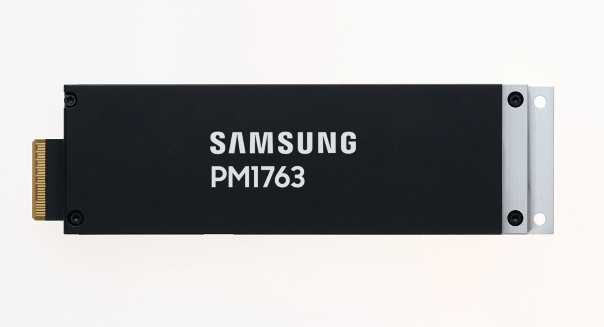
    Samsung just began mass production of an enterprise SSD purpose-built for artificial intelligence (AI) and high-performance computing (HPC) servers.

    Read against the backdrop of 2026’s brutal memory shortage, it’s tempting to ask: does this bring costs down? The honest answer is not directly, not soon. But it does hint at how relief eventually arrives.

    (An SSD (Solid State Drive) is a data storage device that uses flash memory chips to store data, instead of spinning magnetic disks like older hard drives (HDDs).

    No moving parts — data is stored electronically on NAND flash chips, so there’s nothing physically spinning or moving to read/write data.)

    What Samsung Actually Shipped

    The PM1763 is built on 9th-generation V-NAND and a new 4nm controller, available in 4TB, 8TB, and 16TB capacities.

    The flagship 16TB drive hits sequential read/write speeds of 28,400/21,900 MB/s, over double its predecessor, the PM1753. And it’s fast enough to move a 40GB language model in about 1.4 seconds.

    Where consumption of electricity is concerned, the new SSD’s power efficiency improves by more than 1.8x, and it’s designed for liquid-cooled, direct-to-chip server racks, with post-quantum cryptography baked in for security-conscious deployments.

    In short: it’s a performance and efficiency play, not a supply play. It doesn’t add wafer capacity or NAND bits to a starved market.



    Why That Distinction Matters Right Now

    2026 has been defined by what analysts are calling a “structural” — not cyclical — memory shortage.

    Manufacturers have been reallocating fab capacity away from conventional NAND and DRAM toward high-margin, AI-driven products like HBM and high-capacity enterprise SSDs, since a single AI server rack can demand over 1,000TB of NAND.

    It is this reallocation, not a lack of manufacturing, that is driving contract prices up. TrendForce and IDC both expect meaningful new fab capacity — the kind that would actually ease scarcity — no earlier than late 2026, with real relief likely 2027-2028.

    Where A Chip Like This Actually Helps

    Doing more with less is the real short-term win here, not making more chips.

    If the PM1763 lets a data center handle the same amount of AI work using fewer drives, thanks to better speed and nearly double the power efficiency, that means buying fewer SSDs for the same job, and spending less on power and cooling per server rack.

    For a data center operator, that can offset, not reverse, rising per-unit NAND prices. It’s a way of doing more with the same starved allocation of chips, rather than a way of making more chips available.

    There’s also a signaling effect. Samsung, SK Hynix, and Micron are all funneling R&D toward exactly this segment — high-capacity, high-margin enterprise storage — because that’s where hyperscaler demand and pricing power both sit.

    Bottom line for the community

    Don’t expect AI infrastructure costs to fall because of this launch. Expect them to keep climbing through 2026, with a slower rate of increase for operators using the newest, most efficient hardware. Expect real price relief only once new fab capacity actually comes online, not before.

    Image credit: Samsung

  • NVIDIA’s Move To Secure Autonomous AI

    NVIDIA’s Move To Secure Autonomous AI

    Whether you are a developer writing these skills or a business leader deploying agents in your enterprise, this new development fundamentally rewrites how AI security is handled.

     NVIDIA recently introduced “NVIDIA-Verified Agent Skills”. This capability governance framework provides a standardized way to inspect, verify, and monitor the tools we give our AI agents.

    Before NVIDIA’s new standard, the online marketplace was completely unregulated. 

    Right now, there may perhaps be scores of businesses that might be hesitant to fully deploy AI, because of the fear it will make a massive, costly mistake or get hacked.

    NVIDIA, and soon some other tech giants, are building the safety rails these businesses need. They are turning AI agents from unpredictable, risky “mad scientists” into vetted, background-checked, predictable digital employees.

    Click here to read this newsletter.

  • Google’s “Daily Brief”: A Fresh Spin On Agentic AI?

    Google’s “Daily Brief”: A Fresh Spin On Agentic AI?

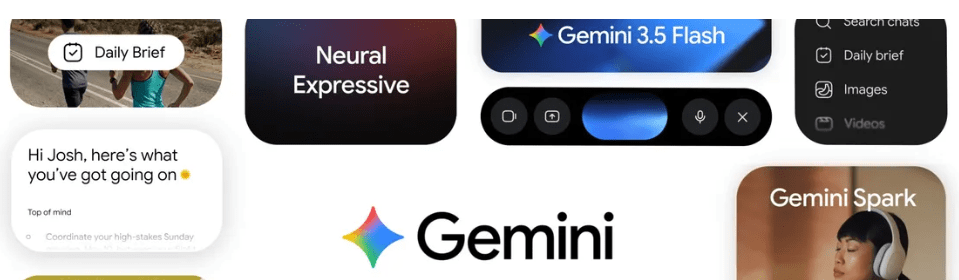
    So for those in our community who may have missed this – Google has introduced a new feature today called “Daily Brief”, an AI-powered productivity agent within its Gemini app.

    The tool is designed to deliver personalized morning digests by scanning Gmail, Calendar, and Gemini chats to highlight urgent updates, prioritize tasks, and suggest next steps. Announced at Google I/O 2026, Daily Brief is now rolling out to US subscribers of Gemini Plus, Pro, and Ultra, marking a significant step in Google’s shift toward proactive AI assistance.

    But is it Different From the Rest of the Pack?

    So the real question here is – does this new agentic AI truly stand apart from other agentic AI tools already in the market? At its core, Daily Brief offers a personalized morning digest by pulling information from Gmail, Calendar, and Gemini chats, then suggesting immediate actions. But this is similar in spirit to Microsoft Copilot’s daily briefing emails, which summarize meetings, tasks, and emails, and maybe even to Apple’s rumored AI assistant, expected to integrate deeply with iOS productivity apps.

    Where Daily Brief differs, say some, is in its agentic design. Unlike Copilot, which primarily delivers static summaries, Google’s tool emphasizes proactive orchestration, from suggesting replies, scheduling events, and learning from user feedback to refine future briefs. It also integrates with Gemini Spark, a 24/7 agent capable of executing tasks across Google Workspace and third-party apps, positioning Daily Brief as part of a larger, continuous AI ecosystem rather than a standalone feature.

    However, the distinction may blur in practice. There are other assistants already offer contextual task suggestions, and startups like Notion AI and Reclaim provide similar proactive planning.

    Google’s edge lies in its “Neural Expressive design language”, which makes briefs visually dynamic with graphics and narration, potentially enhancing engagement.

    The Verdict For Now

    Ultimately, Daily Brief is less a radical departure than a polished iteration. Its success will depend on whether users see value in Google’s integrated, ecosystem-first approach compared to competitors’ offerings.

    Image credit: Google ‘The Keyword’

  • Introducing “Gemma 4” And How To Download It On Your PC

    Introducing “Gemma 4” And How To Download It On Your PC

    Open-source, standalone AI models represent a fundamental shift in how we interact with machine intelligence, moving from “renting” a service in the Cloud to “owning” a tool on our own hardware. Unlike browser-based assistants that require a constant Internet connection and transmit your data to remote servers, standalone models are self-contained files — the “weights” — that run entirely on your local computer’s processor and memory.

    This architecture grants users complete data sovereignty, allowing for a “zero-leakage” environment where sensitive documents, private research, and intellectual property never leave the physical device. Beyond privacy, these models offer operational resilience, functioning at full capacity during internet outages and providing infinite use without recurring subscription fees or “per-token” costs.

    Introducing Google’s Gemma 4: Frontier Power, Local Control

    Released on April 2, 2026, Gemma 4 is the latest generation of open-weight models from Google DeepMind, designed to bring the “frontier-class” reasoning of the flagship Gemini 3 models to the open-source community. For the first time in the series’ history, Gemma 4 is released under a fully permissive Apache 2.0 license….which means it allows developers and individuals total commercial freedom to modify and deploy the models as they see fit.

    This 4th-generation family includes at least 4 variants — ranging from the mobile-optimized “E2B” to the high-performance “31B” Dense variant. All have multimodal capabilities (processing text, images, and audio) and an expanded 256K context window.