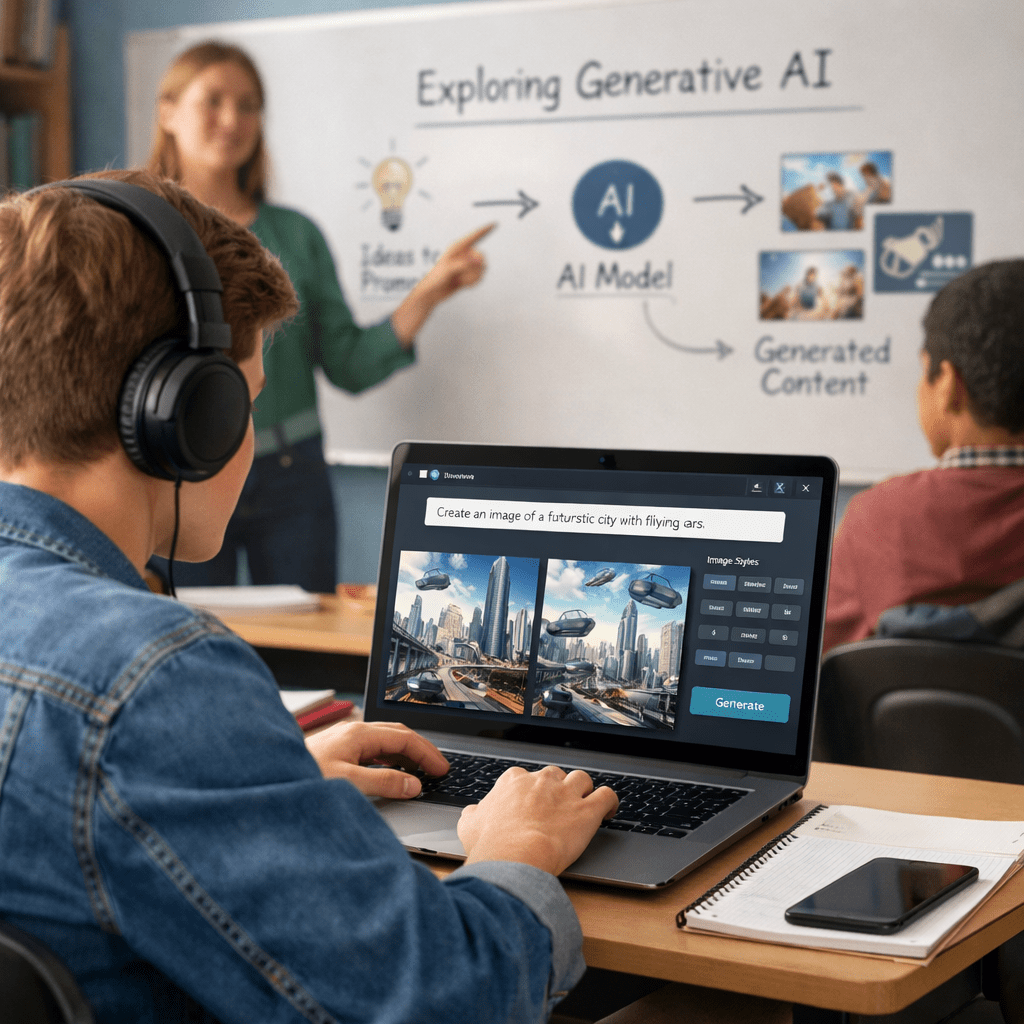
The growing use of generative artificial intelligence (gen AI) in higher education reflects a significant shift in how students approach academic work.
For example, fresh data from Turnitin indicates that 53.6% of Australian university submissions screened between October 2025 and April 2026 contained some level of AI-generated content. Within this group, around 10% of submissions were assessed as containing more than 80% AI-written material.
These figures suggest that AI tools have moved beyond experimentation and become part of mainstream student workflows.
The data also highlights that AI use exists along a broad spectrum rather than as a single category of behaviour.
Different Strokes For Different People
Some students appear to use AI for limited tasks such as brainstorming, editing or improving clarity, while others rely on it more extensively to generate substantial portions of their assignments. This distinction complicates conventional discussions about academic integrity because AI use is no longer simply a matter of whether students use these tools, but how they incorporate them into the learning process.
The widespread adoption of generative AI raises questions about the purpose and design of university assessments.
Traditional take-home essays and written assignments were created on the assumption that students would independently research, analyse and compose their responses.
As AI systems become increasingly capable of producing coherent and well-structured text, these assumptions are being challenged. Universities are therefore examining whether existing forms of assessment continue to measure the knowledge and skills they were originally intended to evaluate.
The findings also indicate that institutional responses are evolving. Many Australian universities, for example, have introduced policies governing the acceptable use of generative AI, yet translating these policies into consistent classroom practice remains an ongoing process.
Variations in assessment design, disciplinary expectations and instructor guidance mean that students may encounter different standards across courses. This creates an environment in which clear communication about acceptable AI use becomes increasingly important.
Written by AI or Not?
Another notable aspect of the discussion concerns the limitations of AI detection.
While detection tools can identify patterns consistent with AI-generated writing, they cannot always determine how students used AI or distinguish between acceptable assistance and inappropriate dependence. This makes assessment of student work more complex than traditional plagiarism detection, where copied material can often be directly traced to an original source.
The Australian data also gains significance when viewed in an international context. Turnitin reported similar patterns in the United Kingdom, while submissions in the United States showed an even higher proportion of heavily AI-generated work. These comparisons suggest that the integration of generative AI into higher education is part of a broader global trend rather than an isolated national development.
Conclusion
Overall, the increasing use of generative AI by university students illustrates a changing educational landscape in which digital tools are becoming embedded in academic practice. The available evidence points to a shift from viewing AI as an emerging technology to recognising it as a routine component of student work. As universities continue to refine policies, assessment methods and teaching practices, the discussion is likely to focus on defining the role that AI should play within higher education while ensuring that assessment continues to reflect intended learning outcomes.