Tag: artificial intelligence

  • 5 Things Everyone Should Know About AI Right Now

    5 Things Everyone Should Know About AI Right Now

    1. AI Is a Tool, Not Magic

    AI can write, design, analyze, and automate faster than ever, but it still depends on human direction. The quality of the output often depends on the quality of the input.

    2. Prompting Is Becoming a Real Skill

    Knowing how to ask AI the right questions is quickly becoming as valuable as knowing how to use search engines a decade ago. Clear instructions produce dramatically better results.

    3. AI Won’t Replace Everyone, But People Using AI Will

    The biggest shift isn’t AI replacing humans overnight. It’s that individuals and companies using AI effectively will outperform those who ignore it.

    4. Ownership Matters More Than Ever

    As AI-generated content floods social platforms, audiences are becoming harder to reach organically. Building owned assets — like newsletters, communities, and email lists — is becoming more valuable than chasing algorithms.

    5. The Opportunity Window Is Still Early

    Most people are still experimenting with AI casually. The individuals who learn how to integrate AI into their workflows today are positioning themselves ahead of a massive wave of change.

    What do you think? Write in the ‘Comment’ section.

  • 5 AI-Proof Skills That Will Be Most Valuable In Next 5 Years, Experts Say

    5 AI-Proof Skills That Will Be Most Valuable In Next 5 Years, Experts Say

    A recent CNBC report highlights an important shift in the age of artificial intelligence (AI): technical knowledge alone may no longer guarantee career security. Instead, experts believe that deeply human skills will become even more valuable over the next five years.

    The article identifies five “AI-proof” skills that machines are unlikely to fully replace: communication, critical thinking, emotional intelligence, adaptability, and leadership. (Business Insider)

    The reasoning is simple. AI tools are becoming highly effective at repetitive and data-heavy tasks, but they still struggle with human judgment, empathy, creativity, and relationship-building. For example, AI can summarize information quickly, but it cannot truly understand emotions during a difficult conversation or inspire a team during uncertainty. Experts say workers who combine AI tools with strong interpersonal skills will have the greatest advantage.

    The development also reflects broader workplace trends. Companies are increasingly automating routine work, especially in customer service, finance, and software support roles. At the same time, businesses are looking for employees who can solve complex problems, communicate clearly, and work effectively with both people and AI systems.

    For everyday workers and students, the message is not to fear AI but to adapt alongside it. Learning how to use AI tools productively is becoming as important as learning computer skills once was. However, experts stress that human qualities — curiosity, creativity, emotional awareness, and resilience — are likely to remain the most valuable career assets in an AI-driven economy.

    Reference:

    1. CNBC article on AI-proof skills
    2. Business Insider — Ways to Help AI-Proof Your Job
    3. Times of India — Nvidia CEO Jensen Huang on Staying Relevant in the AI Age
    4. Built In — AI Replacing Jobs and Creating Jobs
    5. Business Insider — Jensen Huang’s Advice on AI Education
  • How AI Is Becoming Radiology’s Most Valuable Assistant

    How AI Is Becoming Radiology’s Most Valuable Assistant

    Artificial intelligence (AI) is quietly transforming radiology from a field overwhelmed by image volumes into one that is faster, more precise, and increasingly preventive. Hospitals worldwide are using AI tools to help radiologists detect diseases earlier and reduce diagnostic delays.

    Radiology departments today process thousands of scans daily, from X rays and CT scans to MRIs. AI systems can analyze these images in seconds, flagging abnormalities that may require urgent attention. This does not replace radiologists. Instead, it acts as a second set of eyes.

    One of the clearest examples is breast cancer screening. At Sweden’s Karolinska Institute, researchers found that AI-assisted mammogram screening helped reduce radiologists’ workload while maintaining accuracy in cancer detection. Similar systems are now being tested across Europe and the United States to improve early diagnosis rates.

    AI also proved valuable during the Covid-19 pandemic. Hospitals in India, China, and the UK used AI software to rapidly assess lung scans and identify signs of infection. In overwhelmed healthcare systems, this helped doctors prioritize patients needing urgent care.

    Stroke care is another area seeing major gains. Companies such as Viz.ai have developed AI tools that alert specialists when brain scans show signs of a blocked artery. In stroke treatment, where every minute matters, faster detection can significantly improve survival and recovery outcomes.

    In India, startups including Qure.ai are deploying AI tools to detect tuberculosis and lung disease from chest X rays in underserved regions. This is particularly important in rural areas where trained radiologists are scarce.

    Challenges remain. AI systems can inherit biases from training data and still require human oversight. Regulators are also grappling with questions about accountability and patient privacy.

    Yet the direction is clear. AI is not replacing radiologists. It is becoming an essential assistant, helping doctors make quicker and more accurate decisions in a healthcare system under growing strain.

  • “OpenAI Frontier”: What’s It About?

    “OpenAI Frontier”: What’s It About?

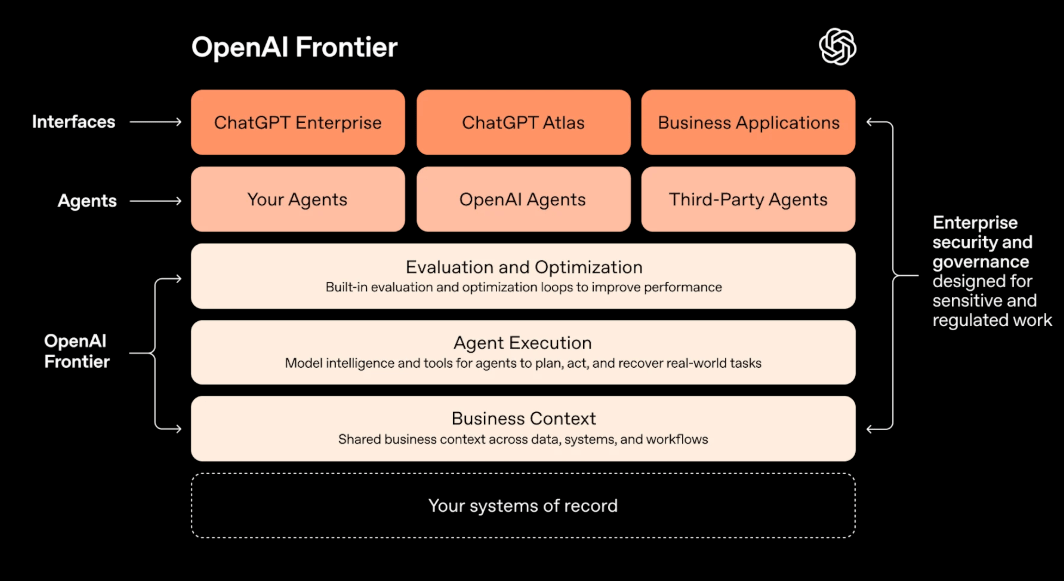
    OpenAI Frontier represents one of the most important shifts in artificial intelligence since the rise of conversational AI. While most AI products today function as assistants that respond to prompts, Frontier introduces something fundamentally different: autonomous AI agents capable of operating like coordinated digital coworkers. Built as an enterprise-scale AI orchestration platform, Frontier enables multiple AI agents to collaborate, share memory, execute workflows, and interact with software systems with minimal human intervention.

    What makes Frontier especially compelling is that it moves beyond the “chatbot” paradigm. Instead of simply generating text or answering questions, Frontier agents can conduct research, manage operations, create marketing campaigns, analyze business performance, coordinate tasks, and continuously update one another in real time.

    The result feels less like using a single AI tool and more like managing an intelligent organization powered by autonomous systems.


  • Help! I Just Found An AI Agent In My Google Search

    Help! I Just Found An AI Agent In My Google Search

    For more than 20 years, search engines worked like a digital library desk. You typed in a few keywords, got a list of links, and did the research yourself — opening tabs, comparing sources, and piecing together answers manually.

    That era is starting to fade.

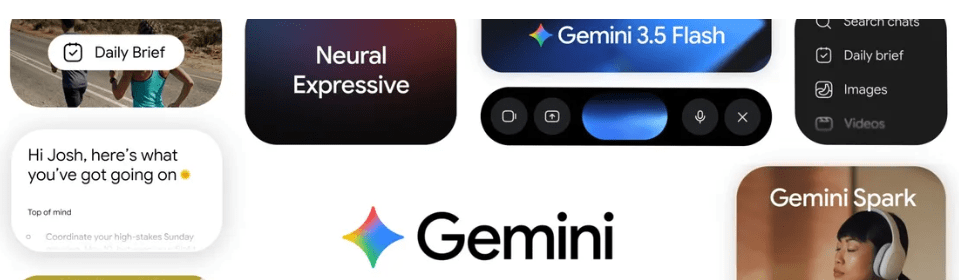
    At Google I/O 2026, Google introduced the Gemini 3.5 Flash search experience, a major shift toward what it calls “agentic search” and the “intelligent search box.” Instead of simply pointing you to websites, search is becoming an AI-powered assistant that can research, summarize, organize, and act on your behalf.

    For everyday users, this changes the role of the search bar entirely. It’s no longer just a gateway to the web. It’s becoming a 24/7 digital assistant that does the heavy lifting for you.

    To know more, click here.

  • Google’s “Daily Brief”: A Fresh Spin On Agentic AI?

    Google’s “Daily Brief”: A Fresh Spin On Agentic AI?

    So for those in our community who may have missed this – Google has introduced a new feature today called “Daily Brief”, an AI-powered productivity agent within its Gemini app.

    The tool is designed to deliver personalized morning digests by scanning Gmail, Calendar, and Gemini chats to highlight urgent updates, prioritize tasks, and suggest next steps. Announced at Google I/O 2026, Daily Brief is now rolling out to US subscribers of Gemini Plus, Pro, and Ultra, marking a significant step in Google’s shift toward proactive AI assistance.

    But is it Different From the Rest of the Pack?

    So the real question here is – does this new agentic AI truly stand apart from other agentic AI tools already in the market? At its core, Daily Brief offers a personalized morning digest by pulling information from Gmail, Calendar, and Gemini chats, then suggesting immediate actions. But this is similar in spirit to Microsoft Copilot’s daily briefing emails, which summarize meetings, tasks, and emails, and maybe even to Apple’s rumored AI assistant, expected to integrate deeply with iOS productivity apps.

    Where Daily Brief differs, say some, is in its agentic design. Unlike Copilot, which primarily delivers static summaries, Google’s tool emphasizes proactive orchestration, from suggesting replies, scheduling events, and learning from user feedback to refine future briefs. It also integrates with Gemini Spark, a 24/7 agent capable of executing tasks across Google Workspace and third-party apps, positioning Daily Brief as part of a larger, continuous AI ecosystem rather than a standalone feature.

    However, the distinction may blur in practice. There are other assistants already offer contextual task suggestions, and startups like Notion AI and Reclaim provide similar proactive planning.

    Google’s edge lies in its “Neural Expressive design language”, which makes briefs visually dynamic with graphics and narration, potentially enhancing engagement.

    The Verdict For Now

    Ultimately, Daily Brief is less a radical departure than a polished iteration. Its success will depend on whether users see value in Google’s integrated, ecosystem-first approach compared to competitors’ offerings.

    Image credit: Google ‘The Keyword’

  • “Autocomplete Culture”: How Predictive AI Is Reshaping Human Expression

    “Autocomplete Culture”: How Predictive AI Is Reshaping Human Expression

    “Autocomplete culture” describes a shift in human expression caused by predictive technologies. As recommendation engines, generative AI systems, and engagement algorithms become embedded in daily life, culture increasingly begins to resemble machine prediction. Instead of creating entirely original forms, people often select, remix, or optimize from patterns already suggested by algorithms.

    The phrase “autocomplete culture” comes from the metaphor of autocomplete: software predicting the next word before a person fully decides what to say. Applied socially, the idea suggests that platforms now predict not only sentences, but also aesthetics, opinions, trends, and behavior. Social media feeds reward familiar formats, AI writing tools generate statistically likely prose, and creators adapt their work toward algorithmic visibility. Over time, this can produce a flattening effect where content becomes interchangeable, optimized, and repetitive.

    Critics argue that autocomplete culture encourages speed over depth and engagement over authenticity. AI-generated articles, formulaic video essays, SEO-driven blogs, and “LinkedIn voice” corporate posts are often cited as examples. Recommendation systems can also narrow discovery by repeatedly surfacing similar styles, reinforcing cultural monocultures instead of diversity.

    The term overlaps with ideas like “algorithmic monoculture,” “synthetic media,” and “stochastic parroting.” While often used critically, autocomplete culture is not purely negative. Supporters argue that AI tools lower creative barriers, help people communicate faster, and democratize production. The debate ultimately centers on whether predictive systems expand human creativity or gradually standardize it into statistically optimized patterns.

  • AI and The Craft Of Making Beer

    AI and The Craft Of Making Beer

    Artificial intelligence (AI) and beer? True, that.

    The craft beer industry has always thrived on experimentation. Brewers constantly search for new flavor combinations, brewing methods, and fermentation techniques to stand out in a crowded market. Today, AI is becoming one of the newest tools behind that creativity.

    From predicting flavor profiles to optimizing fermentation and designing entirely new recipes, AI is reshaping how modern craft beer is made.

    What AI Means in Brewing

    In brewing, AI refers to computer systems that analyze large amounts of brewing data and learn patterns from it. These systems can:

    • Study thousands of beer recipes
    • Analyze ingredient combinations
    • Predict flavor outcomes
    • Monitor brewing conditions in real time
    • Recommend process improvements

    Instead of replacing brewers, AI acts more like a highly analytical brewing assistant.


  • Rise Of Forward Deployed Engineer: Magic Wand That Helps AI Get Real World Results

    Rise Of Forward Deployed Engineer: Magic Wand That Helps AI Get Real World Results

    Our “AI For Real” community members may or may not have heard of “Forward Deployed Engineers” (FDEs) as they are called. The current AI boom has made them more visible and valuable, although they existed long before.

    An FDE is a software engineer who works directly with customers to solve real-world problems using AI and technology. Think of them as a mix of engineer, consultant, and product builder.

    Unlike traditional engineers who mostly work inside a company, FDEs spend a lot of time understanding how a customer operates. They sit with teams, learn workflows, identify bottlenecks, and then quickly build custom solutions. In AI companies, this often means connecting large language models, automation tools, and company data into systems that improve productivity.


  • Consulting AI Before A Doc

    Consulting AI Before A Doc

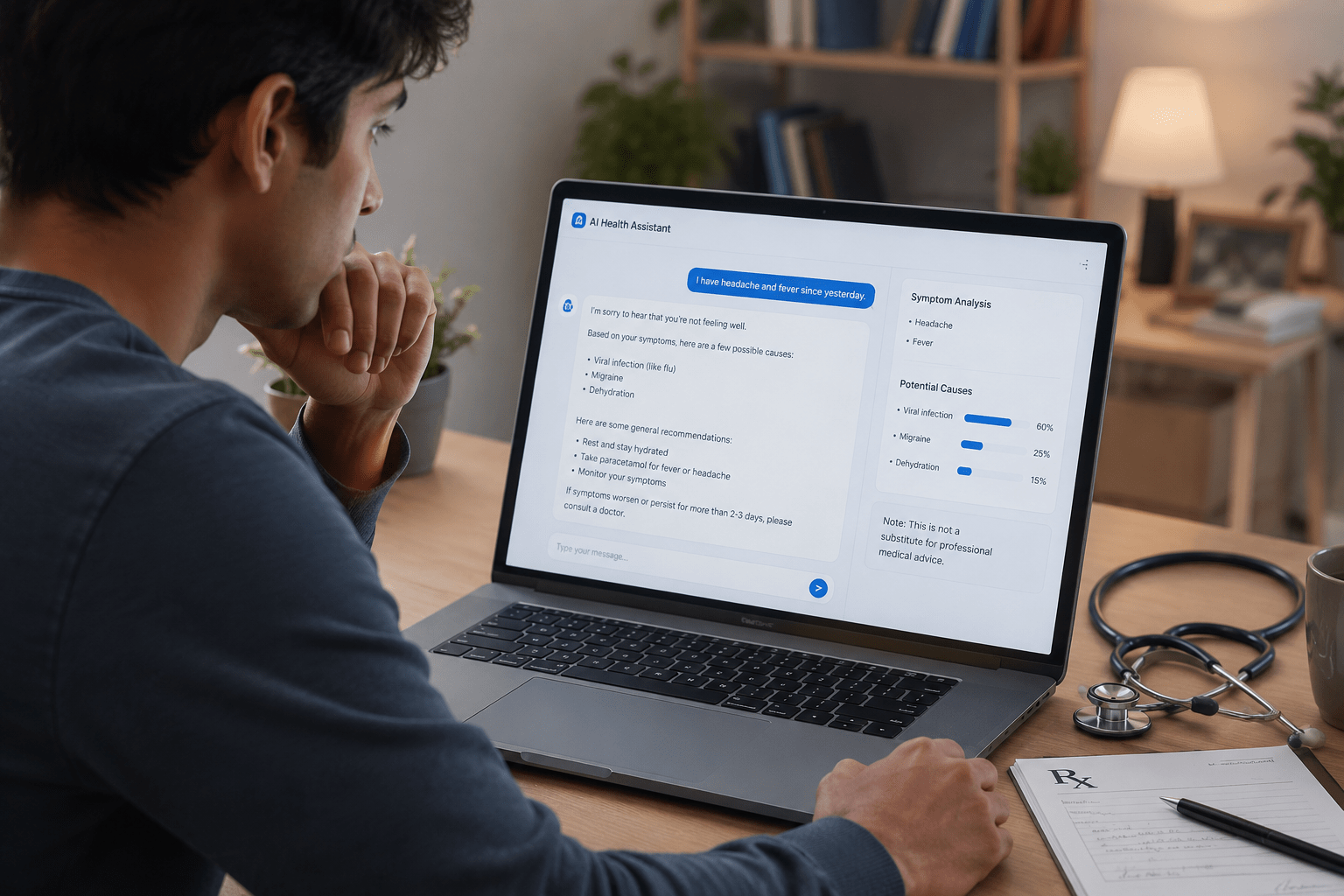
    Artificial intelligence (AI) is rapidly becoming the first source of medical advice for many patients before they visit a doctor. From symptom checkers to chatbots such as ChatGPT, people are increasingly turning to AI tools to understand illnesses, interpret medical reports, and seek treatment suggestions.

    A recent study by The BMJ reported that patients are using AI-powered platforms to ask health-related questions because they are available 24/7 and provide quick answers in simple language. Experts say this trend is growing, especially among younger patients who are comfortable using digital technology.

    Another study undertaken by Bain & Company found that many patients are open to AI-assisted healthcare, particularly for understanding symptoms and medical scans. However, most still prefer AI to support doctors rather than replace them entirely.

    Another survey conducted in the United Kingdom by researchers at King’s College London revealed that one in seven people preferred consulting AI chatbots instead of visiting a doctor, mainly due to long waiting times and easier accessibility.

    You Are Hereby Warned

    Medical professionals, however, warn that AI systems can provide incorrect or misleading information. A study published in Nature Medicine showed that people often trust AI-generated medical advice even when it may not be fully accurate. (Nature) Experts emphasize that AI should be used only for preliminary guidance and not as a substitute for professional medical consultation.

    Despite the risks, AI is expected to play a larger role in healthcare in the future. Doctors believe that when properly supervised, AI tools can improve communication, reduce pressure on hospitals, and help patients become more informed about their health.

    Reference:

    The BMJ – Patients using AI for medical advice
    The BMJ Article Bain & Company – Survey on AI in healthcare
    Bain & Company Report The Guardian – UK study on AI chatbots and doctors
    The Guardian Report Nature Medicine – Trust in AI-generated medical advice
    Nature Medicine Study PR Newswire – AI reshaping patient-doctor relationships
    PR Newswire Report