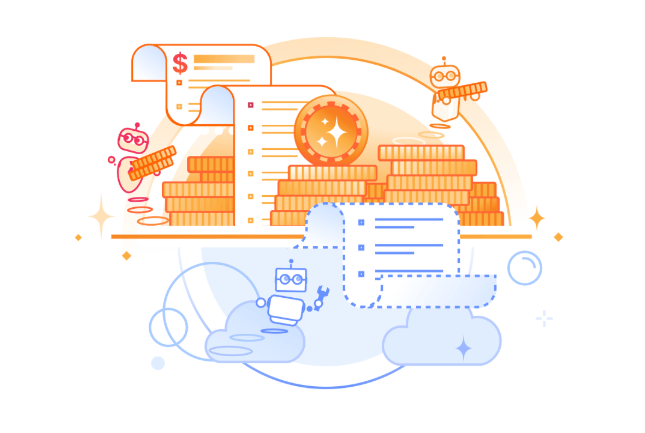
For the past two years, companies have faced a peculiar problem: they want employees to use AI more, but they also fear the costs that come with widespread adoption. As organizations rolled out access to powerful models from providers such as OpenAI, Anthropic and Google, many discovered that AI spending can spiral surprisingly quickly. A single engineer, chatbot, or automated workflow can consume millions of tokens and generate thousands of dollars in charges within days.
That growing concern is the backdrop for Cloudflare’s latest announcement: spend limits for its AI Gateway service, a feature designed to give companies much tighter control over AI costs.
AI can write, design, analyze, and automate faster than ever, but it still depends on human direction. The quality of the output often depends on the quality of the input.
2. Prompting Is Becoming a Real Skill
Knowing how to ask AI the right questions is quickly becoming as valuable as knowing how to use search engines a decade ago. Clear instructions produce dramatically better results.
3. AI Won’t Replace Everyone, But People Using AI Will
The biggest shift isn’t AI replacing humans overnight. It’s that individuals and companies using AI effectively will outperform those who ignore it.
4. Ownership Matters More Than Ever
As AI-generated content floods social platforms, audiences are becoming harder to reach organically. Building owned assets — like newsletters, communities, and email lists — is becoming more valuable than chasing algorithms.
5. The Opportunity Window Is Still Early
Most people are still experimenting with AI casually. The individuals who learn how to integrate AI into their workflows today are positioning themselves ahead of a massive wave of change.
What do you think? Write in the ‘Comment’ section.
Artificial intelligence (AI) is quietly transforming radiology from a field overwhelmed by image volumes into one that is faster, more precise, and increasingly preventive. Hospitals worldwide are using AI tools to help radiologists detect diseases earlier and reduce diagnostic delays.
Radiology departments today process thousands of scans daily, from X rays and CT scans to MRIs. AI systems can analyze these images in seconds, flagging abnormalities that may require urgent attention. This does not replace radiologists. Instead, it acts as a second set of eyes.
One of the clearest examples is breast cancer screening. At Sweden’s Karolinska Institute, researchers found that AI-assisted mammogram screening helped reduce radiologists’ workload while maintaining accuracy in cancer detection. Similar systems are now being tested across Europe and the United States to improve early diagnosis rates.
AI also proved valuable during the Covid-19 pandemic. Hospitals in India, China, and the UK used AI software to rapidly assess lung scans and identify signs of infection. In overwhelmed healthcare systems, this helped doctors prioritize patients needing urgent care.
Stroke care is another area seeing major gains. Companies such as Viz.ai have developed AI tools that alert specialists when brain scans show signs of a blocked artery. In stroke treatment, where every minute matters, faster detection can significantly improve survival and recovery outcomes.
In India, startups including Qure.ai are deploying AI tools to detect tuberculosis and lung disease from chest X rays in underserved regions. This is particularly important in rural areas where trained radiologists are scarce.
Challenges remain. AI systems can inherit biases from training data and still require human oversight. Regulators are also grappling with questions about accountability and patient privacy.
Yet the direction is clear. AI is not replacing radiologists. It is becoming an essential assistant, helping doctors make quicker and more accurate decisions in a healthcare system under growing strain.
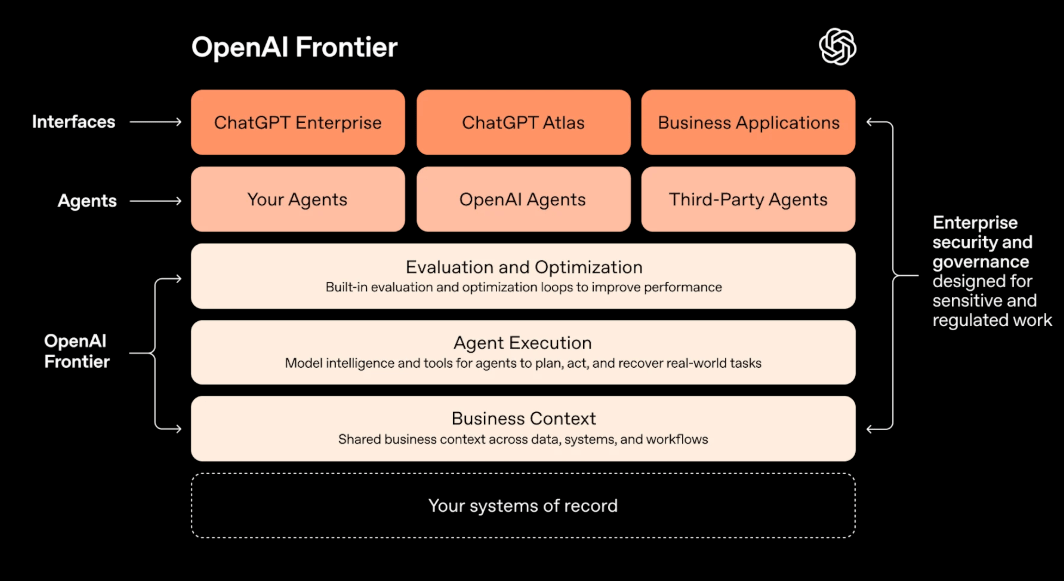
OpenAI Frontier represents one of the most important shifts in artificial intelligence since the rise of conversational AI. While most AI products today function as assistants that respond to prompts, Frontier introduces something fundamentally different: autonomous AI agents capable of operating like coordinated digital coworkers. Built as an enterprise-scale AI orchestration platform, Frontier enables multiple AI agents to collaborate, share memory, execute workflows, and interact with software systems with minimal human intervention.
What makes Frontier especially compelling is that it moves beyond the “chatbot” paradigm. Instead of simply generating text or answering questions, Frontier agents can conduct research, manage operations, create marketing campaigns, analyze business performance, coordinate tasks, and continuously update one another in real time.
The result feels less like using a single AI tool and more like managing an intelligent organization powered by autonomous systems.
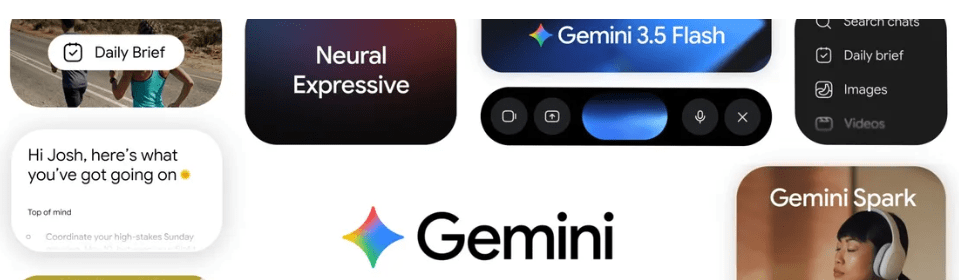
So for those in our community who may have missed this – Google has introduced a new feature today called “Daily Brief”, an AI-powered productivity agent within its Gemini app.
The tool is designed to deliver personalized morning digests by scanning Gmail, Calendar, and Gemini chats to highlight urgent updates, prioritize tasks, and suggest next steps. Announced at Google I/O 2026, Daily Brief is now rolling out to US subscribers of Gemini Plus, Pro, and Ultra, marking a significant step in Google’s shift toward proactive AI assistance.
But is it Different From the Rest of the Pack?
So the real question here is – does this new agentic AI truly stand apart from other agentic AI tools already in the market? At its core, Daily Brief offers a personalized morning digest by pulling information from Gmail, Calendar, and Gemini chats, then suggesting immediate actions. But this is similar in spirit to Microsoft Copilot’s daily briefing emails, which summarize meetings, tasks, and emails, and maybe even to Apple’s rumored AI assistant, expected to integrate deeply with iOS productivity apps.
Where Daily Brief differs, say some, is in its agentic design. Unlike Copilot, which primarily delivers static summaries, Google’s tool emphasizes proactive orchestration, from suggesting replies, scheduling events, and learning from user feedback to refine future briefs. It also integrates with Gemini Spark, a 24/7 agent capable of executing tasks across Google Workspace and third-party apps, positioning Daily Brief as part of a larger, continuous AI ecosystem rather than a standalone feature.
However, the distinction may blur in practice. There are other assistants already offer contextual task suggestions, and startups like Notion AI and Reclaim provide similar proactive planning.
Google’s edge lies in its “Neural Expressive design language”, which makes briefs visually dynamic with graphics and narration, potentially enhancing engagement.
The Verdict For Now
Ultimately, Daily Brief is less a radical departure than a polished iteration. Its success will depend on whether users see value in Google’s integrated, ecosystem-first approach compared to competitors’ offerings.
In 2026, there is no such thing as “nothing to eat.” If you have a smartphone and some random scraps in your fridge, you have a meal. In this video, we’re showing the common man’s ultimate AI hack: using AI vision to turn your leftovers into professional-grade dinners.
Whether it’s a wilted carrot or a random jar of sauce, AI can see the potential you can’t. Stop ordering expensive takeout and start using the tech in your pocket to save hundreds on your grocery bill.
In this video: ✅ The 5-second fridge video trick. ✅ How to prompt Gemini or ChatGPT for “Scrap Recipes.” ✅ Why AI vision is the best tool for your wallet this year.
WATCH THIS VIDEO:
Challenge: Open your fridge, find the weirdest, loneliest ingredient you have, and drop it in the comments. Let’s see what the AI can build for you! 👇
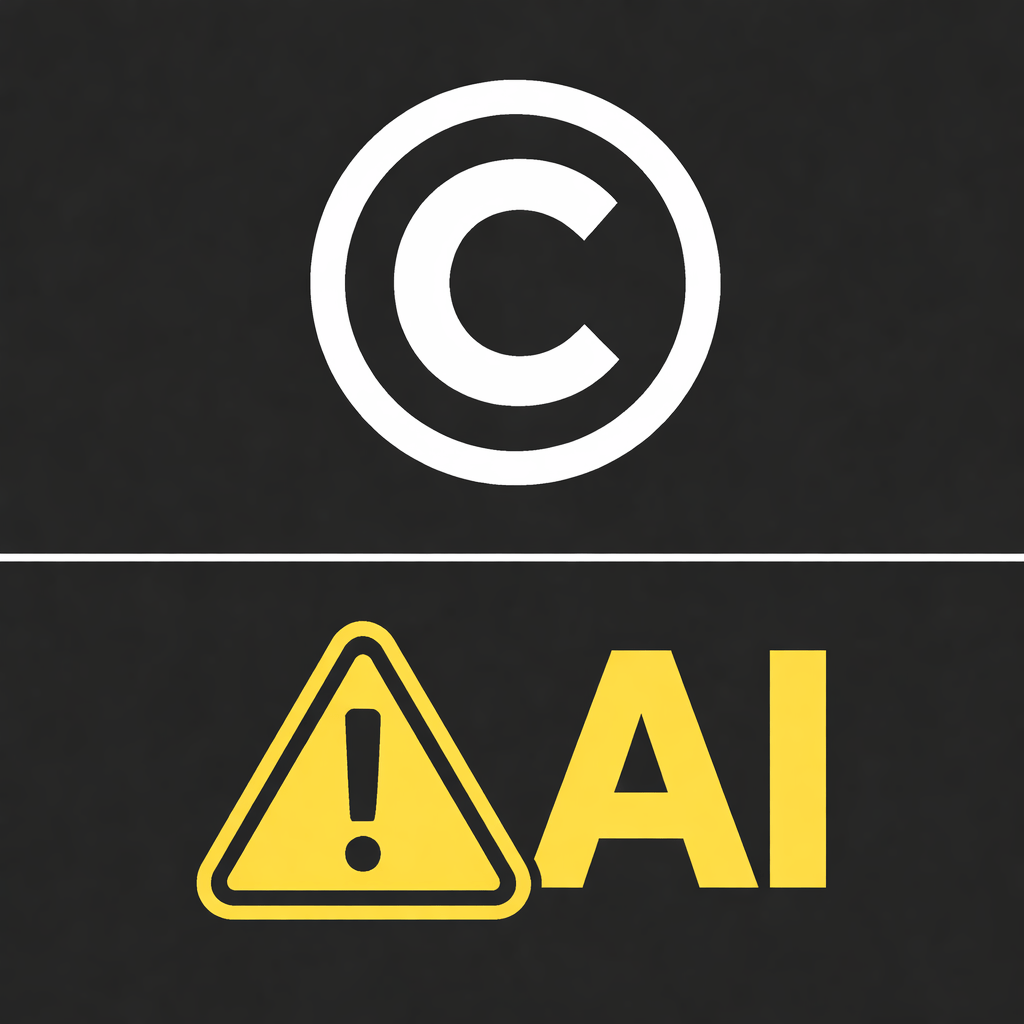
AI and copyright are entering a new phase globally. Pure AI-generated content is increasingly treated as public domain, while copyright protection lies in human creativity — editing, arranging, and directing AI outputs.
For creators, the key shift is clear: documentation and proof of human input are becoming essential to defend ownership in the age of generative AI.
Here’s a primer on AI and copyright (March 2026) that will help creators understand where they stand on various uses of AI in matters of text, image, and video generation.
All of us know that artificial intelligence (AI) is rapidly reshaping the global employment landscape, and the consequences are becoming starkly visible. Platforms originally designed for AI agents, such as RentAHuman.ai, are being flooded by desperate human workers offering to do anything from clerical tasks to creative services. This surge reflects a growing imbalance: while automation expands, opportunities for human labor are shrinking, leaving millions scrambling for relevance in a digital-first economy.
In what experts are calling a paradigm shift for scientific discovery, leading research labs have announced that advanced artificial intelligence (AI) systems are now capable of conducting high-level mathematical research with minimal human intervention, solving long-standing open problems, and generating academic-quality results.
At the forefront of this development is an AI agent known as Aletheia, developed by researchers at Google DeepMind. Built on the company’s powerful Gemini Deep Think reasoning architecture, Aletheia has transitioned from solving structured competition problems to tackling professional research challenges in pure mathematics and related disciplines.
According to research published last week, Aletheia was designed to generate, verify, and revise solutions end-to-end in natural language — navigating complex mathematical literature, constructing long-horizon proofs, and autonomously producing results of academic interest. In one notable demonstration, the system authored a complete research paper on calculating structural constants in arithmetic geometry without direct human reasoning input.
What the AI Has Achieved
Autonomous Publication: Aletheia produced a mathematical paper — including novel calculations — entirely through its own reasoning pipeline, a feat previously thought to be the province of seasoned academic mathematicians.
Open Problem Solving: In a large-scale evaluation of hundreds of unpublished conjectures drawn from the Erdős Conjectures database, the AI generated autonomous solutions to multiple open questions.
Human-AI Collaboration: Beyond fully autonomous discoveries, the AI has worked with researchers to prove complex bounds on interacting systems — blending machine reasoning with expert oversight.
Broader Implications for Science
Traditionally, artificial intelligence has assisted researchers as a tool for computation, literature review, and drafting. The latest generation of AI agents, however, functions more like an autonomous research partner, capable of:
Identifying promising approaches to unresolved questions,
Checking and refining proofs using internal verification methods,
And even admitting when a problem is beyond its current capabilities.
This shift has sparked lively debate among mathematicians and philosophers about authorship, credit, and the nature of discovery itself. If an AI can originate and verify new mathematics, questions arise about who — or what — qualifies as the “author” of a research breakthrough.
What Comes Next
While the results so far are promising, researchers caution that much work remains before AI systems can reliably replicate the full depth and creativity of human mathematical reasoning across all fields. Verification, interpretability, and ethical oversight continue to be priorities as these technologies mature.
Amazon Web Services (AWS) has confirmed at least two outages in recent months, both internally linked to its own AI coding assistants. While speculation mounted about AI being the cause, Amazon insists the disruptions were the result of user error, not AI malfunction.
December 2025 outage: A 13-hour disruption occurred when engineers allowed Kiro, Amazon’s agentic AI coding tool, to make system changes. The tool deleted and recreated an environment, affecting a single service in parts of mainland China.
Second incident: Did not impact customer-facing services but again involved AI tools.
Comparison: Neither incident matched the scale of the October 2025 outage, which lasted 15 hours and disrupted multiple apps, including OpenAI’s ChatGPT.
Amazon’s Position
You’ve reached the end of the preview. Please register here to read the rest!