In what experts are calling a paradigm shift for scientific discovery, leading research labs have announced that advanced artificial intelligence (AI) systems are now capable of conducting high-level mathematical research with minimal human intervention, solving long-standing open problems, and generating academic-quality results.
At the forefront of this development is an AI agent known as Aletheia, developed by researchers at Google DeepMind. Built on the company’s powerful Gemini Deep Think reasoning architecture, Aletheia has transitioned from solving structured competition problems to tackling professional research challenges in pure mathematics and related disciplines.
According to research published last week, Aletheia was designed to generate, verify, and revise solutions end-to-end in natural language — navigating complex mathematical literature, constructing long-horizon proofs, and autonomously producing results of academic interest. In one notable demonstration, the system authored a complete research paper on calculating structural constants in arithmetic geometry without direct human reasoning input.
What the AI Has Achieved
- Autonomous Publication: Aletheia produced a mathematical paper — including novel calculations — entirely through its own reasoning pipeline, a feat previously thought to be the province of seasoned academic mathematicians.
- Open Problem Solving: In a large-scale evaluation of hundreds of unpublished conjectures drawn from the Erdős Conjectures database, the AI generated autonomous solutions to multiple open questions.
- Human-AI Collaboration: Beyond fully autonomous discoveries, the AI has worked with researchers to prove complex bounds on interacting systems — blending machine reasoning with expert oversight.
Broader Implications for Science
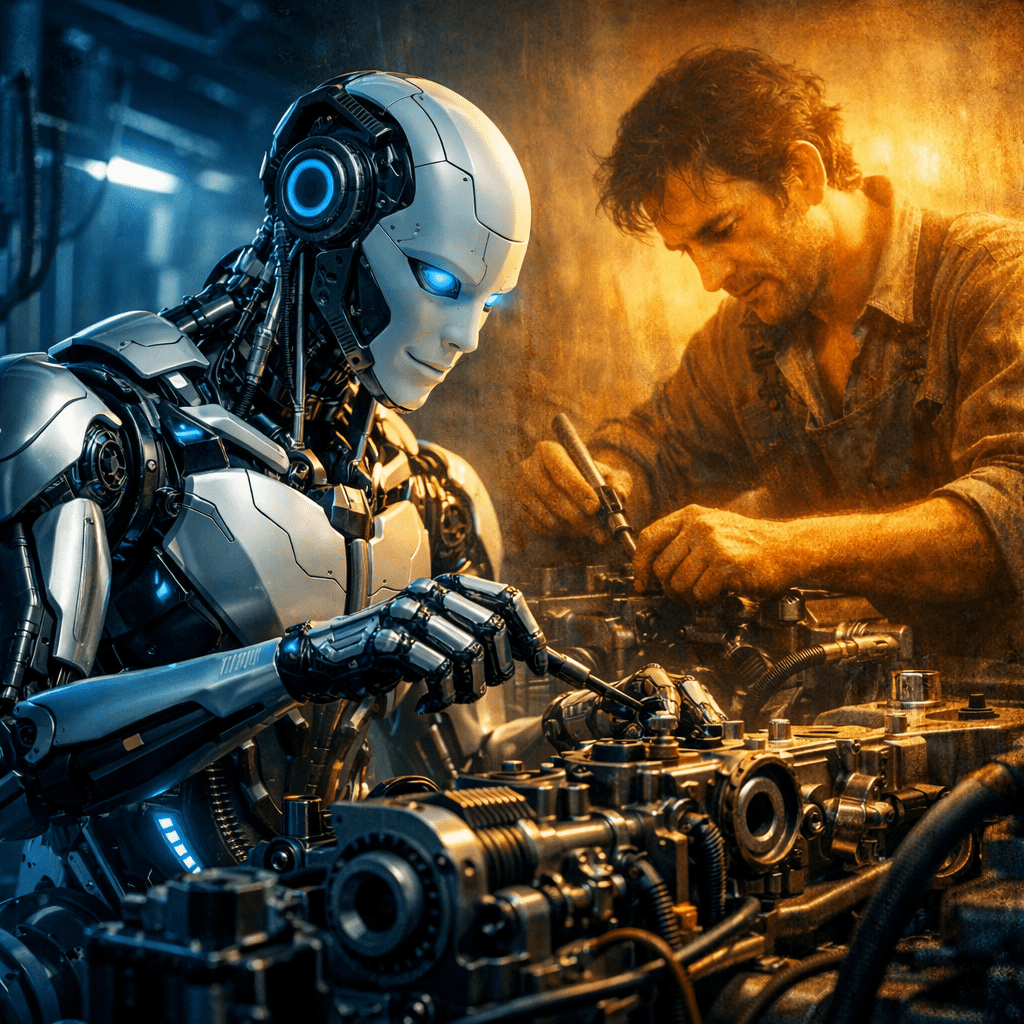
Traditionally, artificial intelligence has assisted researchers as a tool for computation, literature review, and drafting. The latest generation of AI agents, however, functions more like an autonomous research partner, capable of:
- Identifying promising approaches to unresolved questions,
- Checking and refining proofs using internal verification methods,
- And even admitting when a problem is beyond its current capabilities.
This shift has sparked lively debate among mathematicians and philosophers about authorship, credit, and the nature of discovery itself. If an AI can originate and verify new mathematics, questions arise about who — or what — qualifies as the “author” of a research breakthrough.
What Comes Next
While the results so far are promising, researchers caution that much work remains before AI systems can reliably replicate the full depth and creativity of human mathematical reasoning across all fields. Verification, interpretability, and ethical oversight continue to be priorities as these technologies mature.