If you’ve ever asked an AI for five ideas and received what feels like the same answer written five different ways, you’ve experienced something similar to “mode collapse”.
In simple terms, mode collapse is when an AI starts producing repetitive, predictable, or overly generic responses instead of exploring different possibilities.
Imagine asking a group of friends for holiday suggestions. One recommends hiking in Nepal, another suggests a beach in Greece, and someone else proposes a city break in Japan. Now imagine every friend simply says, “Go to Paris.” That’s what mode collapse looks like in AI. It keeps returning to the same “safe” answer.
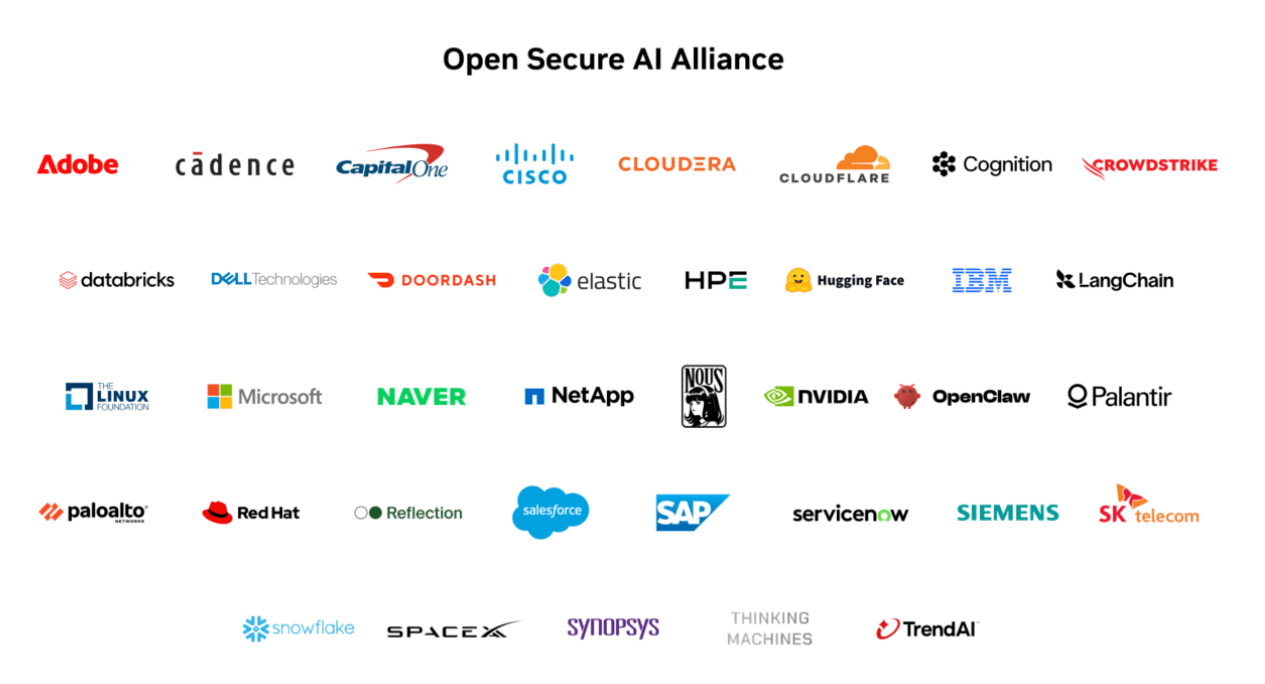
As artificial intelligence becomes more deeply integrated into businesses and everyday life, concerns over its security are growing just as quickly. To address these challenges, NVIDIA and a group of leading technology companies have launched the Open Secure AI Alliance, an industry initiative focused on developing open-source tools and shared standards to make AI systems safer, more secure and more trustworthy.
The alliance seeks to accelerate the development of transparent security frameworks, testing tools and best practices that help organisations deploy AI responsibly while strengthening trust in increasingly capable AI systems.
According to NVIDIA, the initiative is founded on the belief that open collaboration can help identify vulnerabilities faster, improve defensive capabilities and establish common standards across the AI ecosystem.
The founding members include a broad cross-section of the technology industry, spanning AI infrastructure, enterprise software, cybersecurity and cloud computing.
Among the alliance’s priorities are the development of open evaluation frameworks, red-teaming tools, vulnerability disclosure practices and other resources that enable developers to assess and strengthen AI systems against emerging threats. The initiative also encourages greater cooperation between industry, academia and the open-source community to address evolving security challenges.
The launch comes amid growing debate over the role of open AI models in cybersecurity and follows heightened industry attention on AI-related security risks. NVIDIA and its partners argue that open security tools can complement proprietary AI systems by giving defenders broader access to shared research and proven safeguards.
The AI world loves labels. If you listen to enough podcasts or read some LinkedIn posts, you’ll hear people passionately debating closed models, open models, and, increasingly, something that might best be described as “Open-ish”.
Confused? Let’s use a restaurant analogy.
A “Closed” model is like dining at an exclusive restaurant where the chef refuses to share the recipe. The meal is fantastic, the service is polished, and you leave happy. But if you ask how the sauce was made, you’re politely shown the door. You can enjoy the food, but you can’t peek into the kitchen or start your own branch.
An “Open” model is the opposite. Imagine a generous chef who not only serves the meal but also hands you the recipe, lets you into the kitchen, and says, “Go ahead, improve it if you like.” You can tweak the ingredients, experiment with new flavours, or even open your own restaurant. That’s the spirit of open source: transparency, collaboration and the freedom to build on what already exists.
Then there’s the increasingly popular middle ground: “Open-ish”.
This is the restaurant that proudly displays its kitchen through a giant glass window. You can watch the chefs at work, perhaps even buy the recipe book, but you’re not allowed behind the counter. Or maybe you can use the recipe, but only if you’re not planning to open a competing restaurant. It feels open, and in many ways it is, but there are strings attached.
Many modern AI models live in this category. “Open-ish” is an informal umbrella term, whereas “open-weights” is a specific technical category. Their creators may release the model weights, allowing people to run them locally, but restrict commercial use. Others publish research papers but not the training data. Some open almost everything except the secret ingredient that made the dish famous in the first place.
The reason people say “Open-ish” is that many “open” AI models aren’t fully open in the traditional open-source sense.
For example, a company might:
✅ Release the model weights.
✅ Allow you to run the model locally.
❌ Keep the training data secret.
❌ Not release the full training pipeline.
❌ Restrict commercial use through the licence.
That’s an open-weights model, but many open-source advocates would argue it isn’t fully open. Hence the nickname, “Open-ish.”
Which is the Right Model?
None of these approaches is inherently right or wrong. Closed models often deliver polished products, invest heavily in safety and can fund expensive research.
Open models fuel innovation, education and an astonishing amount of community-driven progress.
Open-ish models try to strike a balance between encouraging adoption and protecting business interests.
Perhaps the real lesson is that “open” isn’t a simple on/off switch anymore. It’s more like a dimmer control with dozens of settings. The AI community sometimes argues as though a model is either completely open or completely closed, when the reality is much messier.
So the next time someone proudly announces that their model is “open,” it’s worth asking a gentle follow-up: Open in what way? The code? The weights? The data? The licence? The answer is often more interesting than the label itself.
And just as every chef guards “some” secret, even if it’s only where they buy the tomatoes, every AI model has its own definition of openness. The trick is knowing which doors are actually unlocked.
Imagine this: You are a student in a classroom looking at the class blackboard when suddenly, Albert Einstein appears on it and teaches you aspects of his Theory of Relativity. Fiction? No, it’s real. (Only, Einstein is AI created.)
A Chinese company, “iFLYTEK” showcased its AI Blackboard at the recent 2026 World Artificial Intelligence Conference (WAIC), presenting the AI school blackboard device as part of its AI-powered education portfolio designed for classroom teaching.
The AI Blackboard combines a traditional writing surface with artificial intelligence (AI) features intended to support classroom instruction.
According to iFLYTEK, this is no ordinary blackboard but “an intelligent hub integrated into the entire teaching process”.
Here are some of its features:
Handwritten content on the board can be recognized and converted into standardized graphics, while the system can identify related knowledge points and recommend teaching resources.
In mathematics lessons, the AI Blackboard can transform two-dimensional geometric figures into three-dimensional models for classroom display.
The system also includes AI virtual human technology that allows students to interact with AI representations of historical and cultural figures, including Confucius, Albert Einstein and the Tang Dynasty poet Li Bai.
Teachers can also customize their own “digital clones,” replicating their voices with a single sentence to provide personalized Q&A for students after class, making individualized teaching a reality rather than just a concept.
It can even be used to remotely conduct a class in another classroom thousands of miles away, and also eliminates language barriers.
Separately, teachers can create AI-powered digital avatars using voice-cloning technology to answer students’ questions after class.
Background
iFLYTEK is a Chinese artificial intelligence company founded in 1999 and headquartered in Hefei, Anhui Province. The company specializes in speech recognition, natural language processing, machine translation, and other AI technologies, with products and services spanning education, healthcare, smart cities, finance, and enterprise applications.
In education, iFLYTEK develops AI-powered learning platforms, digital classroom technologies, and teaching tools for schools and universities. Its education portfolio includes smart classrooms, AI-assisted teaching systems, language learning solutions, and interactive devices such as the AI Blackboard.
The company has expanded its presence in China’s education sector through partnerships with schools and local governments, while also promoting selected education technologies in international markets.
For classroom documentation, the AI Blackboard uses a “4+1” camera system and AI audio processing to automatically record lessons. The system can generate lesson records and produce short instructional video clips from classroom sessions, according to the company.
iFLYTEK said the AI Blackboard has been deployed in all 33 provincial-level administrative regions in China and is used in more than 1,400 counties and districts. The company’s announcement also highlighted a demonstration in which the system supported a joint lesson between a school in Zhejiang Province and a school in Indonesia using AI capabilities to facilitate cross-language communication.
Finding a security vulnerability in a large codebase is a bit like searching for a leaking pipe inside a skyscraper. You know water is escaping somewhere, but figuring out which floor, which room, and which pipe is the real challenge.
The company has introduced Antares, a family of security small language models (SLMs) designed specifically for vulnerability localization. Instead of writing code or generating patches, these open-weight models focus on one important job. They help developers identify where a known security flaw is likely hiding inside a software repository.
That distinction matters.
(BTW: An open weight model is an AI model whose trained parameters (weights) are publicly available, allowing organizations to run, inspect, and often fine tune it on their own infrastructure without having to build the model from scratch.)
Many organizations today rely on large general purpose AI models for coding assistance. While they are powerful, they can also be expensive to run and often require sending sensitive source code to cloud services.
Antares takes a different approach. It is a smaller, specialized model that can run locally, keeping proprietary code inside an organization’s own environment while significantly reducing compute costs.
Think of it this way. If a Swiss Army knife can do twenty different jobs reasonably well, Cisco’s Antares model is a precision screwdriver built for one task. It may not do everything, but it performs its intended job with remarkable efficiency.
The Implications
For businesses, this could mean faster security reviews, lower AI infrastructure costs, and fewer delays when responding to newly disclosed vulnerabilities. Security teams no longer have to sift through thousands of files manually before deciding where to focus their attention. The AI helps narrow the search, allowing human experts to spend their time verifying and fixing issues instead of hunting for them.
Developers also benefit. Because the models are open weight, organizations can inspect, fine tune, and integrate them into their own development pipelines. That flexibility makes them attractive for enterprises that want greater control over their AI tools instead of relying entirely on closed commercial services.
The two models—Antares-350M and Antares-1B—as open-weight models now available to the broader community on Hugging Face.
Cisco’s announcement reflects a broader trend in enterprise AI. Bigger is not always better. Sometimes the smartest solution is a smaller model that excels at one critical task. In cybersecurity, where speed, privacy, and cost all matter, that focused approach may prove more valuable than another all purpose AI assistant.
Who says you need a supercomputer to build artificial intelligence (AI)? Today, something as powerful as AI can run on something as small as a Raspberry Pi!
This tiny, affordable computer is opening the doors to a world of smart technology, allowing students, makers, and tech enthusiasts to create everything from face-recognition systems and voice assistants to robots and smart home gadgets.
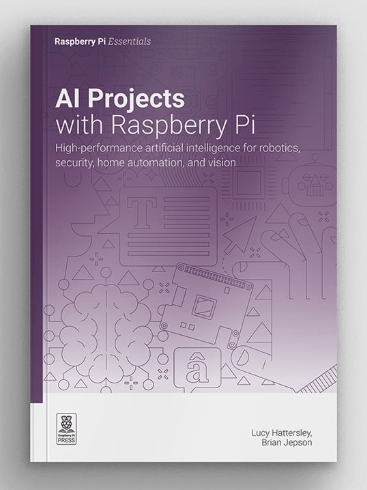
With “AI Projects with Raspberry Pi”, learning AI is no longer limited to experts. It’s now fun, hands-on, and within reach of anyone with curiosity and a Raspberry Pi.
The new guide is packed with hands-on projects that enable students, hobbyists, educators, and makers to explore the rapidly growing world of artificial intelligence using Raspberry Pi hardware.
The publication introduces readers to essential AI concepts such as computer vision, machine learning, and natural language processing through practical, project-based learning. Instead of focusing only on theory, it encourages users to build real-world applications, including smart cameras, voice-controlled assistants, environmental monitoring systems, and intelligent automation projects. Many of these applications run directly on Raspberry Pi devices, showcasing the power of edge AI, where data is processed locally for faster performance, enhanced privacy, and reduced reliance on cloud services.
What’s Raspberry Pi?
Raspberry Pi is a series of compact, affordable single-board computers developed to make computing, programming, and digital innovation accessible to everyone.
Since its launch in 2012, Raspberry Pi has become a global favourite among students, educators, hobbyists, and professionals for learning coding, building electronics projects, and developing applications in robotics, IoT, AI, and automation. Despite its small size, a Raspberry Pi delivers impressive computing power and supports a wide range of programming languages, operating systems, and hardware accessories. With a strong emphasis on hands-on learning and innovation, Raspberry Pi has empowered millions of people worldwide to turn creative ideas into real-world technology solutions.
Beyond teaching technical skills, “AI Projects with Raspberry Pi” inspires creativity and innovation. It highlights how affordable computing can be transformed into intelligent systems capable of solving real-world problems across education, robotics, smart homes, and environmental monitoring. By combining powerful AI tools with easy-to-use hardware, Raspberry Pi continues to empower the next generation of innovators.
Artificial intelligence (AI) keeps getting more powerful, but which risks actually deserve our attention over the next few years?
A team from MIT FutureTech and the University of Queensland set out to answer that. They asked 272 international AI experts to rate 24 AI risks by how likely they are and how much harm they could cause, using a structured survey method designed to build consensus across many rounds.
The headline finding: even in a best-case scenario where companies and governments make reasonable efforts to manage AI responsibly, five risk categories still carry at least a 10% chance of catastrophic harm within five years — meaning outcomes on the scale of over a million deaths, $100 billion in losses, or comparable damage to society.
Those five are AI systems gaining dangerous capabilities
AI-enabled weapons and cyberattacks
environmental harm
inequality and job loss
the concentration of power and unequal distribution of AI’s benefits.
Without any mitigation at all, the picture is worse: 8 of the 24 risk domains crossed that same 10% catastrophic-probability threshold.
Two risks stood out to researchers as especially urgent. AI is unusually good at coding and pattern recognition, which makes it a natural fit for accelerating cyberattacks. And “dangerous capabilities” is a broader worry — the same advances that help with legitimate work can also make surveillance, deepfakes, persuasion, and even weapons development easier to pull off.
The study also flagged competitive pressure as a risk multiplier: when companies or countries fear falling behind, they may cut corners on safety just to move faster.
Three sectors were named as most exposed: information (misinformation, privacy), national security (cyberattacks, weapons), and finance (fraud, market manipulation). And there’s a mismatch worth noting — developers and regulators are seen as most responsible for managing these risks, while everyday users bear the brunt of them.
It all started with prompt engineering. But today, it’s come to what’s called as “Loop Engineering”.
This is the practice of designing, testing, and improving the repeated cycles that an AI system follows to solve a task. Instead of asking a model a single question and accepting its first answer, loop engineering builds a structured process where the AI generates a response, evaluates it, improves it, and repeats this cycle until it reaches a satisfactory result.
A simple loop may consist of four steps: plan, execute, evaluate, and refine.
First, the AI creates a plan for solving the problem.
Next, it executes the plan by producing an answer or performing an action.
Then, the result is evaluated against predefined criteria, such as accuracy, completeness, or safety.
Finally, based on the evaluation, the AI revises its output and begins another iteration if needed.
A group of 29 countries has signed an agreement to establish the World AI Cooperation Organization, a China-backed intergovernmental body aimed at promoting international cooperation and governance in artificial intelligence (AI).
The agreement, signed in Shanghai ahead of the World AI Conference, marks the most significant institutional effort yet by Beijing to shape the rules governing AI development at a global level.
While the organisation is framed as a platform for collaboration, its broader significance lies in the emerging contest over who sets global AI standards.
The move positions China as an alternative centre of influence to the United States and its allies, which have largely pursued AI governance through smaller, like-minded coalitions focused on safety, security and democratic values. Beijing, by contrast, has consistently advocated a more inclusive framework that emphasises technology sharing, state sovereignty and access for developing economies.
The establishment of a permanent institution could deepen this divide by creating parallel governance architectures. Countries in Africa, Asia and Latin America that seek greater access to AI infrastructure and expertise may increasingly align with the China-led framework, potentially giving Beijing greater influence over emerging technical standards, regulatory norms and digital infrastructure investments.
The development also raises questions about the future of international AI regulation. Rather than converging on a single global framework, competing institutions may evolve around different political and economic priorities, mirroring broader strategic competition between Washington and Beijing. That fragmentation could complicate efforts to develop universally accepted rules for frontier AI, cross-border data governance and responsible deployment of advanced systems.
Former OpenAI Chief Technology Officer Mira Murati has taken a major step in challenging the dominance of the artificial intelligence (AI) industry’s biggest players with the release of the first AI model from her startup, “Thinking Machines Lab”.
The company unveiled “Inkling”, an open-weight foundation model designed to give developers greater flexibility to customize AI systems using their own data, rather than relying on proprietary models controlled by companies such as OpenAI and Anthropic.
The model contains 975 billion parameters, but activates only 41 billion during any given task, a design intended to improve efficiency by reducing computing costs without sacrificing performance. Which means: The AI model has a vast amount of knowledge stored inside it, but it doesn’t use all of it every time you ask a question. Instead, it activates only the parts that are relevant to the task at hand. This makes the system faster and cheaper to run while still delivering high-quality answers.
Thinking Machines Lab said its strategy focuses on balancing affordability and adaptability instead of competing solely on raw computing power. Alongside Inkling, the company is promoting “Tinker”, a cloud-based fine-tuning platform that enables developers to customize large AI models without managing complex infrastructure.
Here’s What You Need To Really Know
Unlike fully closed AI systems, Inkling’s open-weight design allows organizations to adapt the model to specialized tasks while retaining greater control over their data and applications.
So what makes Inkling different is that it gives users more freedom. Most popular AI models are like rented apartments. You can use them, but you cannot change how they are built. Inkling is more like buying a house: businesses and developers can modify it to suit their own needs. It is also designed to work more efficiently by using only the parts of its “brain” needed for a task, making it faster and cheaper to run. This means companies can build AI tools tailored to their business without spending as much on computing or depending entirely on big tech firms.
Inkling was trained using text, images, audio and video data and includes safeguards against misuse, including protections against cyberattacks and biological threats. The company also announced that the model was developed using Nvidia hardware under a multiyear partnership with the chipmaker.
With its first model release, Thinking Machines Lab is positioning itself as a key contender in the rapidly evolving AI market, betting that openness, customization and lower costs will appeal to enterprises seeking alternatives to today’s dominant AI platforms.